
Sliding doors often seem like the ideal solution: they are stylish, save space, and visually expand the room. Their image is firmly associated with modern renovations and smart layouts. But when it comes to making a real choice, a bunch of questions pop into your head.
There are many conflicting opinions about them. Some praise them for their convenience, while others complain about drafts and flimsiness. It can be difficult to figure out what is true and what is just outdated stereotypes or unfortunate personal experience.
In this article, we will calmly and without advertising hype analyze sliding doors. Let's see what their real advantages are and what one significant disadvantage we will have to put up with. We will separate popular myths from facts and gather opinions that will help you make an informed decision.
Opinion 1

Nastya: in our apartment, a sliding door leads to the bathroom. We chose it because of the very small hallway — with a regular door, there would be no room to turn around.
At first, the door guide was installed at the bottom, which was very inconvenient: dirt and dust got stuck in the rail, and over time, the door stopped sliding smoothly. We had to replace the design and install a door with a top rail.
Now everything is fine.

Sliding doors with a bottom rail are only made by manufacturers who are not concerned about the quality of the door or their reputation.
Evgeny Bobrov: Nastya is absolutely right — sliding doors with a bottom rail are only made by manufacturers who are not concerned about the quality of the door or their reputation. Dust and dirt will definitely get into the bottom rail, the door will start to squeak, move noisily, and eventually it may even jam. The bottom rail can only be used in wardrobes, where no one walks.
At UNION, we only use reliable Italian rails with top mounting from the ECLISSE factory. There is nothing at the bottom, so the floor covering is not damaged. And the ECLISSE mechanisms themselves are very high quality: smooth and quiet.

Zhenya Lykasova, J. Lykasova Design Studio: of course, we have used sliding doors in our studio's projects — they are an excellent solution when there are many doors in one place, such as a corridor or hall.
Sliding doors eliminate collisions with other doors and significantly save space. This, in turn, contributes to the ergonomics and comfort of the room.
Opinion 2

Anton: we have a minimalist interior—white walls, white sliding doors that reach the ceiling. I like that they don't take up space, blend in with the room, and there's no need to worry that a small child will pinch their finger or trap themselves somewhere—the doors open and close easily.
The downsides are that they are expensive and quite noisy; you won't be able to close the door quietly at night.
As for the noise when closing, I am adamant: a high-quality sliding door should not be noisy.
Evgeny Bobrov:
in this case, the high price of a sliding door may be due to its size. The taller the door, the more expensive it is. This applies to both hinged and sliding doors. It is difficult to make a tall door leaf that retains its geometry and strength.
Various accessories also add to the price of a door: for example, decorating it with architraves or trims, or fitting it with a lock. But if you compare the basic configurations of sliding and swing doors, they will be almost identical in cost.
As for the noise when closing, I am categorical: a high-quality sliding door should not be noisy. Manufacturers of sliding door hardware don't just develop mechanisms, of which there are millions, but strive to achieve quietness and ease of closing. My advice is to choose leading manufacturers whose doors are completely quiet and smooth. Then there will be no discomfort.
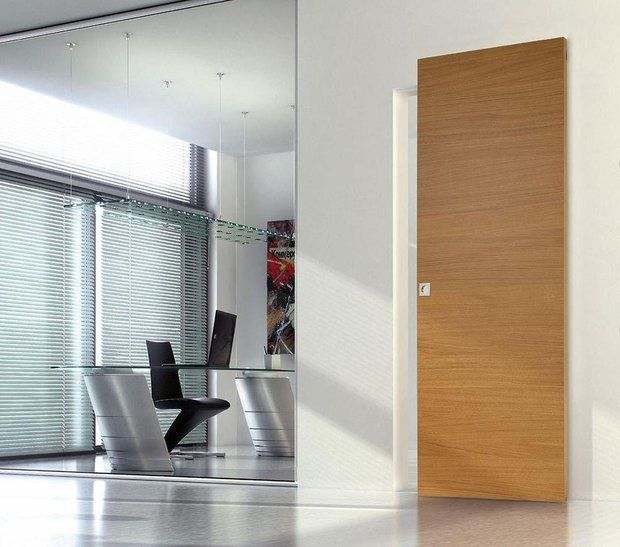

Anton and Denis Yurov, Yurov Interiors: we often use MAGIC doors in our projects. They not only save square meters in small apartments, but also create wide doorways in places where the use of a conventional door would be simply impossible or at least inconvenient.
Sliding doors are not just a fashion trend, but a practical solution for saving space and visually enlarging a room. They have real advantages: they do not get in the way when opening, look great in modern interiors, allow you to divide areas without clutter, and are even suitable for small apartments. The only downside is the increased requirements for installation accuracy and guide quality. At the same time, there are many myths surrounding them: for example, that they wobble, let noise through, or are unreliable — most of which are not true. We have collected eight opinions from people who have been living with such doors for years to show that it's not as bad as it seems.
Opinion 3

Katya: i have been living with sliding doors for a year and a half and am generally satisfied. However, before installing them, it is important to know that the wall must be of a certain thickness and must be prepared in advance. If your renovation is already complete, it will not be possible to install sliding doors. You also need to understand that sliding doors have lower sound insulation than hinged doors.
A sliding door along a wall does not require any preparation in principle — it can be any wall. The main thing is that it can support the weight of the door at the point where the mechanism is attached.
Evgeny Bobrov:
it is not entirely true that you cannot install a sliding door after renovation. There are different types of sliding doors — it all depends on which design you choose.
For example, a sliding door along the wall does not require any preparation—it can be any wall. The main thing is that it can support the weight of the door where the mechanism is attached. If we are talking about a sliding door in a pocket, then yes — you need to make a wider doorway, install a pocket for the door, cover it with plasterboard along with the wall, then paint or wallpaper it.
Regarding sound insulation. If it is the simplest set consisting of a rail and a door leaf, then yes — the sound insulation of a sliding door will be lower. But if we use a sliding door with a frame around the opening, with a special false jamb with maximum sealing, the sound insulation, although not 100% identical to that of a hinged door, will still be quite good.

A sliding door can be made completely invisible!
Evgeny Bobrov: by the way, a sliding door can be made completely invisible! For example, you can make the door leaf mirrored, install it on a special invisible MAGIC rail, and not put a handle on it. It will look like a regular mirror attached to the wall — no one will ever guess that there is a room behind it.
So, to sum up, sliding doors are a practical and stylish solution, but not a panacea for any space. Their main advantages are space saving, visual expansion of the room, abundance of light, and modern design. The main compromise is that they always have slightly lower heat and sound insulation compared to a good hinged door.
It is important to separate fact from fiction. They do not have to be cold, do not always require super-powerful rollers, and are not only suitable for huge apartments. Much depends on the quality of the profile, double glazing, and professional installation.
Ultimately, the choice is yours. If light, air, and space are your top priorities, and complete privacy in the room is not a pressing issue, a sliding door would be an excellent purchase. If you need maximum insulation for a quiet bedroom or study from noise in the house, it may be worth considering traditional options. Assess your priorities, and the solution will become obvious.


