
When it comes to flooring, we often think of parquet, laminate, or tile. But there is another option that is becoming increasingly popular in modern homes and apartments—self-leveling flooring. This is not just a smooth, monochromatic surface, but a technology with great potential.
On the one hand, such floors look very stylish and modern. They can be perfectly smooth and glossy, matte and tactile, and with the help of 3D technology, they can be turned into a real work of art. It seems like the perfect solution for those looking for something unusual and durable.
On the other hand, living with this type of flooring has its nuances. Before deciding to install it, it is worth weighing all the pros and cons. After all, what is ideal for a shopping center or bathroom may not be entirely practical in a living room or bedroom. Let's figure out where self-leveling floors reveal their full potential and where unexpected difficulties may await.
Advantages of self-leveling floors
1. Smooth, seamless covering
The key advantage of self-leveling floors is their perfectly smooth, seamless finish. The floor looks neat, and its surface is extremely aesthetically pleasing.
2. Decorative potential
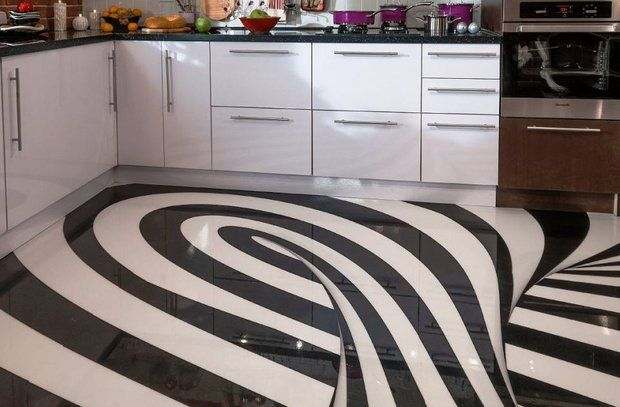
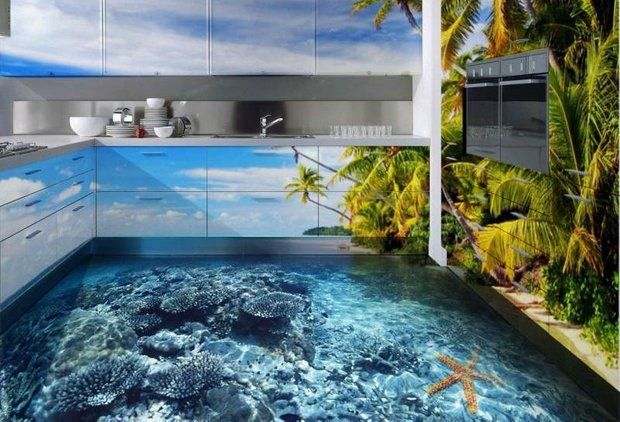
Another feature of self-leveling floors, thanks to which they gained widespread popularity at one time, is their enormous decorative potential. With this coating, you can imitate the pattern of natural stone or mosaic flooring, create 3D effect images, decorate the surface with fanciful lines and picturesque streaks, “lay” a flower lawn under your feet, or “scatter” sea pebbles.

3. Variety of colors
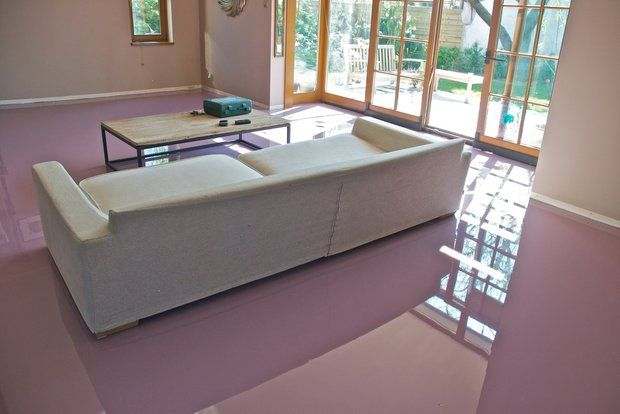
Self-leveling floors are also available in solid colors. Moreover, the palette of colors and shades is so diverse that you can choose a tone that perfectly matches any color scheme of the interior.
4. Wear resistance
Self-leveling floors are an excellent covering in terms of performance characteristics. They are quite durable, wear-resistant, and capable of serving for more than a decade. In addition, such floors do not show scratches or dents from furniture legs.
5. Easy to maintain
Self-leveling floors are incredibly easy to care for and are not affected by aggressive household chemicals. Dirt does not get stuck in them, and thanks to their monolithic surface, dust does not accumulate anywhere.

6. Practicality
Among other things, self-leveling floors are not affected by moisture, which makes them a practical material suitable for use even in rooms with high humidity levels: in kitchens and bathrooms.
7. Safety
The materials used to install a self-leveling floor are completely safe and non-toxic after hardening. Such floors do not emit any specific odor and can be used without fear.
8. Additional features
A pleasant addition when choosing a self-leveling floor is waterproofing, as well as the fire safety of the coating.

9. Can be used as a rough coat
Many builders love self-leveling floors as a rough coating: they perfectly level the surface and are not too difficult (for professionals) to install.

Self-leveling floors are a practical and stylish solution for residential interiors, but they are not always suitable. On the one hand, it creates a smooth, almost seamless surface, looks modern, is easy to clean, and allows you to play with space using color and effects such as “3D images.” On the other hand, such a floor can be cold to the touch, slippery when wet, and its installation requires a level base and precise pouring. In addition, repairs can be more difficult than with laminate or linoleum if there are defects or damage. Therefore, it is important to consider where exactly it is needed: it is justified in the hallway or kitchen, but in the bedroom or nursery, it is debatable.
Disadvantages of self-leveling floors
1. Cold flooring
Self-leveling floors are not the warmest, and those who like to walk barefoot will clearly not be pleased with their temperature. However, this covering goes well with heated floors, so this disadvantage can be overcome.
2. Considered an old-fashioned covering
Unfortunately, many people associate self-leveling floors exclusively with photographic 3D designs from the 2000s. Indeed, imitation grass or sea on the floor will not look appropriate in every interior. But don't forget about plain coatings, self-leveling floors with unobtrusive patterns, graphic images, and other options.

3. Does not add coziness to the interior
Many people consider glossy self-leveling floors to be not the most comfortable option for residential premises. However, there are also matte variations. Although, of course, self-leveling floors are far from the tactile, warm textures of wood or, say, the sophistication of natural stone textures.
4. Not a budget solution
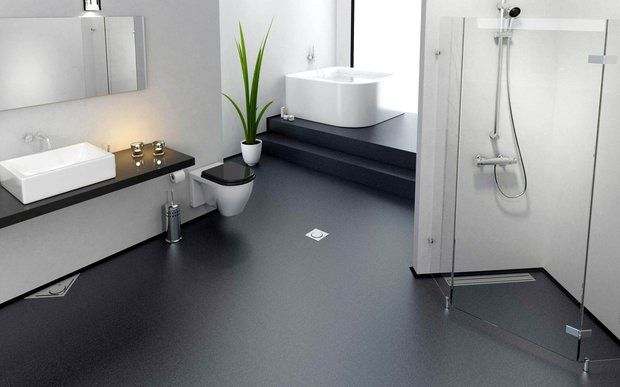
A high-quality self-leveling floor is not the cheapest option. Moreover, the greater the surface difference, the greater the material consumption. In addition, it is better to entrust the installation technology to professionals: if it is not done correctly, you risk getting a poor-quality covering.
It is also worth remembering that self-leveling floors take time to dry. And consider the complexity of dismantling.
5. Sensitivity to ultraviolet light
Prolonged exposure to direct sunlight can cause self-leveling flooring to change color.
Expert opinion
We found out what professionals think about the use of self-leveling floors. Alexey Bely and Diana Maltseva shared their opinions with InMyRoom readers.
Alexey Bely: “As a rough covering, self-leveling flooring is the ideal solution.”
Self-leveling flooring as a rough coating is an ideal way to level the joints between different coatings to 1 mm. Rough self-leveling flooring is more suitable for leveling laminate/parquet flooring; for tiles, you can use a leveling screed, in which case the leveling can be done with tile adhesive.

Ultimately, the decision to choose a self-leveling floor for your home is a balanced compromise between aesthetics and practicality. On the one hand, you get a perfectly flat, durable, and virtually seamless surface that looks great in modern interiors. On the other hand, you need to be prepared for a rather complex and expensive installation, which is difficult to correct if a mistake is made.
This type of flooring is ideal for kitchens, hallways, or bathrooms, where durability and moisture resistance are important. However, in bedrooms or living rooms, its cold surface may seem uncomfortable, requiring warm rugs. It is also important to understand that repairing or replacing sections of it is no easy task.
Ultimately, if you like industrial or minimalist modern style and value durable and hygienic solutions, a self-leveling floor is an excellent choice. If warmth, ease of replacement, and a cozy atmosphere are your top priorities, you may want to consider more traditional options, such as parquet or laminate flooring.


