
For your home’s exterior, selecting the right material is essential for both durability and aesthetics. The use of plastic facade panels to improve the appearance of residential buildings has grown in popularity. Homeowners should carefully consider the range of benefits and considerations that these panels offer.
The cost-effectiveness of plastic facade panels is one of their main benefits. A larger range of homeowners can afford plastic panels because they are frequently less expensive than more conventional materials like brick or wood. Beyond the initial purchase, plastic panels are also cost-effective for installation because they are generally lightweight and simple to handle, which lowers labor expenses.
The range of colors and styles that are offered is another important advantage. With so many designs of plastic panels that resemble stone or wood, homeowners can achieve the desired aesthetic without having to deal with the upkeep of traditional materials. They fit well with both traditional and modern architectural styles because of their adaptability.
But it’s important to think about the possible disadvantages of plastic facade panels. Even though they are strong and moisture-resistant, they might not last as long as stronger materials like brick or concrete in the long run. Extreme weather exposure, such as extended sunshine or below-freezing temperatures, can deteriorate plastic and change its appearance.
Knowing the technical specifications of plastic facade panels is essential when making your selection. Typically, they are produced in a range of thicknesses and sizes, each appropriate for a particular installation technique and set of structural specifications. While some panels can be mounted directly to an external wall, others might need to be supported by a framework.
In conclusion, plastic facade panels present a stylish and affordable way to improve the external appearance of your house. Homeowners can achieve both practical functionality and aesthetic appeal for their facade by weighing potential drawbacks like durability under harsh conditions against advantages like affordability and design versatility.
- Description of facade plastic panels
- Advantages and disadvantages
- Specifications
- Kinds
- Lathing for plastic facade slabs
- Installation instructions
- Useful video
- Video on the topic
- What is thermoceramics?? Exterior decoration. Facade panels Omnifactor Keralite, review, price, installation.
- Japanese facade panels – why are they?
- Facade panels. What is the difference?
- TechnoNIKOL Hauberk facade tiles after 2 years | Review of tiles | I am answering the questions
Description of facade plastic panels
Fusion is used to combine two distinct masses to create plastic panels for the external decoration of a house. These panels are then made into two surfaces: internal and external.
The inner surface of the panel’s structure gives the material a high degree of stiffness, which is required to maintain the original geometry in the face of numerous influences. The material can withstand mechanical loads thanks to this layer.
During the manufacturing process, a variety of high-quality and protective modifiers and pigments are added to the material’s composition. Such materials have previously undergone a variety of tests, such as those measuring their resistance to UV light and the destructive time factor. These ingredients help products become colorfast, meaning that they maintain their color over time.
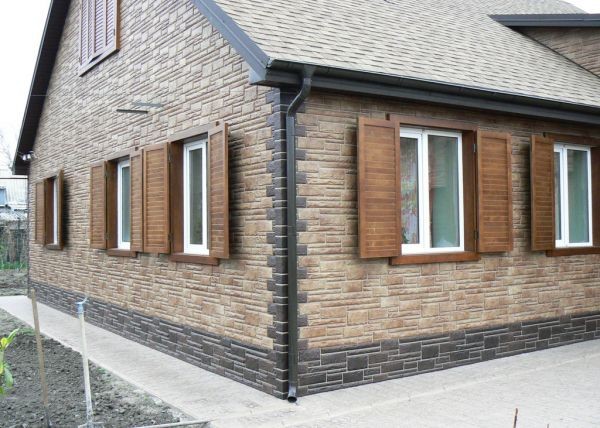
PVC or HPL plastic are used to make plastic facing panels. The second kind is regarded as one of the most advanced and trustworthy. You can achieve extremely good protective properties for your home by using this material as a facing material—it’sevenused in aircraft construction.
Advantages and disadvantages
The following are typical benefits of using plastic panels for facade cladding:

The shortcomings stem from the requirement to allocate a slightly higher sum of money towards construction projects. There are times when hiring the services of reputable construction companies is necessary, which entails extra expenses.
Specifications
If you’re interested in buying plastic panels for facade cladding, you should educate yourself about their technical features, which include the following:
- Panel thicknesses are 6, 8, 10 mm;
- product width 1300 and 1850 mm;
- Product lengths are available in 2800, 3050, 3650 mm;
- the material weighs respectively 8.4 11.2 14 kg/m2;
- the tensile strength indicator is 100 MPa;
- the size change parameter in the case of high temperature conditions is 0.15%;
- the level of bending strength is 140 MPa;
- the density parameter is 1.4 g/cm 3 ;
- linear expansion coefficient parameter, in the case of temperature fluctuations is 0.9 x 10 -51/k;
- thermal conductivity index is 0.3 w/m*k;
- the material is resistant to temperature changes ranging from -60 to plus 85 degrees Celsius;
- belongs to flammability group g1;
- Available in a rich range of colors, which include both monochrome colors and imitation of various natural materials.

Kinds
The types of plastic panels are as follows:
- Under the stone. This type of plastic panels is represented by a variety of product options that can imitate various types of natural stone. The material can look like marble, brickwork, stonework and many other variations. The main advantage of using plastic panels for this type of cladding is that the cost of construction work will be several times less than if natural materials are used.
- Tree. This type of plastic panels designed to imitate a variety of wood species. The assortment includes species from the simplest and most common wood species to rare and exclusive ones. The panels can also imitate different wood textures.
- Metal. In appearance, this type of product resemble galvanized steel or aluminum, As for the surface, this material is available with both a smooth and perforated structure of the top layer.

Lathing for plastic facade slabs
The creation of a frame or sheathing is the most crucial step in the installation of plastic panels.
This is how the procedure appears:
- Initially, you need to walk over the entire surface of the walls of the house and eliminate fungal and mold stains, then treat these areas with a special composition with an antiseptic or fungicidal effect;
- it is also recommended to eliminate microcracks in the wall of the house;
- The sheathing can be erected from a galvanized profile or timber. Having opted for a wooden frame, it is worth considering that it is not as durable compared to a metal one;
In the event that it is decided to install wooden sheathing, it needs to be treated with specific solutions to keep it safe.
- The frame can be installed in a vertical or horizontal position. The horizontal lathing is installed relative to the starting profile, J profile and horizontal sections of the products;
- the step at which the sheathing elements will be installed is calculated relative to the size of the panels.

Utilizing plastic facade panels to adorn the outside of a house presents a mixed bag of advantages and disadvantages. They are well-liked by homeowners looking for a speedy renovation solution because of their lightweight design and simplicity of installation. There are several varieties of these panels, each with unique technical characteristics appropriate for various climates and design tastes. Nevertheless, two significant drawbacks are their susceptibility to scratches and possible fading in strong sunlight. Comprehending these facets enables homeowners to make knowledgeable decisions regarding the suitability of plastic facade panels for their home’s external remodeling requirements.
Installation instructions
The following order is followed when carrying out construction work:
- The starting bar is fixed first; it should be located at the lowest point of the house. In this case, during the fastening process, it is necessary to leave a gap of 10 cm near the edge so that it is possible to subsequently install an outer corner;
- after this they begin to lay the first row of material, Nails can be used as fastening elements, for which it is first necessary to drill a hole on each panel.
- During operation, it is necessary to check the accuracy of the angles, since they must be flush with the panels;
- after the entire surface of the facade is covered with slabs and only the last row remains, located under the roof of the building, then most likely there will be a need to give the product the required size. To do this, the panel is trimmed, making sure that the protective coating is not damaged.

Useful video
Comprehensive video guidance on how to install facade panels:
| Advantages: Lightweight, easy to install, low maintenance, wide range of colors and textures. | Disadvantages: Susceptible to fading over time, less durable compared to traditional materials like brick or stone. |
| Types: Hollow-core panels, solid-core panels. | Technical Specifications: Typically made from PVC or other plastics, varying in thickness from 8mm to 20mm, resistant to moisture and insects. |
Plastic facade panels are a popular option for exterior home decoration because they provide a number of advantages. Because of their light weight, installation is simpler and the structural load may be reduced. Over time, they will require less maintenance because of their resistance to weathering and insects. Plastic panels also come in a variety of colors and textures, so homeowners can achieve the look they want without having to do a lot of maintenance.
Plastic panels have some disadvantages despite their benefits. Their eventual replacement may be required due to their fading and susceptibility to scratches from prolonged exposure to sunlight. Despite the fact that some contemporary panels are recyclable, worries regarding their composition also stem from their makeup. In addition, careful installation is necessary to avoid moisture infiltration, which can result in mold growth or structural damage.
It is essential to comprehend the types and technical specifications of plastic facade panels when making your selection. Typical varieties include composite panels, which combine plastic with other materials for improved durability and insulation, and PVC (polyvinyl chloride) panels, which are renowned for their affordability and adaptability. In order to ensure compliance with regional building codes and climate conditions, technical considerations include panel thickness, UV resistance ratings, and fire retardancy certifications.


