
For homeowners, cracks in the blind area surrounding their home can be a common yet unsettling problem. If ignored, these cracks could worsen the appearance of your property and result in more significant issues. These gaps allow water to seep in, which can lead to erosion, damage to the foundation, and even leaks in the basement. To keep the structural integrity of your home intact, you must take immediate action to resolve these problems.
Fortunately, with the correct advice and equipment, fixing cracks in the blind area is a doable task. Our professionals have compiled useful tips to assist you in effectively addressing this issue. Regardless of your level of experience, these pointers will walk you through the procedure step-by-step.
Our professionals cover everything you need to know, from determining the origin of the cracks to selecting the suitable materials for repair. You’ll discover the various kinds of cracks and the most effective ways to repair them, guaranteeing a strong and long-lasting fix. You can protect your property and improve its curb appeal by restoring the blind area surrounding your home by heeding the advice of these professionals.
Continue reading to learn how to fix cracks in the blind area surrounding your home and to give yourself the confidence to tackle this do-it-yourself home repair project like a pro. You can maintain your home in excellent condition for many years to come with a little work and the appropriate strategy.
If neglected, cracks in the blind area surrounding your home can result in serious structural issues. Experts advise thoroughly cleaning the impacted area before applying a premium sealant to stop water infiltration in order to effectively repair these cracks. To guarantee a long-lasting repair, it’s also critical to address any underlying problems, such as soil settlement or inadequate drainage, that are causing the cracks. Homeowners can preserve the integrity of their foundation and save money on future repairs by heeding these expert advice.
- Why is it important to choose the right materials for repairs??
- What repair mixtures are used?
- For concrete
- Epoxy compounds
- Sealants, polyurethane
- Self-expanding tapes
- For granite
- From paving slabs
- How to fill the seam when the blind area moves away from the building?
- How to treat it against destruction?
- How to choose quality compounds?
- Video on the topic
- Blind area (sealing cracks). Experiment. RESULT (2026 – 2026)
- Sealing foundation cracks and blind areas
- Waterproofing. Concrete Crack Repair.
Why is it important to choose the right materials for repairs??
Several external finishes, including concrete and both natural and artificial cobblestones, are used to create the blind area. Therefore, the repair composition must be chosen with consideration for the finish and type of damage in order to restore the load-bearing capacity and geometric shape of the structure.
In addition to restoring the integrity of the cover, a professionally chosen repair mixture or impregnation can enhance the structure’s performance qualities, such as durability, resistance to moisture and frost, and suitability for the intended use.
For these kinds of compounds, the usual temperature range that is acceptable is -30 to +45 C.
Key attributes of the repair mixtures for the house’s blind area:

- frost resistance for outdoor use;
- fast setting, accelerated process of strength gain;
- increased strength characteristics for significant mechanical loads;
- water resistance – the ability to be exposed to atmospheric moisture for a long time;
- hydrophobicity – water-repellent ability;
- elasticity – resistance to dynamic loads;
- environmental safety, the material does not pose a danger to human health and the environment.
What repair mixtures are used?
The two types of restoration work that are typically done on the surface of the blind area are the sealing of individual cracks and the restoration of large deformed areas.
As soon as cracks are discovered, they must be sealed to stop water from entering them and processes that would eventually destroy the blind area. Epoxy, adhesive compositions, and special polymers are used for this.
Each one has technical instructions attached by the manufacturer that go into great detail about how to use it and what areas it can be used in.
Defect size grouping by degree on the blind area’s surface:
- cracks no more than 5 mm;
- chips from 10 to 20 mm;
- depressions up to 40 mm;
- deep destruction up to 100 mm;
- deep damage of 400 mm until the reinforcement is completely exposed – here the use of any repair mixtures is ineffective, a complete replacement of the damaged area is required.
For concrete
Rudimentary supplies for concrete blind area repair:
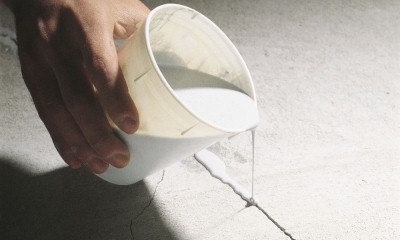
Epoxy compounds
Relevant:
- ED-16/20, Russia, 600 rub./kg;
- Epoxy 520, Czech Republic, 890 RUR./2kg;
- UZIN KR 416, Germany, 4975 RUR./0.75l;
- Repair Technokolla, Italy, 3600 RUR./1.8l.
Benefits
- frost resistance,
- water resistance,
- joint strength,
- affordable prices.
Drawbacks:
- flammable material,
- it is necessary to follow safety rules during restoration work.
Sealants, polyurethane
Relevant:
- ELASTOSIL PU 20, Russia, 260 rub./0.6 l;
- 3M PU 575, Russia, 275 RUR./0.6;
- Rubberflex.Pro, France, 300 rub./0.6 l.
Benefits
- good adhesion,
- long period of use up to 25 years,
- applicability for external repairs in the temperature range from – 35 to + 45 C.
Flaws: difficult to dispose of and contains toxic materials.
Self-expanding tapes

Relevant:
- PSUL, Russia. 190 rub./1m.P.;
- G-Flex/ GX-7615/ Alchemy, Ukraine, 200 RUR./m.P.;
- Waterstop 1520, Greece, RUB 245./m.P.;
- FUMAX, China, 320 rub./m.P.;
- Hydrotite.CJ-0720, Japan, 360 rub. m.P.
Benefits
- increased connection reliability,
- moisture resistance,
- frost resistance,
- large selection of sizes and configurations.
Drawbacks:
- high price,
- do not allow pressure on the material during installation.
For granite
Basic granite blind area repair supplies:
- Polyester adhesive putty Tenax Solido, Italy, RUB 3,200./l. Advantages: wide range of applications for all types of natural stones, strength of joints and permissibility of work in a humid environment and in frosts. Disadvantages: high cost.
- Polyester adhesive putty Nitor 50, Italy, 1500 RUR./l. Advantages: high-quality connections, wide range of applications for all types of natural stone. Disadvantages: high cost.
- Polyester adhesive putty FLUIDO TRANSPARENTE, Italy, 1200/0.75 l. Advantages: good adhesion, durable seams, machineable. Disadvantages: high price.
From paving slabs
Common materials for repairing a paving slab blind area:
- Liquid adhesive putty AKEPOX 2000, Germany, RUB 5,738./1.5 l. Advantage: easy processing, strength, frost resistance, water protection. Disadvantages: only for horizontal seams.
- Thick adhesive-putty Solido Colorato, 3G Pagl, Italy, 630 RUR./0.125l. Advantage: high thickening rate, high-strength joints, frost resistance, moisture resistance. Disadvantages: high price.
- Thick adhesive-putty Crystal, crystal-transparent, RUB 3,180./l. Advantage: hardens quickly, easy to process, high permissible temperature. Disadvantages: high price.
How to fill the seam when the blind area moves away from the building?
The blind area and the base are not tightly fastened to one another, according to the technology. Uneven shrinkage of both structures is the cause of this. To make up for this, you must leave a seam all the way around the edge. It is protected from air influences by a hermetically sealed outer surface made of special materials.
Close the resulting gap using medium-thick polystyrene foam or polyurethane sealant between the blind area and the base. It’s common to use tapes, foam, or bitumen mastics.
The polyurethane sealant is first held in place by a specific bottom that is created in the crack by a rope made of foamed polyethylene. It "seizes" quickly, sealing the seam firmly; cement mortar is then applied to the entire seam.
The following are benefits of using polyurethane sealant and polyethylene tape to seal seams:

- highest thermal insulation;
- low thermal conductivity;
- good resistance to moisture penetration;
- elasticity;
- reliability;
- ease of processing;
- long service life;
- compatibility with concrete and stone.
How to treat it against destruction?
Using impregnations from atmospheric aggressiveness, secondary protection of the outer layer is carried out following the construction of a rigid blind area or the restoration of its surface.
Both organic and inorganic composition impregnations are available from the retail chain:
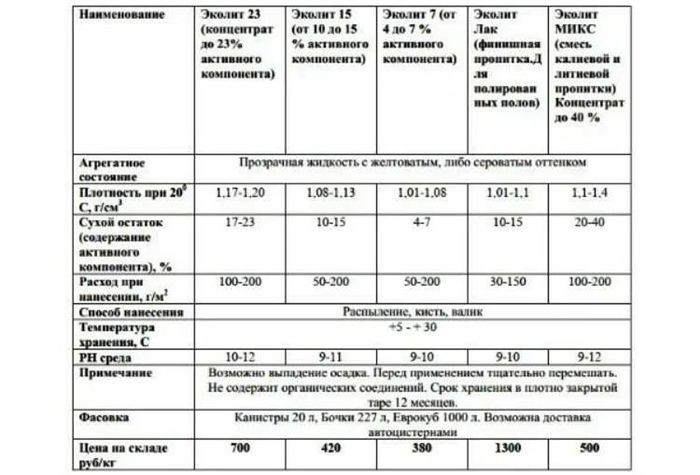
- Organic ones contain acrylic, epoxy resins and polyurethane, which come into contact with concrete or paving stones, fill all external pores, which repels water. The most popular impregnation is FOB-F7 and can be used for any hard surface covering from concrete to granite. Advantages: the highest degree of sealing, chemical and impact resistance, does not accumulate dirt, creates a non-slip surface, tenfold increase in wear resistance, prevents the formation of chips and cracks. Disadvantages: high cost, 6200 rubles./10 l.
- Inorganic silicate potassium-lithium impregnations enter into a chemical reaction with Ca(OH)₂ present in the facing layer under the influence of which hydrosilication occurs. Advantages: durable, high strength 20% higher than original condition, excellent water resistance. Disadvantages: high cost: 700 rubles./kg.
How to choose quality compounds?
The following considerations need to be made in order to choose the mixture for blind area restoration at home correctly:
- type of destruction;
- size of the detected defect;
- conditions for using the blind area.
The primary purpose of deeply penetrating impregnations is to reinforce the concrete surface. Additionally, there are impregnations that harden quickly, enabling you to finish repairs in six to eight hours.
Craftsmen prefer to use liquid casting mixtures when working with blind areas. They have the least shrinkage, higher adhesion, and can strengthen the top layer of the structure.
This section contains a wealth of pertinent and helpful information about fixing the blind areas around the house.
| Advice | Details |
| Clean the Area | Remove debris and dirt from the crack to ensure proper adhesion of repair materials. |
| Apply Filler | Use a high-quality concrete filler to fill the crack, making sure it penetrates fully. |
| Level the Surface | After filling, smooth out the surface with a trowel to make it even with the rest of the blind area. |
| Seal the Repair | Apply a concrete sealant over the repaired area to protect it from water and further damage. |
| Regular Maintenance | Check the blind area periodically for new cracks and address them promptly to prevent bigger issues. |
Maintaining the integrity and aesthetics of your home requires fixing cracks in the blind area surrounding it. You can effectively address these problems and stop additional harm by listening to professional advice. Start by giving the damaged area a thorough cleaning, making sure to get rid of any dirt or debris that might obstruct the repair procedure.
Next, pick a concrete patching compound or sealant that works well. To ensure durability and weather resistance, experts advise using premium materials intended for outdoor use. To create a smooth, even surface, carefully apply the sealant, making sure to completely fill in any cracks.
Preventing future cracks also requires regular maintenance. Examine the blind area on a regular basis, particularly following severe weather, and take quick care of any small problems. You can prolong the life of the repaired area and prevent more expensive repairs by taking preventative measures now.
In conclusion, you can save time, money, and stress by consulting an expert when fixing cracks in the blind area surrounding your home. You can restore this significant component of your home’s look and functionality with the appropriate methods and materials, guaranteeing that it will stay in excellent shape for many years to come.


