
For many years, cinder blocks have been a mainstay in the construction industry, providing an adaptable and reasonably priced building material for a range of applications. These blocks are frequently picked for both residential and commercial buildings due to their dependability and usability. However, cinder blocks have benefits and drawbacks of their own, just like any other building material.
The strength and durability of cinder blocks are two of their key advantages. They are strong enough to withstand harsh weather and offer superior structural support. Cinder blocks also resist fire, which gives any building an additional degree of security.
There are, however, a few disadvantages to take into account. Because cinder blocks can be heavy, handling and transportation can be a little difficult. Additionally, they have a propensity to absorb moisture, which, if improperly sealed and maintained, could result in possible mold and mildew problems.
We’ll go more into the benefits and drawbacks of cinder blocks in this post. Insights from users who have worked with this material will also be shared, giving a comprehensive view of its performance and practical applications. Knowing the whole range of cinder blocks can help you, whether you’re a novice builder or an experienced one, make wise choices for your upcoming construction project.
| Aspect | Details |
| Pros | Cinder blocks are cost-effective, durable, and provide good insulation. They"re fire-resistant and soundproof, making them ideal for construction. |
| Cons | They can be heavy and challenging to work with. Cinder blocks may also absorb moisture, leading to potential issues with dampness. |
| Reviews | Users generally appreciate the strength and affordability but note the need for proper waterproofing to avoid moisture problems. |
- Advantages
- Flaws
- Builders" opinion
- Video on the topic
- Build junk. Cinder block house
- Foam block and cinder block Real tests and disadvantages
- Cinder Block House Review | Proper house construction
- A HOUSE FROM BLOCKS, IS IT WORTH BUILDING, ALL PROS AND CONS.
- Real disadvantages of expanded clay block. What mistakes should not be made when building a house from blocks??
- This is the WORST material for construction?! / PROS AND CONS of building a house from wood concrete
Advantages
Cinder block is a common building material because it offers several benefits.

- Affordable price compared to other wall materials. Cinder block is cheaper than brick. Read more about cinder block prices here.
- Practicality of use in terms of time costs. Due to the large size of the blocks, the object can be erected in the shortest possible time.
- Simplicity of masonry. After a thorough study of the theory, even a beginner can cope with the task.
- Possibility of using load-bearing and non-load-bearing walls for masonry (as part of the construction of low-rise buildings).
- Fire resistance. The material can withstand temperatures up to 800 degrees.
- No shrinkage during operation.
- Wide range of different strength grades. This allows you to choose materials for different tasks and save on construction costs.
- Durability. When purchasing high-quality material, following construction technologies and timely repairs, blocks can last more than 100 years.
- High strength.
- Possibility of use as a finishing material.
- Light weight. This feature allows you to save money on foundation construction.
The advantages of using slag concrete blocks in construction can only be properly realized if you buy certified factory material. The quality guarantee for blocks produced under artisanal conditions is typically nonexistent.
Flaws
Cinder blocks, like any other building material, have a number of drawbacks, such as:
- High moisture absorption rate, which is 75%. Cinder block laying should be carried out only in dry weather, and the unfinished building should be reliably insulated from dampness. It is unacceptable to leave buildings made of cinder blocks without finishing and roofing during the winter period.
- The need for quick and high-quality exterior finishing with carefully thought-out waterproofing.
- Low environmental component.
- Difficulty in conducting internal communications.
- Increased fragility of the material.
- Impressive weight of solid blocks. Their use requires pouring a strong and massive foundation.
- Low compressive and bending strength. This can negatively affect the object when the foundation shrinks or when the ground moves.
- Unattractive appearance of buildings made of unfinished cinder block.
The health of those who live in such buildings may be adversely affected by toxic filler found in cinder blocks if a dishonest manufacturer disregards production technology.
The highest point that a cinder block task can reach is three stories. The material can only be used to build non-load-bearing walls and partitions in multi-story buildings.
Builders" opinion
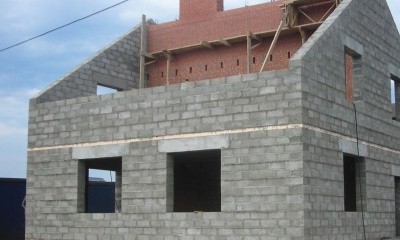
- People who used cinder blocks for construction are satisfied with their performance characteristics. They indicate that high-quality material does not fray or crumble. A comfortable temperature is always maintained inside the room.
- Cinder concrete buildings in regions with low seismological activity have served their owners for more than 70 years. Walls with high-quality external and internal finishing do not get wet, mold and foreign odors do not appear in houses.
- However, there are people who are unhappy with the use of cinder blocks. They claim that the material has an increased background radiation, which makes living in such houses dangerous to health. The presence of foreign impurities contributes to the development of allergies and bronchial asthma. This statement is valid for cheap cinder blocks without quality certificates.
- Also, the disadvantages include significant expenses for finishing materials. Saving on it leads to the fact that the blocks get wet, freeze and crack.
- To avoid problems, experienced owners of cinder block houses advise purchasing only high-quality material and building buildings according to the rules, with accurate calculations.
You can read reviews of cinder block construction here and here.
This video goes into great detail about this building material’s benefits and drawbacks.
It’s evident from examining cinder block’s many facets that they provide a number of benefits for building projects. They are a popular option for many builders because they are reasonably priced, long-lasting, and offer good insulation. An additional layer of safety is added by their fire resistance, which is important in both residential and commercial construction.
Cinder blocks do have some disadvantages, though. They need specific tools and abilities to work with because they can be heavy and difficult. Not everyone finds cinder blocks to be aesthetically pleasing, and further finishing may be necessary to get the desired appearance. Another issue that may arise is moisture absorption, which calls for careful sealing and upkeep.
User reviews point out cinder blocks’ advantages and disadvantages. While some emphasize their robustness and affordability, others draw attention to the difficulties in managing and completing them. In general, the choice to employ cinder blocks ought to be founded on a rigorous evaluation of the particular requirements and limitations of the undertaking.
In summary, cinder blocks are still a good choice for a variety of building applications. Their advantages frequently exceed their disadvantages, especially when it comes to price and longevity. Builders are able to make well-informed decisions that best suit their construction goals by weighing the pros and cons and taking user reviews into account.
Because of their affordability and strength, cinder blocks are a common building material that are used in a lot of construction projects. They do have a unique set of benefits and drawbacks, though. Positive aspects include their strong fire and pest resistance, soundproofing, and thermal insulation. The drawbacks are that they can be bulky, unsightly, and in colder climates, you might need to add more insulation. In this post, we’ll examine the benefits and drawbacks of cinder blocks, present user testimonials, and offer advice on how to complete construction projects with the greatest outcomes.


