
A common source of injuries both at home and in public places is slipping on stairs. Safety is the first priority because even a small mistake can result in catastrophic accidents. Anti-slip pads are a useful tool for improving stair safety.
The purpose of anti-slip pads is to increase traction and lower the possibility of slipping. Wood, tile, and concrete stair surfaces are just a few of the surfaces on which these pads are readily installed. They are made of various materials and styles to fit both outdoor and indoor staircases.
Anti-slip pads not only stop accidents from happening, but they can shield your stairs from deterioration. They are a useful and affordable solution for both homes and businesses because they add a layer of protection that can prolong the life of your staircases.
Selecting the appropriate anti-slip pads can have a big impact on upkeep and safety. You can make sure that everyone in your house or place of business can use the stairs safely and confidently by installing the appropriate pads.
| Topic | Details |
| Benefits of Anti-Slip Pads | Anti-slip pads enhance safety by providing better grip on steps, reducing the risk of slips and falls. |
| Types of Anti-Slip Pads | There are various types, including adhesive pads, rubber pads, and textured strips, each designed to improve traction. |
| Installation Tips | Clean the step surface thoroughly before applying the pads, ensuring they stick properly for maximum effectiveness. |
| Maintenance | Regularly check the pads for wear and tear and replace them as needed to maintain optimal safety. |
- Types of linings, their advantages and disadvantages
- Rubber
- Aluminum
- Abrasive track
- Anti-slip mats
- Self-adhesive tape
- What is better to choose
- Installation rules and features
- Video on the topic
- Installation of anti-slip pads on steps
- Rubber anti-slip mats, step pads. Anti-slip heating coating for porch
- Anti-slip pads on steps
- Anti-slip pads on steps.Kompozit54.com
- Rubber pads on steps
- Anti-slip pads on steps with rubber insert
Types of linings, their advantages and disadvantages
The material that is used to make the linings has a sole bearing on its performance characteristics.
Rubber
Rubber is often used in the production of pads to ensure pedestrian safety when they move on slick surfaces. It ought to be extremely elastic and stop uncontrollably sliding.

Furthermore, the rubber used to make the pads has temperature resistance. Even at -50 o C, it retains its elasticity. It gets compressed in the instant someone walks on it, making it difficult to slide over.

Self-cleaning qualities are added to some rubber models during the manufacturing process. That is, the ice film breaks and cracks even with small deformation, preventing the formation of an ice crust.

Few people are aware of the additional benefit of anti-slip rubber pads on stairs: high shock absorption. This means that even in the unlikely event that someone falls down a flight of stairs, the risk of suffering a serious injury is reduced.

Aluminum
Aluminum profiles are the foundation for the production of combined linings. In other words, a rubber or other non-slip insert is fitted within the profile. The step’s surface can be covered with this design. These kinds of products are very good at preventing uncontrollably sliding pedestrians.


Apart from the conventional flat profile, there are L-shaped profiles available in the market. Stairs with this kind of design are typically found in areas with heavy pedestrian traffic, like the areas at train stations and shopping mall entrances.
This profile can shield the riser in addition to the step’s surface.

Dowels and self-tapping screws hold the aluminum profile to the step. A new rubber component is inserted to replace the worn-out one. Based on empirical evidence, this design can be categorized as one of the most dependable products within its category, which explains its widespread usage.
Abrasive track
This class of non-slip mats comes in the form of tapes that have abrasive particles applied to them or mats with an adhesive backing. A roll is an additional source of the abrasive track supply. You can apply any kind of anti-slip coating with it.

This material is utilized, for instance, in private homes, on stairs with light loads. Apart from stripes, producers have perfected the creation of mixtures that only need to be applied to a predetermined area. The problematic part of the staircase can be used once it has dried.
Anti-slip mats
These matting shield more than just onlookers from trip hazards on slick staircases. Additionally, they gather dirt from people’s shoes as they go up the stairs. Furthermore, carpeting has the potential to be incorporated into interior design.

One piece can be used to make staircase mats. For instance, a polymer-cast object with a working surface composed of spikes or other components that improve the anti-slip properties. Usually smooth, the rear (bearing) side is fastened to the step.
Additionally, there are designs in which compounds—ideally containing abrasive crumbs—are applied to the rubber base. Adhesives, pressure strips, and fasteners can be used to secure staircase mats in place.
Self-adhesive tape
The ability to produce non-slip self-adhesive tape has been mastered by numerous manufacturers. They are made up of multiple layers. putting the polymer base with rubber glue. Use adhesive film to keep it preserved. There is a black abrasive with coarse grains applied to the belt’s exterior.

A layer that is both abrasive and anti-slip. Such a tape has a width of 25 to 50 mm and a length of roughly 180 mm. This tape can be used in practically any climate since it is still functional at temperatures between –29 and +60 o C.
For safe movement, anti-slip pads on the steps are crucial, especially in places where there is a lot of foot traffic and moisture. Extra traction from these pads lowers the chance of slips and falls, which is crucial in homes with young children, senior citizens, or anyone with mobility issues. Installing anti-slip pads is a simple and practical way to improve the safety of your stairs because it can make the area safer and reduce accidents.
What is better to choose
What selection criteria are available for overlays mounted on stairs? The anticipated cross-country ability dictates the kind of pad. If the stairs are in a museum, that’s one thing, but a staircase at a major train station is quite another.
Furthermore, the ways in which the linings are mounted must be considered. Installing products in homes or small offices that require screws or adhesive tape is a simple task.
In crowded areas like shopping malls and entertainment venues, rubber inserts and aluminum profile linings are typically installed. It is acceptable to use solid aluminum linings in these areas. High wear resistance and affordability define this option.
It’s important to consider anti-slip pads’ performance characteristics when selecting them. The steps themselves are shielded from potential harm by the overlays in addition to pedestrians. This is particularly crucial for costly marble or granite staircases.
These items can also serve as carriers of advertising material in addition to being essential components of the interior.
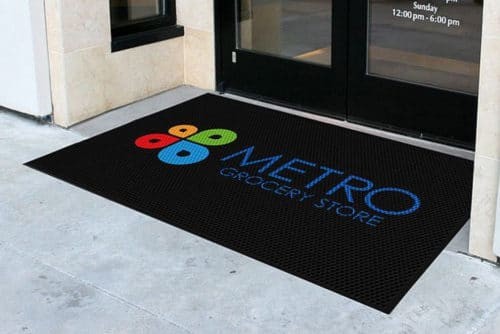
Therefore, we suggest self-adhesive tape for private homes and combined aluminum linings for public buildings.
In relation to the latter, fluorescent, luminous tapes have proliferated lately and serve as both an anti-slip surface and stair illumination, thereby augmenting the safety of stair usage.


Installation rules and features
Installing anti-slip pads on stair steps can be done with:
- adhesive composition applied to the surface;
- self-adhesive tape;
- pressure strips.
The following is the sequence of steps for installing pads.
Markings are made initially. You can use adhesive tape or a construction marker for this. When installing pads, if strips or corners are used, then the locations where holes need to be made in order to install fasteners must be marked. They should be separated by no more than 35 to 40 mm.

It is necessary to put fasteners straight into the tile joint. It makes sense to use narrow construction tape rather than marks, which can be used to indicate the limits of the anti-slip tape, if you intend to install the pad on an adhesive base. It is easily removable once installed.
You can use fasteners or adhesive to install overlays on the steps of a wooden staircase. Additionally, it is more prudent to use dowels if the staircase is composed of concrete.
A quick and easy way to make sure everyone is safe in your house is to install anti-slip pads on your steps. These pads increase traction, which lowers the possibility of slips and falls, particularly in wet or high-traffic areas.
Selecting the best anti-slip pads requires taking into account factors like installation ease, durability, and material. You can find the ideal solution that complements your style and needs with the variety of options available, including adhesive-backed strips and rubber.
Maintaining the effectiveness of your anti-slip pads requires routine maintenance. Periodically clean them to get rid of dirt and debris, and look for any damage that could make them less gripping. Promptly replacing worn-out pads will guarantee ongoing protection.
You’re actively contributing to the creation of a safer environment by including anti-slip pads in your steps. It’s a tiny investment that can protect you and your family from harm and give you peace of mind. Put safety first and take advantage of the extra stability that anti-slip pads provide for your house.


