
Winter is in full swing, but your radiators are barely warming up? Many people are familiar with the situation when the apartment is cold, but heating or electricity bills are only going up. Turning on additional heaters is expensive and not always safe.
But don't despair and wrap yourself in three sweaters. There are many simple and, importantly, economical ways to make your home warmer. Often the problem lies not in the temperature of the radiators, but in the fact that precious heat simply escapes from the rooms.
In this article, we have compiled five practical tips to help you stay warm without spending too much on electricity. These methods are time-tested and do not require large investments, but you will feel the results very quickly.
Method one: seal all the gaps, and it will immediately become warmer.
Up to 20-30% of heat escapes through gaps in doors and windows. Imagine: you are heating the street, not your apartment. Up to 15% of heat is lost through glass and doorways. In total, almost half of your precious heat is lost to nowhere.
Windows are the main enemy. Even plastic windows lose their airtightness over time. The rubber seals dry out, the sashes sag, and micro-gaps appear. It's easy to check: light a candle and hold it up to the frame. Is the flame flickering? That means there's a draft.
What to do: buy a self-adhesive sealant at any hardware store. It costs 100-200 rubles per roll and can be applied in five minutes. Apply it around the entire perimeter of the door, and the gaps will disappear.
For old wooden windows, the old-fashioned method works: cotton wool plus masking tape. Yes, it doesn't look great. But it works. The main thing to remember is that you'll have to peel it all off by summer.
The front door is the second front. Cold air comes in from below, from the entrance hall. Especially if your neighbors' windows are open. Check the threshold: if you can see light or feel air movement, this is a problem.
Solution: a threshold seal. Sold in any hardware store, it is attached with screws or glue. It costs 300-500 rubles and has an instant effect. Another option is a heavy curtain on the front door. It creates an air cushion that keeps the cold out.
Balcony door. If the balcony is not insulated, it is a huge hole in your thermal insulation. Balcony doors usually do not fit tightly, especially if they are old.
What works: a door seal, a thick curtain that reaches the floor. Ideally, a heavy curtain that hangs from the ceiling and does not let air in from below.
The result: after eliminating all gaps, the temperature in the apartment rises by 2-3 degrees. No heaters, no electricity costs. You simply stop heating the street.
Sometimes the radiators are barely warm, and the apartment is still cold, especially when heating rates are rising. Turning on heaters is expensive and not always safe. But there are simple and inexpensive ways to make your home warmer without them: remove curtains and furniture that block radiators, insulate gaps in windows, close doors to prevent air from circulating, hang thick curtains, and use rugs on the floor. These small steps significantly increase warmth and save money — sometimes without even having to call the management company.
Method two: foil behind the radiator works wonders
Radiators heat not only the air in front of them, but also the wall behind them. And the wall is thick concrete that faces the street. So you are not heating your apartment, but the facade of the building.
How it works.
Heat from the radiator spreads in all directions. Some of it goes into the room, some into the wall. The wall heats up and transfers heat to the street. Losses can amount to 20-25% of the total heat output of the radiator.
Partitions can be:
With inserts made of any material. 3. Arches or semi-arches are suitable even for small rooms, and if you combine an arch and a partition, you can choose the most harmonious zoning option, ranging from a clear demarcation to a slightly outlined division. 4. You can also use a column (however, it is not suitable for a small room) or a wrought iron openwork grille.
Consist of panels that move along two rails fixed to the ceiling and floor or only to the ceiling. Such a partition can be easily moved to one side or the other, opening up a full or partial view of the room, and if necessary, areas can be isolated from each other. Easy to install on site. 2. Decorative partitions for zoning space in the form of false walls are most often made of drywall, less often of brick, glass blocks, or wood. Although it is a solid structure, it is thinner and lighter than a solid wall. It can be designed with openings like shelves, in which an aquarium, household items, and similar objects can be placed. If desired, even a small fireplace can be placed in such a wall. Plasterboard and glass blocks or stained glass combine well.
Aluminum;
Wood;
Plastic.
Solid;
Glass;
Made from the following materials:
Openwork; Sliding
A carpet creates an air layer between you and the cold floor. The thicker the carpet, the warmer it is. Even a small 2 x 3 meter carpet makes a noticeable difference. Your feet stop feeling cold, and the room feels warmer.
If you don't have a large rug, at least lay a small one near the sofa or bed. The area where you spend most of your time will become more comfortable.
Curtains on the windows.
Windows are cold surfaces. Even double-glazed windows let in the cold. Thick curtains create an air cushion between the window and the room.
Heavy curtains made of thick fabric work best. Blackout or lined curtain fabric is ideal. Such curtains not only protect against the cold, but also block drafts.
Hang curtains from the ceiling to the floor so that they completely cover the window. During the day, you can open them, and in the evening, be sure to close them. At night, when it is especially cold outside, curtains act as an additional wall.
Blankets and bedspreads.
Thick textiles on the sofa, armchair, and bed create comfort and warmth. Terry cloth, knitwear, and fleece retain body heat for a long time.
Cover the sofa with a blanket and the bed with a warm bedspread. When you sit or lie down, wrap yourself up. Your body warms the fabric, the fabric retains the heat, and you stay warm even if the room temperature is 17°C.
Result: ttextiles subjectively raise the temperature in the room by 2-3 degrees, and in reality, they help to retain heat and prevent it from being wasted. This is not a substitute for heating, but it is an excellent addition.
Method four: control air movement
Warm air is lighter than cold air, so it rises to the ceiling. Cold air sinks. As a result, the temperature is +22°C near the ceiling and +15°C at floor level. You are sitting in a cold zone, while the heat is uselessly hanging around upstairs.
Close the doors.
If you have several rooms, you don't need to heat the entire apartment equally. Close the doors to rooms where no one is currently present. Is the bedroom empty during the day? Close the door. Is the kitchen not in use? Close it.
This is how you create heat zones. The main room (the living room, where you spend your day) heats up faster and retains heat better. There is no need to heat the entire apartment — it is enough to heat one room.
Exception: the bathroom.
If the house has hot water, even without heating, there is always one working radiator in the apartment — the towel dryer. Therefore, keep the bathroom door open (unless, of course, someone is using it). Warm air from the bathroom will spread throughout the apartment.
Another way is to fill the bathtub with hot water and leave the door open. The water cools slowly, giving off heat to the air. However, this method is controversial—the hot water meter keeps running, and the humidity in the apartment increases. But it works in emergencies.
Ceiling fan.
It sounds strange, but a ceiling fan in winter is not nonsense. It mixes the air: warm air sinks down, cold air rises up. As a result, the temperature is equalized throughout the entire height of the room.
If you don't have a ceiling fan, you can use a regular floor fan. Position it so that it blows upward at an angle. The air will swirl, and the temperature will become more even.
Close the ventilation (temporarily).
Warm air escapes through the vents in the bathroom and kitchen, and cold air comes in from the common shaft. If you close the vents, heat loss will be reduced.
But be careful: this can only be done temporarily. Without ventilation, air exchange in the apartment is disrupted, an unpleasant odor appears, and mold can form. Therefore, close the ventilation for a maximum of a few hours when it is particularly cold. Then be sure to open it and ventilate.
Method five: use household appliances as heaters.
Any appliance that consumes electricity generates heat. Light bulbs, computers, ovens — they all heat the air. If used correctly, you can raise the temperature by 1-2 degrees without buying a heater.
Incandescent bulbs.
LED bulbs save electricity, but they do not generate heat. Classic incandescent bulbs, on the other hand, release up to 95% of their energy in the form of heat. A single 100 W bulb is like a small heater.
If you have old light fixtures with incandescent bulbs, don't rush to replace them with LEDs. In winter, they act as an additional source of heat. Turn on all the chandeliers, floor lamps, and sconces, and the room will immediately become warmer.
Computers and laptops.
A laptop under load (games, video editing, heavy programs) heats up considerably. The cooling system expels warm air outside. You can warm the air within a radius of one to two meters from the computer.
A desktop PC heats even more. A powerful video card and processor are all sources of heat. Place the system unit next to where you sit, and you will be warmer.
Oven.
If you have a gas or electric oven, use it for cooking more often. A working oven heats up the kitchen very quickly. After cooking, leave the door slightly open—the warm air will escape into the room.
Warning: do not turn on the oven just to warm up. It is dangerous (especially gas ovens) and uneconomical. But if you are cooking, use the heat to the maximum.
Vacuum cleaner and hair dryer.
Strange but true: a running vacuum cleaner emits warm air from the back of the body. The temperature rises by 0.5-1.5 degrees. A powerful hair dryer also works as a mini-heater for a local area.
Of course, this is not a complete replacement for heating. But if you need to quickly warm up a small space (for example, the bathroom before a shower), you can use it.
What you definitely should NOT do
Some heating methods are not only useless but also dangerous.
- Do not turn on the burners on a gas stove for heating. This is a direct path to carbon monoxide poisoning. A gas stove is not designed for heating. Combustion products should be removed through the exhaust fan, not accumulate in the room.
- Do not use candles as a heater. A dozen candles on the table look beautiful, but they are ineffective and pose a fire hazard. They provide minimal heat and carry a high risk of fire.
- Do not overload the electrical network. If you plug three heaters into one outlet, the wiring may not be able to handle it. This is especially true in older homes, where the wiring is designed for lower loads.
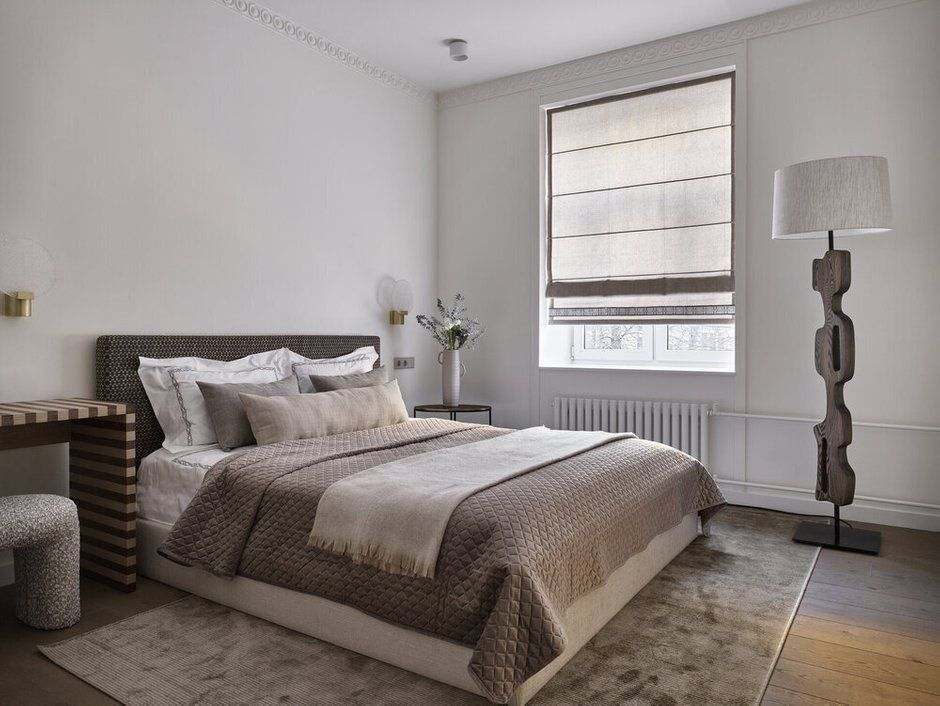
As you can see, even when the central heating fails, we have ways to influence the temperature in the apartment. The main thing is to approach the issue comprehensively: don't just plug the gaps, but make smart use of what you already have.
These methods do not require large investments, but you will feel their effect quite quickly. Heat will stop escaping to the street, and sunlight and household appliances will become your allies.
Try implementing even a couple of items from the list. A comfortable atmosphere at home is often the result of small but effective actions. And best of all, they will not only help you stay warm, but also save a little money when you see the numbers on your next bill.


