
Fiberglass pipes are a flexible option for plumbing and modern construction projects. These pipes, which are made of glass fibers embedded in a resin matrix, provide a special combination of strength and resistance to corrosion. Fiberglass pipes are suitable for both hot and cold water systems because of their composite material, which enables them to withstand extreme temperatures. Compared to conventional materials, their lightweight nature also makes handling and installation easier.
The extraordinary durability of fiberglass pipes is one of their most notable qualities. Fiberglass is non-conductive, unlike metal pipes, which makes it perfect for areas where electrical conductivity might be dangerous. This characteristic lowers maintenance costs over time by extending the pipes’ lifespan and improving safety. Fiberglass pipes are also resistant to deterioration by chemicals, which makes them appropriate for a variety of industrial uses in which corrosive materials are present.
Fiberglass pipes are more adaptable than traditional plumbing. They are extensively employed in infrastructure projects like wastewater treatment facilities because of their exceptional resistance to abrasion and biological growth. Fiberglass pipes are also used in the oil and gas sectors, where they provide dependable performance when moving corrosive fluids in difficult circumstances.
To sum up, fiberglass pipes offer a contemporary solution that combines chemical resistance, strength, and durability. Because of their adaptability, they can be used in a wide range of industrial and construction applications, from massive infrastructure projects to residential plumbing systems. Fiberglass is still essential for improving the effectiveness and dependability of fluid transport systems all over the world as technology develops.
Diameter of fiberglass pipes
Fiberglass pipes come in diameters ranging from 100 mm to 3700 – 4500 mm and beyond, with a typical length of up to 18 m. Pipes can be solid, rectangle, circle, segment, trapezoid, or ring-shaped, depending on the type of cross-section (usually this is a special order with a lot of nuances).
The type of binder is also related to the classification based on diameters:
- GRE pipes have diameters from 5 to 600 mm;
- GRP pipes have diameters from 30 to 4500 mm.
The selection of the necessary pipe characteristics is contingent upon various factors, including the type of raw material, and is linked to the pipes’ operating conditions.

Fiberglass rectangular pipe
Fiberglass pipes with a solid rectangular cross-section are lightweight, visually appealing, and ideal for installing floor elements, supports, and frames. Technology such as pultruded pipes can bear any kind of load, vertical or horizontal. Rectangular profiles are used in a very broad range of applications, including oil and gas, highways, and landscaping.

Fiberglass pipes are durable and lightweight, making them a versatile solution in the plumbing and construction industries. These pipes are perfect for moving hot and cold liquids in residential, commercial, and industrial settings because of their remarkable resistance to corrosion and chemicals, which is bolstered by glass fibers and resin. Their sleek interiors reduce friction losses and encourage effective fluid flow. Fiberglass pipes are used in many different contexts, including sewage treatment, industrial operations, and water distribution systems, where durability and dependability are critical factors. Making educated decisions for contemporary building and renovation projects can be facilitated by having a thorough understanding of their properties and uses.
Application of fiberglass pipes
Fiberglass pipes are used to install networks:
- Water intakes and cold water supply – from main to internal networks;
- Sewerage and storm drainage;
- Drainage networks, facilities for cleaning, reclamation and irrigation.
Pipes have a very broad range of applications, including firefighting, the assembly of light building support and frame structures, the transportation of oil and gas (6 pressure classes and 3 strength classes), and much more. Special orders can be accommodated in the pipe production process.
Characteristics of fiberglass pipes
Pipes made of polyester resins have operating limits of 32 atm of pressure and 90 degrees of temperature; pipes made of epoxy binder have operating limits of up to 240 atm of pressure and 130 degrees of maximum coolant temperature. Simultaneously, the properties of fiberglass’s heat conductivity sometimes allow for the absence of insulation on the pipes’ exterior walls, resulting in nearly zero heat emission. Epoxy resin pipes find application in the oil and chemical industries, as well as in the energy sector (desalination plants and thermal power plant cooling systems). For hot water supply and heating systems in private residences.
The substantial cost differential between glass composites with polyester and epoxy binders is mostly caused by the high cost of the raw materials used in epoxy. Expensive pipes with an epoxy binder are justified when used in a private home’s boiler installation and conventional hot water supply system, but polyester resin pipes with high strength are more than adequate for cold water supply and other communications.
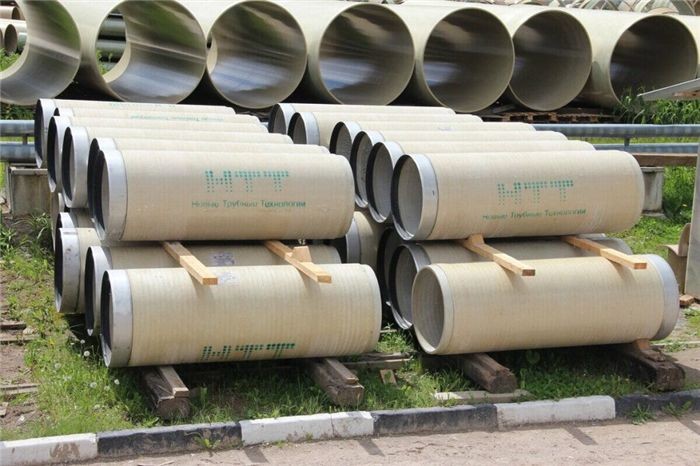
In addition to pipelines, fiberglass pipes are an excellent lightweight and durable material for frame structures – purlins and racks, various supporting elements. The prices for these pipes strongly depend not only on the diameter, but also on the type of binder (pipes made with polyester resins are much cheaper than epoxy), so the interest of private developers and summer residents in a lightweight, aesthetic, high-strength pipe with absolute corrosion resistance is understandable – an almost eternal material. In private housing construction, there is currently no rush to widely use fiberglass pipes, but a simple fact speaks in favor of fiberglass composites: when re-equipping and repairing pipeline systems, many enterprises replace metal pipes with fiberglass ones.

| Fiberglass Pipe Characteristics | Scope of Application |
| Fiberglass pipes are lightweight and durable, resistant to corrosion and chemicals. | Used in industries like oil and gas, chemical processing, and wastewater treatment. |
Fiberglass pipes have special qualities that make them a flexible option for remodeling and building projects. They are perfect for a variety of applications where traditional materials might not be sufficient because of their lightweight yet robust nature. Fiberglass pipes are incredibly strong and resistant to corrosion, making them ideal for use in industrial, residential, and plumbing applications.
The ability of fiberglass pipes to withstand corrosion is one of their main benefits. Fiberglass pipes are extremely resistant to corrosion from chemicals, moisture, and environmental factors, in contrast to metal pipes, which can rust over time. They are ultimately a more affordable option because of this feature, which greatly increases their lifespan.
Fiberglass pipes are also renowned for having a smooth interior surface. This smoothness lowers the possibility of clogs or scaling, which can happen on rougher interior surfaces of other materials, in addition to increasing the flow efficiency of liquids. Because of this, fiberglass pipes are especially well-suited for the transportation of fluid in a range of commercial and industrial settings.
Additionally, compared to heavier materials like metal or concrete, fiberglass pipes are lightweight yet strong, making transportation, handling, and installation easier. This feature reduces labor costs and facilitates the manoeuvrability of fiberglass pipes in confined spaces and during retrofitting projects.
In summary, fiberglass pipes are a strong choice for building and remodeling projects where longevity, resistance to corrosion, and simplicity of installation are critical factors. When it comes to improving the dependability and effectiveness of their plumbing and fluid transportation systems, engineers, contractors, and homeowners all choose them because of their adaptability in a range of applications and long-term cost-effectiveness.


