
Are you considering installing ventilation in your barn? In order to maintain air quality and regulate humidity levels, which can have an impact on livestock health as well as the preservation of stored goods, ventilation is essential. You can accomplish this without having to pay for pricey professional installations by using inexpensive DIY ventilation systems.
Saving money is one of the main benefits of do-it-yourself barn ventilation. If you use readily available materials and straightforward designs instead of hiring a contractor, you can save a lot of money. This makes ventilation projects more affordable for farmers and enthusiasts who want to enhance the atmosphere in their barns without breaking the bank.
Customization is an additional advantage. DIY ventilation lets you customize the system to match the unique design and requirements of your barn. You can modify ventilation solutions to maximize airflow and take care of any unique issues your barn may present, regardless of the size of your farm—from a small hobby farm to a larger agricultural enterprise.
DIY ventilation systems do have some drawbacks, though. The possibility of incorrect installation if not properly planned is one drawback. Inadequately engineered systems might not be able to control moisture levels or remove stale air effectively, which could result in problems like mold growth or animal discomfort.
Notwithstanding these difficulties, a well-designed do-it-yourself ventilation system can significantly improve the general comfort and air quality of your barn. Through an understanding of air exchange principles and the application of tried-and-true design concepts, you can build a system that supports healthier conditions for livestock and stored supplies alike.
Examining the air exchange system’s diagram will show how different parts interact to provide the best possible ventilation. The key components and their locations within the barn will be broken down in this graphic guide, which will also show you how to arrange intake and exhaust points for optimal efficiency and to help you visualize how air flows through the area.
- Work principles
- Advantages and disadvantages
- Where is an air exchange system especially needed??
- Diagram of the system in the animal room
- For chickens
- With pigs
- Video on the topic
- Natural ventilation of the barn .
- 💥Why you CAN’T MAKE VENTILATION FROM A SEWER PIPE!
- Proper ventilation of the cellar, garage, house. Natural air circulation.
- How natural ventilation works? principle of operation
- Natural ventilation – ERRORS
- CHEAP AND RELIABLE VENTILATION IN A PRIVATE HOUSE!
Work principles
- Creation of favorable conditions for animals, poultry, storage of feed, utensils for caring for livestock.
- Removal of various fumes and unpleasant odors that are formed as a result of the life activities of household members.
- Removal of excess moisture so that mold, mildew and other pathogenic microflora do not form on the surfaces of walls, ceilings and floors.
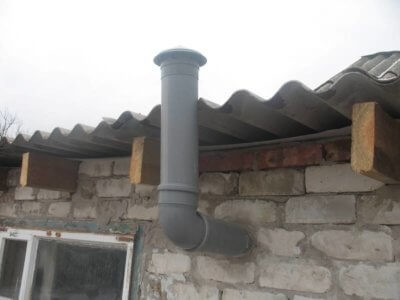
The exchange of air masses is the hood’s basic working principle.
- fresh air from outside the structure is supplied to the supply channel;
- since the temperature outside is most often lower than indoors, cold fresh masses will displace warm exhaust gases upward;
- waste materials will be fed into the exhaust duct in small portions, commensurate with the incoming air flows, and discharged outside the barn.
The type of ventilation is natural and forced (mechanical)
We discuss the viability of building your own ventilation system in a barn in this article. We’ll go over the benefits and drawbacks of do-it-yourself ventilation, emphasizing the advantages of customization and cost savings over potential pitfalls like installation complexity. We’ll also provide you a detailed, step-by-step diagram of an efficient air exchange system that will keep the air quality and circulation in your barn at their ideal levels. The functionality and longevity of your barn space can be greatly increased by knowing how to implement efficient ventilation, whether your goal is to better preserve stored goods or to improve conditions for livestock.
Advantages and disadvantages
- the construction will require a minimum of materials and tools;
- the action lies in the difference in temperature and speed of air masses above the elevated pipe;
- no need to supply electricity, which means savings on wiring, power supply, additional devices for switching on and transmitting electricity;
- one of the disadvantages is poor traction in case of calm weather or hot climates, when the temperature outside the barn is equal to or higher than the microclimate inside the room.
- its organization will contain exhaust and supply pipes, wiring, electrical devices for ventilation control, a mechanical fan;
- it will be necessary to supply electricity to such an outbuilding, which implies entering this fact into the documentation and will increase energy costs;
- to work you need to have a large set of tools and skills, since you will need to connect electrical appliances and the household network if it was not connected to the building;
- in case of poor natural ventilation or unsuitable weather conditions, good draft can be organized for the effective movement of air masses;
- the intensity of elimination of unpleasant odors and moisture is regulated by a person, which is more convenient.
Financial constraints, the tools at hand, and electrical work experience all play a role in the type of ventilation that is selected because mechanical ventilation is more efficient at what it does.
Where is an air exchange system especially needed??
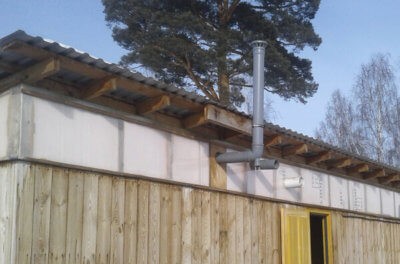
Any structure housing birds or animals must adhere to microclimate regulations. This will guarantee the livestock’s excellent productivity and well-being. Sheds are constructed to resemble fully enclosed rooms with a single entrance and a tiny window opening. The door and window provide organized ventilation, but there is a chance of draft, which poses a risk to animals and poultry because of the prevalence of diseases and decline in livestock. The following guidelines must be followed when determining a barn’s ventilation system:
- The frequency of air exchange in a room with animals or birds must be at least 4 per hour, which requires a complete change of air (4 times) + 15–25% reserve. For example, if the dimensions of the building are 2.4 x 3.5 x 5 m, then the volume will be 42 m 3; in a 4-fold air exchange, a ventilation system capacity of 168 m 3 / hour will be required with an increase of up to 40 m 3 .
- Temperature conditions depend on the type of animals and birds that inhabit the barn, so the following indicators are required: for chickens – 10–15 °C, for rabbits – 9–16 °C, for goats – 5–18 °C, for sheep – 3 –14 °C, for cows – 8–25 °C, for pigs – 8–15 °C. Temperature ranges are winter based on the maximum permissible upper limit. If calculations based on the air exchange rate in the barn are not able to maintain such microclimate indicators, additional adjustments must be made.
- The humidity level should also be limited: for chickens and rabbits – up to 70%, for goats – up to 75%, for sheep – up to 70%, for cows – within 50-85%, for pigs – up to 80%. Ventilation should provide optimal conditions, without drying out the air, so that animals and birds feel comfortable.
For large complexes, all the aforementioned standards apply; however, comparable indicators can only be attained at significant cost for households. As a rough guide to the ideal microclimate, use this information.
Diagram of the system in the animal room
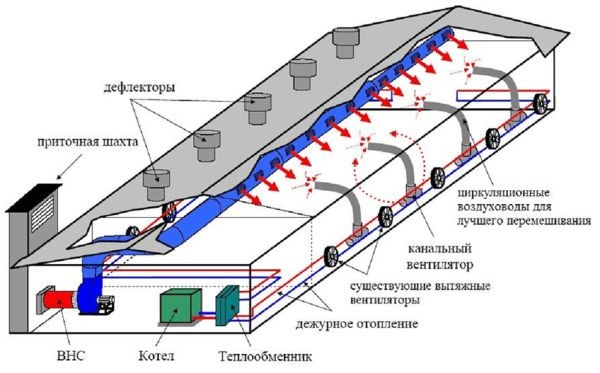
The requirements for microclimate indicators, such as temperature and humidity levels, as well as the technique for laying supply and exhaust channels (how to arrange supply ventilation with your own hands?), are necessary to organize air exchange in a room for animals and chickens. Prior to building the system, calculations must be made because they will affect the installation’s complexity, the quantity of material required, and the design itself.
For chickens
For a limited number of birds, they typically install natural ventilation or a supply and exhaust system, which can be completed quickly and inexpensively while guaranteeing high efficiency in preserving the ideal microclimate in the chicken coop (how to install ventilation with your own hands?). Large facilities housing a sizable flock of chickens have mechanical systems installed.
Preventing drafts is the primary method of allowing natural ventilation in small chicken coops. In order to accomplish this, you must install a window on the room’s opposite wall and multiple through holes above the door.
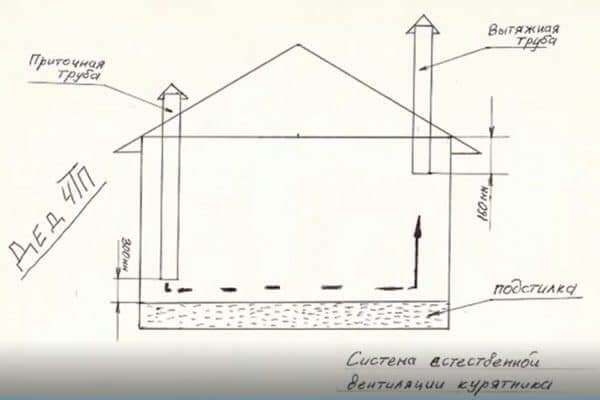
Then, without affecting the birds’ roosts, air exchange will take place in the middle of the chicken coop. But since the chicken coop will require extra heating during the winter, this solution won’t work. A supply and exhaust system manages ventilation throughout the year; its design is contingent upon the specifications of the space, environmental factors, and bird population. Following the computations, you must create a schematic diagram showing the locations of ventilation ducts and other components in the following order:
- To organize an exhaust and supply channel you will need 2 PVC pipes with a diameter of up to 0.2 m and a length of no more than 2 m.
- Above the bird"s perches in the wall at a level of 0.3 m from the ceiling, a hole is made for the exhaust pipe.
- In a place with the rarest visits from livestock, a hole is made for the supply channel at a distance of 0.2 m from the floor.
- The height of the exhaust pipe must be at least 1.5-2 m from the point of exit from the wall (what are the features of installing ventilation outlets?).
- To increase draft and prevent drafts, a deflector is installed on the outlet channel.
- Protection umbrellas are installed on the outside of the pipes to prevent precipitation from entering the ventilation ducts.
With pigs
- From a pair of fans located near the roof and in the window opening. The main condition is to maintain the same power of the devices, so that drafts are not created, and the air exchange is uniform throughout the entire volume of the room. An additional advantage is the ability to switch the rotation speed of the blades into several modes for more efficient and comfortable use of the system.
- Installation of dividers and grilles to suppress drafts and protect the blades from contamination.
- Plastic or metal pipes in a square or round section must have an area of at least 62 cm 2 with a length of 2 m (how to make ventilation from plastic pipes with your own hands?).
- Holes are made at the bottom and top of the walls for air ducts, which will be covered with gratings on the inside of the room, and will be led out with pipes to the outside (you can learn about the important features of installing ventilation in the wall with your own hands, and also see the laying diagram here).
- Metal brackets are used to securely fix the channels.
- To regulate the intensity of air flow and block it, it is necessary to install shields at the entrance to the channels.
- The draft increases due to the installation of a deflector above the air duct, which protects the pipe from debris, leaves, dust, and dirt.
It is imperative to preserve the air ducts’ vertical orientation and plan for their shielding from ambient moisture. Because of the temperature differential between the pigsty and the outside, extra insulation of the pipe is needed when setting up an exhaust duct in the roof. This will prevent condensation from forming on the pipe’s surface during the winter.
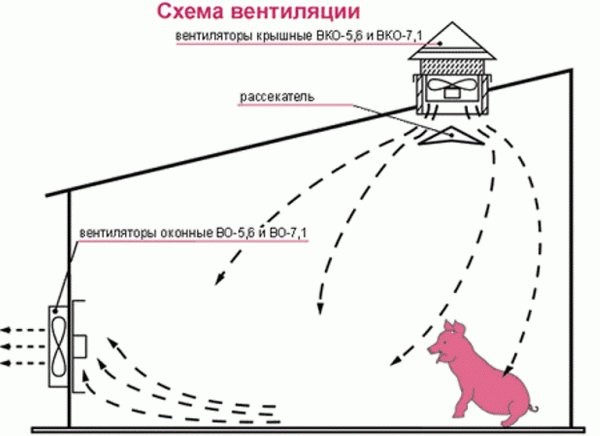
In order to maintain the volume of air and prevent it from being pumped into or out of the room too quickly, if a fan is installed on the exhaust ducts, a device of the same capacity must be installed for the supply pipe. After that, the animals will have ideal microclimate indicators and comfortable surroundings. We also recommend watching this educational video about setting up ventilation in a pig barn:
| Pros | Cons and Considerations |
| 1. Cost-effective: DIY ventilation systems can be built using affordable materials. | 1. Skill and time required: Building an effective ventilation system requires some expertise and time. |
| 2. Customizable: Tailor the system to fit the barn"s specific layout and ventilation needs. | 2. Maintenance: Regular upkeep and cleaning are necessary to en Ensure that the DIY system meets local building codes and safety standards. |
Maintaining adequate ventilation in your barn is essential to keeping animals healthy and protecting the building’s structural integrity. The main benefits of DIY ventilation systems are their affordability and adaptability to your barn’s unique requirements. Strategically placing vents and fans will control airflow, stop moisture from accumulating, and enhance air quality.
The cost-effectiveness of DIY barn ventilation is one of its main advantages. By building your own ventilation system, you can cut installation costs and customize the layout to suit your spending limit. You can modify the system to fit the size and design of your barn by selecting materials that are easily accessible.
To guarantee efficacy, DIY ventilation systems must be carefully planned and implemented. Inadequate ventilation or fan noise are potential consequences of improper installation. It’s critical to adhere to recommendations for fan and vent sizing based on the capacity of the barn and the number of animals housed within.
An efficient do-it-yourself ventilation system usually consists of fans or exhaust vents to remove stagnant air and strategically positioned intake vents to bring in fresh air. Drawing a schematic of these elements makes the airflow pattern easier to see and guarantees even distribution throughout the barn. When placing vents for maximum efficiency, take into account variables like the direction of the prevailing wind and seasonal weather variations.
To sum up, do-it-yourself barn ventilation systems are a workable way to maintain a healthier atmosphere for animals and enhance air circulation. Although they are affordable and easily customised, their maximum effectiveness necessitates meticulous planning and strict adherence to installation guidelines. The animals’ health and well-being can be guaranteed by installing a well-designed ventilation system and meeting your barn’s unique airflow requirements.


