
When working on projects involving water, soil retention, and foundation support, sheet piling is a crucial technique in the construction industry. To create a continuous barrier, interlocking sheets of material are driven into the ground. This technique is essential for maintaining the stability and safety of building sites by stopping soil movement and water seepage.
Sheet piling comes in a variety of forms, each ideal for a particular use. The most popular sheet piles are made of steel because of their strength and longevity, which makes them perfect for heavy-duty projects. Additionally common are composite and vinyl sheet piles, particularly in areas where corrosion is an issue. Timber sheet piles can also be utilized in less demanding or temporary applications.
Planning ahead and having the appropriate tools are essential when installing sheet piling. Usually, the procedure starts with impact hammers, hydraulic presses, or vibratory hammers being used to drive the sheets into the ground. The requirements of the project and the type of soil influence the equipment selection. Making sure the sheets interlock correctly is crucial to building a continuous, strong barrier.
In general, sheet piling offers a flexible and efficient way to address a variety of construction-related issues. Whether you’re working on foundation support, retaining walls, or waterfront projects, knowing when, why, and how to install sheet pilings will greatly improve the success and safety of your construction projects.
| Necessity | Types and Methods of Installing Sheet Piling |
| Prevent Soil Erosion | Steel Sheet Piles: Driven into the ground using vibratory hammers |
| Stabilize Excavations | Concrete Sheet Piles: Precast and inserted into a trench, then filled with concrete |
| Water Retention | Vinyl Sheet Piles: Lightweight and installed by driving or pressing into the soil |
| Support for Structures | Wooden Sheet Piles: Typically used in temporary structures, driven manually or with machinery |
- What it is?
- Building regulations
- Varieties
- Larsen tongue and groove
- Metal tubular welded
- Wooden
- Polymer
- Reinforced concrete
- Used tongue-and-groove technologies
- Vibratory driver
- Driving with a hydraulic hammer
- Drilling with leader drilling
- Screwing and pressing, static pressing
- Submersion dive
- Calculations
- Stages of work
- Strengthening
- Installation of anchors
- Spacer mounts
- Cantilever type fencing
- Common mistakes
- Creation Cost
- Video on the topic
- Calculation of the sheet pile wall of a 9 m pit for strength, rigidity with spacers and ground anchors
- Technology for constructing sheet piling from Larsen sheet piles Vibratory loader ICE 44B
- What is a Larsen tongue??
What it is?
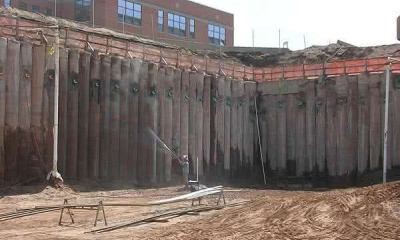
A solid wall composed of identical components joined together is called a sheet piling.
The structure’s ability to sustain large loads and continue serving as a dependable reinforcement for the pit’s walls is made possible by the connecting of individual tongues.
The use of sheet piling on poor soils is made possible by increased strength and stability:
- sandy,
- swampy,
- with high groundwater levels.
Certain varieties of sheet piles are employed to fortify the shoreline. They are frequently utilized for large pits that are deeper than five meters.
Building regulations
SP 45.13330.2017 governs how earthen structures are arranged. It is necessary to consider intersections with existing communications when installing sheet piling fences and performing other construction work in compliance with the document’s requirements. Main pipelines, power cables, and communication lines require special attention.
SNiP 12-04-2002 Although "Occupational Safety in Construction" does not specify how to reinforce the steep walls of pits and trenches, it does forbid work in these excavations without further wall strengthening if the depth of the walls is greater than:
- 1 meter, when working on sandy soil;
- 1.25 meters, when building in sandy loam;
- 1.5 meters for clays and loams;
- no more than 2 meters for dense soils.
Also, GOST R 57365-2016 "Sheet piling walls" regulates how fencing structures are arranged. Guidelines for generating work.
This document suggests marking individual piles, preparing the construction site for the installation of sheet pilings, and conducting engineering surveys to ascertain whether sheet pilings are necessary.
Varieties
Pit fencing is made from a variety of sheet pile types. Every variety has unique qualities and functions, and the tongue and groove type may restrict the applications of certain installation technologies.
Larsen tongue and groove
This metal profile is referred to as "trough-shaped" because of its unique shape. Because the tongue and groove edges are locked, the fence has a sturdy construction. The length of a profile can reach 35 meters. The thickness ranges from 1.5 to 2.3 cm, while the width is 0.8 m.
This kind of tongue and groove comes in a variety of models that can vary in size and shape. L5 is one of the models.
- Strength – 800 kN/m.
- One linear meter of profile weighs 100 kg.
- The material used is St3 or 16ХG.
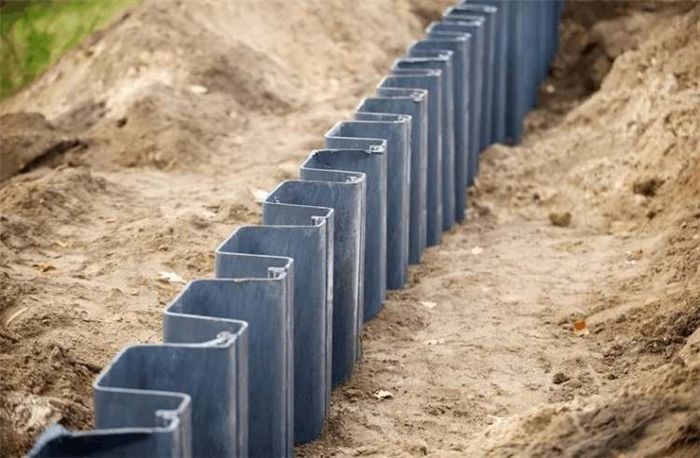
Generally, vibrating machinery is used to install Larsen sheet piles. Scope of application: complex and highly complex objects. exhibits well in shady, loose soil and shields pits from groundwater.
The product’s drawbacks include its high price and the need for more accuracy during installation than when using other tongue types.
The Larsen tongue has numerous analogues in contemporary steel tongues. Their shapes and designs of locks, which enhance their strength properties and make pile driving easier, may set them apart from it.
Other configurations of steel sheet piles are functionally identical to the Larsen sheet pile in terms of both properties and purpose.
Metal tubular welded
Tube welds are a unique kind of metal steel tongues. Their shape sets them apart from their counterparts, and they are not like Larsen tongue and grooves in that they have a multiple-fold increase in load resistance. Long service life is an additional benefit. One of the drawbacks is that mounting the device on steel pipes is very expensive.
Wooden
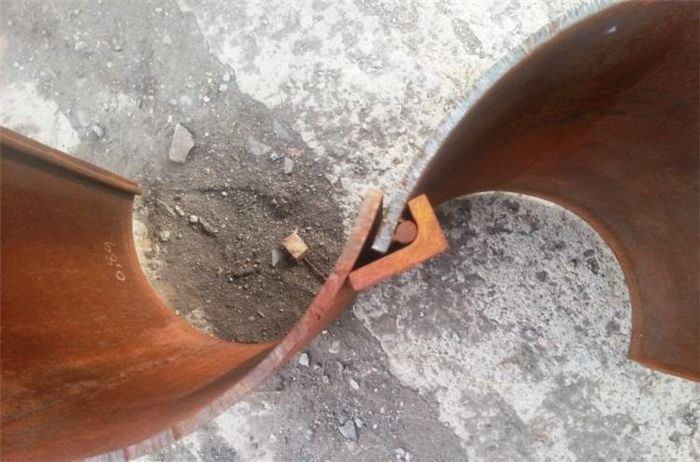
Wooden tongues are the most ancient kind. Building fences with logs, planks, or other wood is permitted. The components are arranged in one or two rows, closely spaced apart, and submerged in the earth to a depth of six meters.
Each component of a fence constructed of specially treated wood has a protrusion and a groove that let you join the structural pieces together.
Principal benefits:
- availability of material,
- its relatively low price,
- Possibility of installation without the use of special equipment.
When compared to metal and plastic tongues, the installation process is more complicated, and the tongues are not as strong or resistant to environmental changes.
Polymer
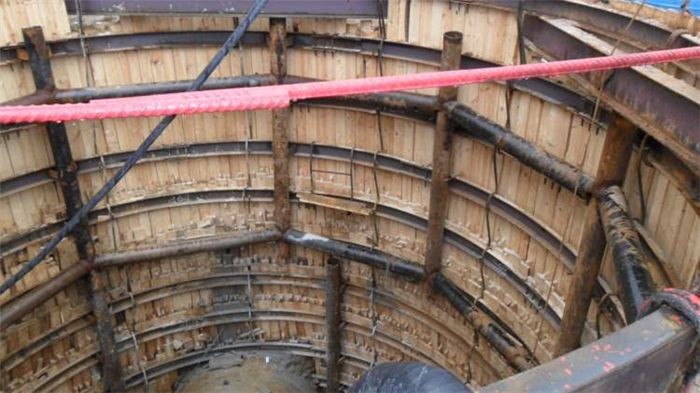
Polymer-based elements can serve as an alternative to metal tongues. PVC is the most widely used material for fencing.
They are more resilient to mechanical stress and have heightened resistance to corrosion. Because PVC panels are lightweight, installing them is simpler and takes less time.
This kind of sheet piling is typically used to reinforce coastlines, equip items near salty seawater, and in other similar situations where there is increased exposure to harsh environments, particularly near bodies of water. Vibration or pressing is the installation method. Unfit for use as a vehicle.

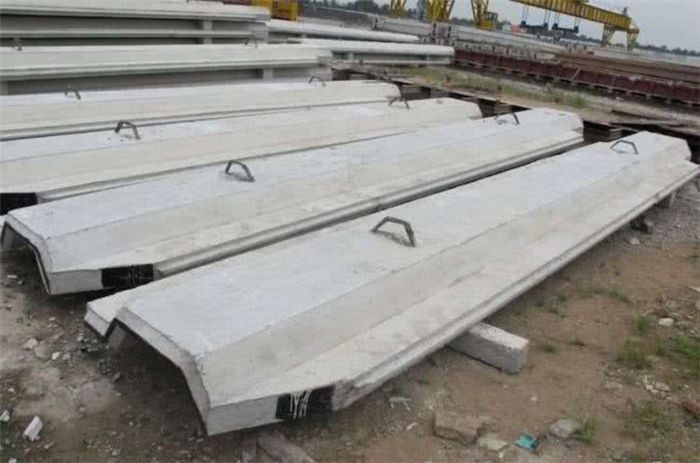
Reinforced concrete
Constructed with reinforced concrete. You can join neighboring tongues in the fence by using the grooves on the edges. Length at maximum: 16 meters. They are distinguished by their large weight, propensity to fracture, and loss of integrity as a result of mechanical harm.
After construction, the buildings become the foundation’s outer perimeter, making dismantling impossible. utilized when building hydraulic structures.
Used tongue-and-groove technologies
The primary kinds of sheet pile driving methods, which can be applied singly or in different ways:
- impact method;
- vibration method;
- pressing.
A variety of machines are employed in this task. Every technology has unique requirements for the apparatus. The most widely used measurements are:
- Low-frequency vibratory machines (9-10 Hz, force up to 1700 kN).
- Medium-frequency (10-30 Hz, force 270 kN).
- High-frequency units with the ability to adjust the imbalance.
- High-frequency vibrators with imbalance adjustment and non-resonant on-off phases.
- Pressing systems.
- Mechanical hammers.
- Air hammers.
- Hydraulic hammers.
- Diesel hammers.
The most efficient way to install sheet piles to a specific depth is by vibration, and vibrators can achieve excellent accuracy by using a pile driver.
Vibratory driver
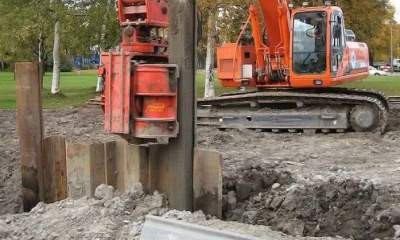
The vibration driving method lessens the likelihood of pile warping and increases installation accuracy. For work, vibrating heads mounted on construction machines are employed.
It is attached to a tongue and groove before it works. The density of the soil lowers as a result of the equipment’s frequency vibrations, and the pile eventually sinks to the necessary depth.
Principal components of the unit:
- vibration exciter with two or four electric motors;
- dynamic impact absorber;
- hydraulic head.
Vibrating machines can also negatively affect nearby structures, even though their operation has less of an impact on the surrounding area than driving piles. When it travels through the earth, it is well absorbed by building foundations and spreads to other supporting structures, which may ultimately cause those structures to collapse.
When high-frequency settings are used, the vibrations’ detrimental effects on neighboring buildings are greatly reduced.
Driving with a hydraulic hammer
When it comes to installing sheet piling in cohesive soil, dense sand, gravel, or above groundwater, vibration methods are not effective. Impact methods of pile installation work better in this situation.
A hydraulic hammer, which is a rod with a striker mounted vertically, can be used for work. The tongue is driven into the ground by the striker as it travels along the rod.
This is the most straightforward and affordable method of installing tongue and groove, but it cannot be used in areas with high population density or in close proximity to historical and architectural landmarks.
Impact loads are transferred from surrounding structures to the soil, weakening foundations and other load-bearing constructions and possibly causing structural deformation.
Drilling with leader drilling
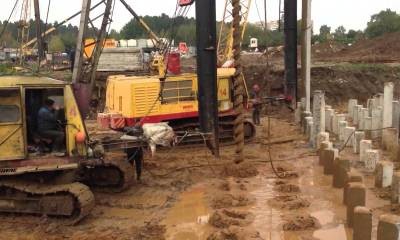
Leader drilling technology is used to expedite the process and make pile installation easier.
This is accomplished by using an auger to locally loosen the soil, resulting in a well with low soil density. Mobile drilling rigs are specialized equipment used in the drilling process.
When working on frozen and dense soils, where its application is clearly necessary, this method is employed with success. When building on low-density soils, leader drilling is necessary because vibration and impact methods of immersion are impractical due to the high risk of pit wall collapse.
Preliminary drilling helps to ensure the accuracy of the pile installation by pre-setting the trajectory of its immersion in areas with high groundwater levels.
Screwing and pressing, static pressing
Driving and vibratory driving can have far-reaching and detrimental effects on the surrounding area due to the vibration and noise effects.
Building structures that are vulnerable to these kinds of impacts will sustain damage if they are close by. The effect is more obvious if the buildings are situated on loose, sandy soils.
When vibrating, water-saturated sand tends to become compacted, causing the soil to sag and eventually destroy the foundation of nearby structures.
Using the tongue-pressing or screwing methods is safer in this situation. Ideal for low-density soils such as sandy soils, clays, and loams.
The primary benefits of the approach are:
- No shock or vibration impacts on nearby buildings.
- Low noise level during operation.
- The likelihood of damage to the pile is reduced, as, for example, with the driving installation method.
One of the drawbacks is that the equipment is bulky and heavy, making it challenging to move and prepare for use. Large objects or buildings are the only things constructed using this method because it requires multiple trucks to transport all of the unit’s components, which raises the cost of construction.
Submersion dive

Undermining and explosive drilling are examples of auxiliary techniques that can be used in challenging situations where soil passage is challenging.
An efficient way to install sheet piles in high-density soils is by underwater diving under high pressure.
The method is using nozzles close to the pile’s base to introduce a tiny amount of water or a unique solution.
The degree of soil erosion can be effectively controlled thanks to low fluid consumption. As a result, the adverse effect is limited to the sheet pile’s movement and has only a minor impact on the soil’s strength.
Use water with low pressure when working in dense soil. In this instance, water has no effect on the soil’s characteristics and does not cause it to sink.
Here, flushing is typically employed as a supplementary task when piles are driven vibratorily. When washing is combined with high vibration exposure, it works especially well.
Calculations
Before beginning the process of digging a pit, sheet piling is made. The primary load-bearing components are driven into the earth. The system is in equilibrium at the beginning, and the soil applies equal pressure to the sheet pile from both sides.
As soon as the excavation process starts, the pressure inside the pit decreases on one side due to a decrease in soil volume. When the equilibrium is upset, pressure from the surrounding dirt starts to build up on the fence. Because of this, it’s essential to compute the sheet pile beforehand in order to determine the maximum load it can support.
The necessary immersion depth and cross-sectional dimensions are ascertained during the computations. They have to be set up so that the fence keeps a certain margin of safety in addition to remaining stable and maintaining the soil’s equilibrium.
There are two ways to do calculations: analytical and graphic-analytical.
The condition Mu≤(m/yn)Mz is used to calculate the sheet piling parameters, where:
- Mu is the moment caused by the force of soil pressure on the sheet piling and contributing to its overturning;
- Mz is the moment of resistance to overturning, which works due to the pinching of the sheet piling in the ground;
- m – coefficient characterizing the operating conditions of the sheet pile in the ground; for soft soils the value is taken equal to 0.7;
- yn – reliability indicator, for dry soil is taken equal to 1.1, for the case of high groundwater – 1.2.
The load-bearing capacity of the sheet pile must be calculated using the general formula for calculating the load-bearing capacity of piles, F= yc(ycrR·d + V·∑ ycri·fi·li), in order to ascertain the moment of resistance to overturning. Where:

- yc – coefficient characterizing the work of the pile in the ground;
- ycr – coefficient that determines the resistance of the soil under the sheet pile;
- R – soil resistance under the sheet pile;
- d – diameter of the supporting sole;
- V is the perimeter of the sheet pile section;
- ycri – coefficient characterizing the work of soil on the side surfaces of the sheet pile;
- fi – soil resistance on the side surfaces of the sheet pile;
- li – length of the side faces of the tongue.
The coefficient values are calculated individually for each type of tongue and groove and are derived from the pertinent regulatory documents. In order to satisfy condition (1), the final calculations are performed by creating diagrams and choosing the driving depth. In addition, during the computations, the wall, beams, spacers, and the tongue itself must all be examined for strength and lock rupture.
Stages of work
Tongue and groove installation can be done in a few ways:
- driving,
- using low-frequency or high-frequency vibrations,
- pressing,
- screwing,
- by erosion method.
The impact of the various technologies varies and is determined by the type of soil and construction conditions. However, the installation principles are essentially the same and entail submerging the pile in the ground in one manner or another.
Consequently, the overall process is kept in place, and the modifications pertain to a few aspects of using this or that technology:

- Site preparation, placement of special equipment, delivery of sheet piles;
- Material is distributed along the perimeter of the pit. Then markings are made, the installation location of each element is determined, slinging is performed and each pile is delivered to the intended installation site;
- The tongue and groove are aligned strictly vertically, and the head of the loader is mounted;
- The pile is installed using the impact method, pressing or vibrating it into the soil. During the installation process, centering is carried out;
- If Larsen tongue and groove is used, then the grooves of each subsequent pile are inserted into the previous one, thus forming a lock. To minimize friction in the lock, lubricant is used.
The upper portion of the profile may distort if Larsen tongue and groove are used frequently. Cutting it off is advised if you want to keep using the element.
The monitoring of the sheet pile’s immersion depth occurs following its installation. If there is more than the maximum allowable deviation between the actual element positions and the design value, the sheet pile will be taken down and reinstalled.
Strengthening
There is a significant risk of subsidence, deformation, and even sheet piling collapse when construction is done on soft soils. It must therefore be reinforced even more. The stability of sheet piles has been improved by the development of several efficient technologies.
Installation of anchors
Using unique anchors to reinforce the structure is a common technique for installing sheet piling. They are placed in soil that is not in the areas where sheet piles and soil actively interact. A single anchor of this type can support loads of up to 500 kN.
The entire pit’s perimeter is reinforced with elements; there are one to three meters between neighboring anchors. The elements are installed at an angle (from 30° to 60°) to maximize the effect.
Buried beneath the earth, each anchor is a reinforced concrete construction. To lay it, a well is dug and into which traction and metal fittings are subsequently inserted. Concrete is then poured into the well. After the solution has solidified, the tongue and groove are joined by the rod, which is then inserted through a hole created especially for it and secured with fasteners.
This approach requires meticulous attention to detail and high precision in all work, which adds to the labor costs and raises the overall cost of building the facility. Anchors are therefore only inserted in situations where the pit’s size precludes the use of spacer elements.
Spacer mounts

If the space between the pit’s opposing walls permits it, spacers are installed. The type of soil and spacer being used determine the maximum distance that can be allowed.
For this purpose, metal pipes are usually used, spaced 4 to 6 meters apart and installed in multiple tiers. Special racks composed of tongues or I-beams are used if the spacers are long.
Increased metal consumption is a characteristic of this strengthening technique. Inventory frames can be used to lower this parameter. Inventory panels are positioned on the fence tongues in this instance. You can use cantilever fastening of the tongues to avoid the need for spacers if the pit is small and the soil is dense.
Cantilever type fencing
Sheet piles set into the ground are acceptable if the pit is less than five meters deep. Make sure the element is firmly pinched and does not have a tendency to collapse because its lower portion is submerged in the soil beneath the excavation’s bottom.
In soft soils, sheet piles are buried more than two-thirds of the pit’s height when they are installed. A strapping frame composed of beams of different sections is mounted on top of the fence to strengthen the structure.
It is essential to forbid moving heavy machinery close to the pit when using this strengthening technique. Furthermore, storing or positioning building supplies close to the fence is not advised.
Sheet piling is necessary to support excavation sites, stop erosion, and stabilize soil during building projects. Steel, vinyl, and wood sheet piling are among the various varieties available; each is appropriate for a particular set of circumstances and applications. When installing sheet piling, the sheets are pressed into the ground with hydraulic jacks, vibratory hammers, or even drop hammers in cases of more difficult soil. Comprehending these techniques and selecting the appropriate one guarantees the security and accomplishment of your building endeavor.
Common mistakes
Frequently, when setting up the foundation pit, issues come up that are challenging to resolve. Because of this, you should be careful to adhere to building codes and regulations in advance:

- Sometimes, after installing a sheet pile, it is discovered that its immersion depth does not correspond to the design. This leads to a decrease in the stability of the structure, which increases the risk of collapse of the pit walls. In this case, it is necessary to remove the tongue and mount it again.
- Gaps between adjacent fencing elements – there is no strong lock connection. This leads not only to deterioration of the waterproofing of the object, but also reduces the strength of the fence. The deficiency can be eliminated by reinstalling the fencing elements.
- As a rule, the sheet piling penetrates the soil several meters deeper than the level where the bottom of the pit is constructed. This poses a danger if there are communications or structures under the pit that are unknown to the builders. If the surveys were not carried out well enough before the start of work, this could lead to a serious accident, which could result in significant financial losses.
Every step of the construction process needs to be meticulously planned because the cost of fixing mistakes can quickly mount up. Additionally, you ought to handle all technological tasks related to installing sheet piling for a pit with caution.
Creation Cost
Knowing the type of sheet pile, the pit’s perimeter, and its depth are necessary to determine how much making sheet piling will cost. After that, figuring out how many components will be required for building won’t be too tough.
For example, you would need roughly 240 elements totaling about 657 tons to build a pit with a perimeter of 120 meters using Larsen L5 sheet piles.
The values obtained will enable you to calculate the delivery costs: the mileage is determined by the distance to the location of the under-construction facility, and the number of flights is based on the vehicle’s carrying capacity. The same methodology is used to calculate the cost of loading and unloading operations.
The cost of installing sheet piles is determined by the quantity of linear meters of the sheet pile being loaded (knowing the depth of the designed pit will be helpful in this regard), as well as by looking at the rates charged by the construction companies that provide these services.
The labor costs range from 450 rubles per linear meter on average.
This section contains all of the most significant and practical information regarding the foundation pit and its evolution.
Sheet piling is a crucial technique in contemporary construction, offering a dependable way to support excavations, create retaining walls, and prevent flooding. Its importance cannot be emphasized, particularly for projects where soil stability and water management are crucial. Strong barriers that guarantee safety and structural integrity can be built by construction teams using interlocking steel, vinyl, or composite sheets driven into the ground.
Sheet piling comes in a variety of forms, each ideal for a particular use. Because of their strength and longevity, steel sheet piles are the most widely used; this makes them perfect for waterfront structures and deep excavations. Sheet piles made of vinyl and composite materials are resistant to corrosion and are frequently utilized in settings where exposure to chemicals or water is a concern. Selecting the right kind of sheet piling will be made easier if you are aware of the particular requirements of your project.
Sheet piling installation calls for specific tools and knowledge. The three main techniques are hydraulic presses, impact hammers, and vibratory hammers. Every technique has benefits, and the selection of a method is contingent upon the soil characteristics, project scope, and ecological factors. For the sheet piling structure to be effective and last a long time, proper installation is essential.
In conclusion, sheet piling is an essential part of many building projects because it provides strong support and defense in difficult settings. You can achieve a safe and long-lasting solution for your construction needs by selecting the appropriate sheet piling type and using the proper installation technique. Sheet piling offers the strength and stability required for success, regardless of the size of the waterfront development or the small-scale excavation you are working on.


