
Comprehending the expenses associated with construction or renovation projects is essential. In many construction projects, sand blocks—also called concrete blocks or cinder blocks—are a necessary component. They are adaptable and utilized for a variety of purposes, including walls and foundations. Effective budgeting is aided by understanding the cost of sand blocks and how to calculate their prices.
Sand block prices can differ depending on a number of factors, including supplier, location, and quantity ordered. Prices typically vary by block or by cubic meter of blocks. Purchasing in larger quantities can frequently result in lower unit costs because suppliers frequently offer bulk discounts. The state of the market and the accessibility of raw materials can also affect prices.
The cost of sand blocks can be computed using an easy method. First, figure out how many blocks you’ll need for your project by calculating how many blocks are needed for every square or linear meter of wall. To find the overall cost, multiply this by the block prices per unit. Add on extra expenses, such as delivery fees if necessary.
For instance, if constructing a wall that is 10 meters long and 2 meters high is required for a project, and the blocks cost $2 each, you would multiply the total cost by the number of blocks required (10m x 2m x blocks per square meter) to get the overall cost. This provides you with a baseline estimate prior to accounting for any additional expenses.
- What does it depend on?
- Dimensions and values
- What affects the cost of masonry made of cement-sand blocks?
- How much do specialist services cost??
- How much is needed for a box at home??
- Calculation for a residential building
- Load-bearing walls
- Partitions
- Determining the number of stones
- Volume in cube and 1 m2
- In a pallet
- Example
- Rules for drawing up estimates for sandstone construction
- How to calculate expenses?
- Video on the topic
- How many cinder blocks in 1 m3. How to calculate the amount of cinder block for building a house or garage
- how to very accurately calculate a cinder block for construction
- Sand blocks. Proportions and cost.
What does it depend on?
The cost and quality of the raw materials—cement, sand, pigments, and water—determine the price of these wall products in the first place. The characteristics of the block that are used in production are also crucial; the more features a product has, the more costly it is.
Acceptable sand block characteristics include:
- Frost resistance, from 50 to 75 cycles.
- Strength, from 200 to 500 kgf/cm 2 .
- Density, from 1300 to 2200 kg/m3 .
- Main dimensions: 200x200x400, 100x200x400, 400x200x400 mm.
The degree of automation of the technological process and the cost of installed equipment also have an impact on the price of sand blocks. The cost to the owner of a contemporary set of equipment for producing 1000 pieces of stone per shift of sand blocks is 110 thousand rubles.
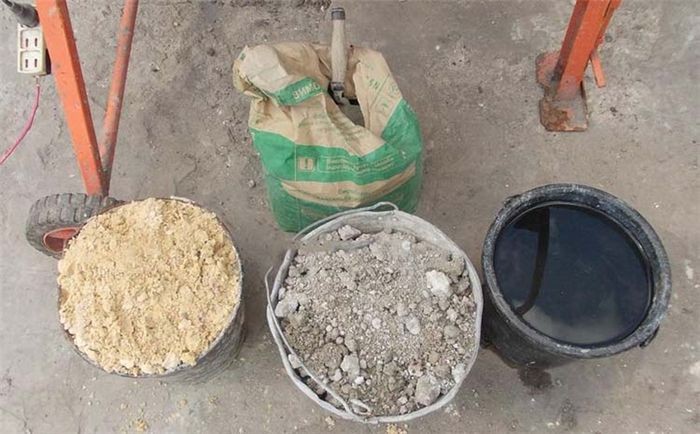
Materials cost for one 20 by 20 by 40 cm sand block:
- Water: 0.6 l, 0.03 RUR.
- Cement: 2.3 kg, 9.20 rub.
- Sand: 11 kg, 3.85 rub.
- Elimination: 11 kg, 1.32 rub.
- Plasticizers: 0.1 kg, 3.30 rub.
- Total 1 block: 25 kg, 17.70 rub.
Note: The cost of transportation, the production of wooden pallet containers, workers’ compensation with taxes and depreciation deductions, rent, electricity and workshop heating services are all factors that the manufacturer considers when determining the price of a sand block.
For instance, if 20,000 solid blocks measuring 400 by 200 by 200 mm are produced each month and sold for 75 rubles apiece, the sales income would be:
- Cost 770 thousand. rub., in t.h.: materials 17.70X20000= 354 thousand. rub.; salary with deductions – 288 thousand. rub.; transport and other overhead costs – 128 thousand. rub.
- The cost of one block is 38.5 rubles.
- Profit from sales per month – 75×20000-770000= 73000 rub./month.
Dimensions and values
This article examines the variables that affect sand block prices for building projects and offers helpful advice on how to compute costs precisely. We’ll go over important factors like price variations across regions, the kind and dimensions of sand blocks that are required, and the labor-intensive handling and laying of them. By comprehending these elements, readers will be better equipped to plan their construction project budgets and make wise choices when buying sand blocks.
What affects the cost of masonry made of cement-sand blocks?
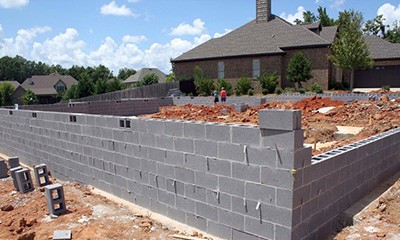
There are multiple primary factors that impact the cost of laying sand blocks.
This is the market price of the blocks, which indicates that the higher the price, the higher the labor costs.
The strength and size of the blocks is the next indicator. Whole blocks have a strength of 50 to 600 kg/cm2, while hollow blocks have a strength of 50 to 300 kg/cm 2.
The two most common sand block sizes are 200x200x400 mm and 400x200x400 mm.
Contractors factor in the installation location when estimating the cost of masonry, including load-bearing walls, partitions, specialty walls, and foundations. The amount of reinforcement depends on the wall’s location and masonry volume, both of which have an impact on the project’s overall cost.
Crucial! Because the cost of masonry work varies by region, prices for masonry in Moscow and the surrounding area are more than 15-20% higher than in Russia’s central regions.
The season has a major impact on pricing in the construction work market; masonry work is considerably less expensive in the winter, ranging from 30% to 50% less than in the summer. This is because construction work has significantly decreased overall.
Because sand blocks require less labor—240 people per hour per 100 m 2 of sand block wall versus 320 people per hour for a brick wall of similar area—their use impacts the overall reduction in construction costs. Additionally, masonry mortar can be used to lay 50 m 2 of sand block walls and only 11 m 2 of brick walls with 1 m 3 of mortar.
How much do specialist services cost??
Because sand blocks are substantially larger on the outside than regular bricks, this type of masonry is nearly twice as expensive. Therefore, the cost per 1 m 3 of solid sand block walls in Moscow is between 1500 and 2000 rubles.
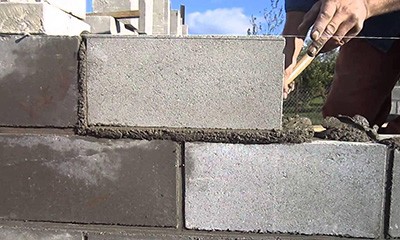
A 400x200x200 mm sand block costs the customer, on average, 35–45 rubles to lay.
A 40x20x40 cm block will cost you 45–55 rubles. The larger the block, the more expensive it is.
Semi-blocks for interior partitions typically cost between 12 and 18 rubles to lay.
Since it can be challenging to count in pieces when there is a lot of construction going on, the price is determined using 1 m 2 or 1 m 3 blocks.
Price list for contractor providing sand block wall laying services:
Crucial! Prices rise dramatically when decorative sand blocks are laid; a customer must pay an average of 65 rubles per PC for masonry services.
How much is needed for a box at home??
The brand of the sand blocks and the size of the walls and partitions, for example, in a one-story home with an area of 144 m2 and a plan of 12 x 12 m, are necessary to calculate the volume of the blocks.
You will need to know the block’s dimensions in order to calculate how much shell rock you will need to buy for wall construction. For instance, the following features of a one-story residential building are taken into account when performing the calculation:
- Household area: 144 m2 .
- House plan: 12×12 m.
- Perimeter of load-bearing walls: 12×4=48 m.
- Wall height: 3 m.
- Length of internal walls: 24 m.
- External corners – 4 pcs.
- Internal corners – 8 pcs.
- Window dimensions: 1.4×1.2 m – 3 pcs.
- External door: 1.0×2.0 – 1 pcs
- Internal doors: 1.0×2.0-3 pcs.
- Wall reinforcement – every 4 rows.
- Seam thickness from 5 to 10 mm.
- Block dimensions – 390x190x190 mm.
Calculation for a residential building
The calculations are done individually for load-bearing walls and intra-house partitions because the house will need multiple brick modifications for these purposes. You must know the total area of technological openings and the wall thickness in order to calculate the number of blocks.
Load-bearing walls
For eight 390 x 190 x 188 mm slot sand blocks, the area of the openings is deducted from the total area of the walls after determining the perimeter of the walls:
- Building perimeter: 12×4= 48 m.
- Total wall area: 48×3= 144 m2 .
- Area of technological openings: 2×1+1.4×1.2×3=7.04 m 2 .
- Total masonry area: 144-7.04=136.96 m2 .
- Wall thickness: 390 mm.
- Area of one block: 0.190×0.188=0.03572 m2 .
- Number of blocks: 136.96:0.03572= 3834 pcs.
- Weight of one block: 35 kg.
- Total weight of blocks: 3834 x 35 kg = 134190 kg.
Note: The result is taken with a margin of 10 to 15% to account for the technological losses of stone during transportation and loading and unloading operations.
Partitions
Similar calculations are made, but a different sand block with dimensions of 400x200x100 mm and a chosen partition thickness of 100 mm is used.
An illustration of how to figure out how many sand blocks are needed for interior partitions:
- Length of partitions: 24 m.
- Total wall area: 24×3=72 m2 .
- Area of technological door openings 2 pcs.: 2x1x2=4 m 2 .
- Total masonry area: 72-4=68 m2 .
- Wall thickness: 100 mm.
- Area of one block: 0.400×0.2=0.08 m2 .
- Number of blocks: 68:0.08=850 pcs.
- Weight of one block: 15 kg.
- Total weight of blocks: 850×15 kg = 12750 kg.
- With a reserve for technological losses: 12750×1.15=14662.5 kg.
Determining the number of stones
Let’s work out the calculation.
Volume in cube and 1 m2
The formula for a parallelepiped’s volume is used to perform a straightforward calculation to find the number of sand blocks in 1 m 3. To do this, take the stone’s dimensions (length, width, and height), convert them to m, and multiply them all together. The volume will be discovered in one block in this manner, for instance:
- 4×0.2×0.2 = 0.016 m 3;
- 4×0.2×0.4 = 0.032 m 3;
- 4×0.2×0.1 = 0.008 m 3;
- 4×0.2×0.12 = 0.0096 m 3 .
In addition, divide 1m3 by the volume of one stone to find the number of stones of a particular size that are contained in 1m3, for instance:
- 4×0.2×0.2 mm: 1/0.016 m 3 = 62.5 pieces.;
- 4×0.2×0.4 mm: 1/0.032 m 3 = 31.25 pcs.;
- 4×0.2×0.1 mm: 1/0.008 m 3 = 125 pcs.;
- 4×0.2×0.12 mm: 1/0.0096 m 3 = 104.16 pcs.
Be aware that these formulas are thought to be universal and allow one to accurately determine how many sand blocks are needed for any given wall volume.
The area of one block must be determined, taking into account the wall’s thickness. For example, the area of a load-bearing wall is 0.4 m, while the area of a partition wall is 0.01 m. This information is needed to determine how many blocks are needed per 1 m2.
In this instance, one block’s area will be equal to:
- 4×0.2×0.2mm: 0.2×0.2 = 0.04 m2;
- 4×0.2×0.4 mm: 0.2×0.4 = 0.08 m2;
- 4×0.2×0.1 mm: 0.2×0.4 = 0.08 m2;
- 4×0.2×0.12 mm: 0.4×0.2 = 0.08 m2
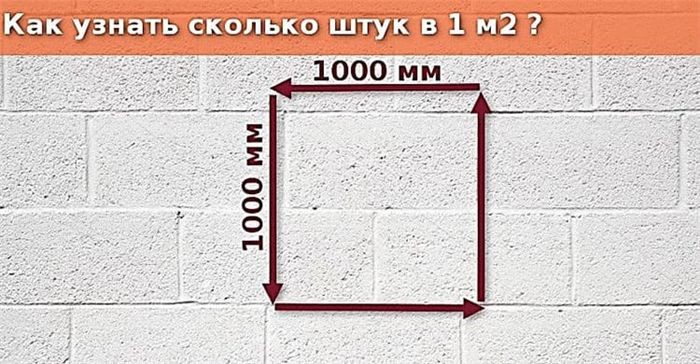
You must divide 1 m 2 by the area of a block in order to calculate the quantity of stone in 1 m 2.
- 4×0.2×0.2mm: 1/0.04 = 25 pcs.;
- 4×0.2×0.4 mm: 1/0.08 = 12.5 pieces.;
- 4×0.2×0.1 mm: 1/0.02 = 50 pcs.;
- 4×0.2×0.12 mm:1/ 0.024 = 41.6 pcs.
In a pallet
Pallets containing sand blocks measure one meter in height, one and a half meters in length, and eight and a half meters in width. Blocks are arranged on a pallet in a single row by area:
- 4×0.2×0.2 m: 1.2/0.4*0.8/0.2=12 pieces in a row; height 1/0.2=5 rows; total – 5×12=60 pcs.
- 4×0.2×0.4 m: 1.2/0.4*0.8/0.2=12 pieces in a row; height 1.2/0.4=3 rows; total – 3×12=36 pcs.
- 4×0.2×0.1 m: 1.2/0.4*0.8/0.2=12 pieces in a row; height 1/0.1=10 rows; total – 10×12=120 pcs.
- 4×0.2×0.12 m: 1.2/0.4*0.8/0.2=12 pieces in a row; height 1.0/1.2=8.33 rows; total – 8.33×12=100 pcs.
Example
For load-bearing walls in a 12-by-12-meter residential building, 3834 pieces of 400x200x200 mm blocks will be needed, and 850 pieces will be needed for partitions measuring 400x200x100 mm.
For load-bearing walls, the corresponding stone quantities are 3834/62.5 = 61 m3, 3834/25 = 153.36 m2, and 3834/60 = 63.9 pallets.
The stone needed for partitions is equal to the following: 850/125 = 6.8 m3; 850/50 = 17 m2; 850/120 = 7.08 pallets.
Rules for drawing up estimates for sandstone construction
Accurate estimates can only be created by experts with sophisticated software; typically, they are created during the home design process.
Note: The customer has control over the extent to which the contractor implements the technological stages of construction and how much it will cost based on design estimates.
The contractor shall bear the additional costs resulting from the non-fulfillment of project documentation if the contractor deviates from the estimates authorized by the contract.
These days, one can create these estimates from sand blocks using three different methods: labor-intensive, expanded, and enlarged.
Small contractors employ labor-intensive methods for smaller construction and installation projects.
In this instance, the computation relies on figuring out how much of the wage fund corresponds to the recognized unit of measurement for building and installation work.
Transport expenses are not included in this option; in this scenario, the customer is responsible for covering them on their own.
All cost items and work types that are specified in the design documentation are taken into consideration when creating the estimate using the expanded method.
Costs for primary and auxiliary building materials, labor wages, transportation and procurement expenses, equipment depreciation, equipment and facility rentals, fuel and electricity costs, and other expenses related to technology must all be included.
The client can now manage the amount of finished construction and installation work as well as the true cost of the materials used thanks to the expanded estimate.
In order to prepare an estimate, a comprehensive package of financial documents must be created in compliance with industry-approved forms. This package should include cost estimates, technological maps, and other construction documents that are specific to the type of construction and installation work and the technical conditions that govern it.
Note: Estimated profit, expressed as a percentage of the wage fund, and overhead costs are key indicators when generating estimates.
The first comprises all of the expenditures incurred by the contracting firm to establish standard operating procedures for building and installing equipment for its upkeep and organization. The contractor sets aside estimated profit as an expense for the growth of its production and material employee incentives.
The estimate also includes all legally required mandatory payments, taxes, and deductions, with the exception of taxes that are already included in direct costs and overhead costs, such as those associated with maintaining housing stock and roads.
How to calculate expenses?
It will be possible to calculate all of the costs associated with laying sand blocks once the volume of sand blocks needed for the construction of load-bearing walls and partitions, as well as their size and market value, have been established.
They consider the price of blocks and supplies, masonry services, transportation services, the cost of loading and unloading, overhead, and profit in order to achieve this.
| No p/p | Name | Qty | One. change. | Price, rub./1m 3 | Amount, rub. |
| 1 | Partition block 400x200x100 mm | 6.8 | m 3 | 4375 | 29750 |
| 2 | Wall block 400x200x200mm | 61 | m3 | 4062 | 247782 |
| 3 | Mortar for laying blocks | 10 | m 3 | 4200 | 42000 |
| 4 | Reinforcement Ø16mm for lintels, balcony beams | 250 | P.m. | 57 | 14250 |
| 5 | Laying aerated concrete walls | 61 | m 3 | 1575 | 96075 |
| 6 | Laying partitions | 17 | m2 | 374 | 6358 |
| 7 | Material | 333782 | |||
| 8 | Transport services | 26000 | |||
| 9 | Loading and unloading operations | 5200 | |||
| 10 | Construction and installation works | 102433 | |||
| eleven | TOTAL (material + technical work + construction and installation work) | 467415 | |||
| 12 | Overhead 15% | 70112 | |||
| 13 | Profit, 10% | 46741 | |||
| 14 | Total | 584268 | |||
Comprehending the expenses linked with sand blocks is imperative for any building undertaking. A number of variables, including supplier, location, and required quantity, can affect prices. Typically, the price per sand block varies depending on the state of the market and falls between [insert typical range based on research]. Getting quotes from several providers is crucial to guaranteeing you’re receiving a fair price.
The required number of sand blocks can be determined using basic math. Calculate the square meters of the area that needs to be built or repaired. Next, based on the size of the blocks you plan to use, calculate the number of blocks per square meter. To determine the total number of blocks required, multiply these numbers. Adding wiggle room for waste and unanticipated events is a good idea.
Taxes, delivery charges, and other expenses could have an effect on the total cost of the sand blocks. Larger projects may benefit from the discounts that certain suppliers provide for large orders or long-term agreements. When planning your construction or renovation budget, don’t forget to account for these extra expenses.
In conclusion, you can successfully manage the budget for sand blocks in your construction projects by investigating current prices, precisely estimating your needs, and taking into account all related costs. This planning guarantees smoother progress and timely completion of your building endeavors in addition to aiding in cost control.


