
Because of its strength and affordability, oriented strand board, or OSB, is a material that is frequently used for building facades. But it needs to be painted correctly to make sure it withstands the weather and keeps its appearance. Painting OSB not only improves its appearance but also shields it from the elements, moisture, and UV light.
It’s important to know what paints and primers are compatible with OSB before beginning any painting projects. The longevity and appearance of the finish can differ significantly depending on the selection made. We’ll investigate several choices while taking things like application simplicity and weather resistance into account.
The secret to a flawless, long-lasting finish on OSB is preparation. This include priming appropriately, sealing edges, and cleaning the surface. To guarantee that the paint adheres properly and endures for many years, each step is essential.
We’ll walk you through every step of the procedure in this post, from choosing the right products to using them efficiently. Whether you’re an expert or a do-it-yourselfer, you’ll find useful advice and insights to help you paint OSB on the exterior of your home with the greatest possible results.
To guarantee longevity and a high-quality finish, painting OSB (Oriented Strand Board) on the facade calls for meticulous preparation and the appropriate materials. From surface preparation to choosing the best paint types (oil-based or acrylic latex) that adhere well to OSB, this article will walk you through all the necessary steps. We’ll also go over crucial primer application techniques that will seal the board and keep it dry, so your OSB facade will look good and withstand the elements for many years to come.
- What is OSB
- Is it possible to paint OSB boards with facade paint?
- How can you paint an OSB board on a facade?
- Alkyd
- Acrylic
- Oil
- Latex
- Painting technology
- Preparatory work
- Main process
- Useful video
- Video on the topic
- OSB painting. How to paint and what to paint OSB on a frame house. How to seal seams with sealant.
- Gray Rot! How to paint OSB? Saving the facade of the house!
- Kd.i: How to paint OSB – statistics for 12 years. h.2
- Kd.i: OSB painting – pros and cons, statistics for 5 years. h.1
- Painting OSB outside (do-it-yourself frame house)
- How to paint OSB? Painting a frame house.
What is OSB
Pressed wood shavings from different species make up the material. Coniferous wood is crushed into chips or shavings to make OSB boards.
Subsequently, the material is placed in specialized machinery and molded in three layers.
The fact that each layer of this material is positioned in the slab in a specific direction explains why it is called "oriented."
The layers within the slab are laid transversely, while the layers outside are laid longitudinally. The wood material is laid out and then sent to the press.
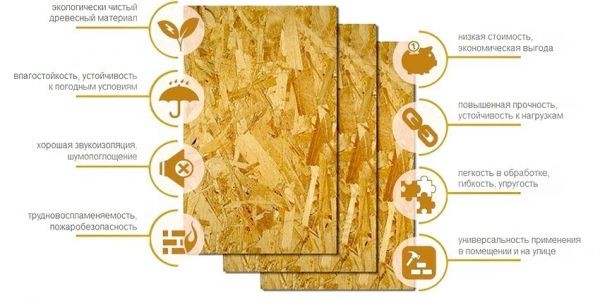
Resins are used in the gluing process, and different wax masses are added to them. The latter ingredients are required for the material to develop moisture resistance.
Is it possible to paint OSB boards with facade paint?

In responding to this question, it is important to keep in mind that OSB boards are made of wood, so you can treat their surfaces with any substance meant for wood facade work.
These could be different impregnations, enamels, or paints used on facades. Choose the necessary material based on the desired outcome of the OSB board’s surface treatment. They may have color or be colorless.
In the first instance, a thick, colorful coating is applied to the slab, covering its natural texture. In the second instance, the slab’s texture is made more severe.
When processing OSB boards with facade paint, there are a few things you should be aware of when doing so:
- Considering that OSB board has sharp corners, which can cause cracking of any type of paintwork, then work must begin by sanding these areas.
- The edges of the slab have a higher level of porosity, than on the rest of the surface, so these areas require additional sealing measures.
- Preliminary surface preparation OSB boards using a primer is mandatory. It is necessary to increase the degree of adhesion and reduce the level of water absorption properties.
- The painting process requires multiple layers of paint, each layer should be as thin as possible.
How can you paint an OSB board on a facade?
Among the different facade paints that can be used to finish OSB, the following stand out:
Alkyd
Alkyd resins, which are boiling mixtures of vegetable oils and acids, are the foundation of alkyd facade paint.
Following application, the substance creates a thin layer that firmly prevents moisture from penetrating the surface. These materials are reasonably priced. Their assistance makes it feasible to offer superior protective features that stop the panel from being destroyed by the sun’s rays.
Temperatures as low as -30 degrees are no match for this material. Not only does the paint not require drying time of 10 hours, but it is also non-toxic.

But OSB panels still light up after being painted with this kind of paint. There’s an unpleasant smell while it dries out.
A completely dry surface is necessary for the application of alkyd compounds; otherwise, the paint will start to bubble and peel off.
Acrylic
One of the most widely used paint types is acrylic. Its composition is primarily water, and acrylates serve as a binding agent. Once acrylic paint has been applied, water disappears from the surface.
In doing so, a trustworthy polymer layer is formed. This kind of paint is very easy to use. It comes in a variety of colors that can be blended together while working to create stunning combinations.
It enables the provision of high gravity resistance, low temperature resistance, and UV radiation exposure for OSB boards. Because acrylic paints have a water base, they impart fire resistance to the material after application.

Oil
Since there are more useful materials on the market, oil paints for outdoor projects that are made using drying oil are already out of date. High toxicity is a characteristic of oil paint. It is necessary to wear a respirator when working.
Because they are manufactured from pricey raw materials, the materials fall into the high-price category. Paint leaks frequently occur when using. It needs a minimum of one day to dry.
In terms of durability, this material is also similar; over time, the paint layer starts to fracture due to its high susceptibility to atmospheric phenomena.

Latex
The latex paint type is a member of the water-based paint family, where latex serves as the binder. Although this material costs a lot more than earlier ones, its advantages and the coating’s ultimate quality make up for it.
Excellent elasticity characterizes the paint and varnish material; even in the event that the base is destroyed, the paint layer will not deform.
Such a coating offers a high degree of sealing and totally insulates OSB boards from moisture, so mechanical impacts are likewise safe.
Surface resistance to atmospheric agents develops. The operation has been going on for over ten years. You can use common household chemicals to clean the surface. The material has an excellent degree of environmental safety and doesn’t release any offensive odors when painted.

Painting technology
The final quality of the coating is determined not only by the paint and varnish application technique but also by the accuracy of the surface preparation.
Preparatory work
A number of tasks are included in the preparatory work stage, and they must be completed in a specific order:
- Using sandpaper, you must carefully sand the surface of the slabs. This is necessary to smooth out the characteristic texture of the slab and prevent the penetration of primer and paint coating materials into its structure.
- leveling. At this stage, the surface is cleaned of various irregularities and dimples in the areas of fastening with self-tapping screws. To do this, use an oil-adhesive putty mixture, in this case, there is no need to fill the recesses between the slab elements with the mixture, since the seams will still become noticeable after painting. To obtain a perfectly smooth surface, it is necessary to sand off the completely dried putty;
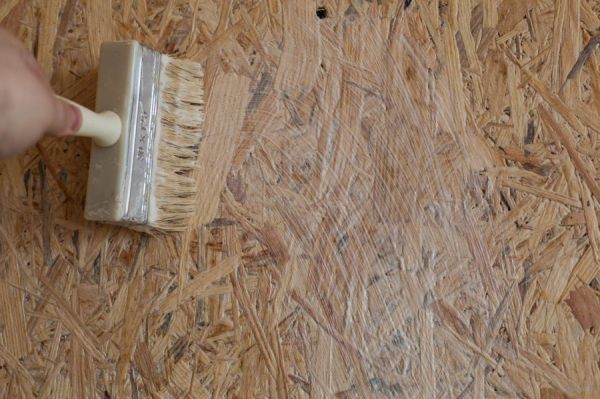
- primer. One of the easiest ways to prime the surface of a slab is using a mixture of water and a water-based alkyd or acrylic polyurethane varnish intended for a wooden surface. The ratio in which the mixture is diluted is 1:10. Application is carried out as carefully as possible to obtain an even layer. An alternative impregnation method is a mixture of alkyd varnish and alcohol.
Main process
The procedure consists of the following steps:
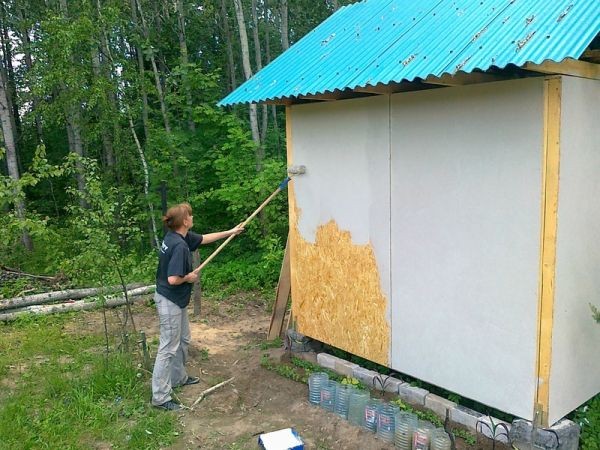
- Begin the process by painting the perimeter of the slab. The edges are painted in 2-3 layers, after which, using a roller, the paint composition is evenly distributed over the rest of the surface.
- Next, they begin to apply the composition to the side of the slab that has not been sanded, the layer of material must be very thin. The paint is applied in one direction.
- The next step is drying the painted slabs. At the same time, drafts and sudden changes in temperature should not be allowed.
- After the 8 hour period has passed, begin applying the next coat of paint, at the same time, you can save or hide the texture of the material as needed.
Useful video
Let’s examine OSB painting in greater detail:
| Step | Description |
| 1. Surface Preparation | Clean the OSB board thoroughly to remove dust, dirt, and any loose particles. |
| 2. Sanding | Lightly sand the surface to smooth out any rough areas and create a better surface for paint adhesion. |
| 3. Priming | Apply a high-quality exterior primer suitable for wood surfaces to ensure better paint adherence and durability. |
| 4. Sealing Edges | Seal all edges of the OSB board with a waterproof sealant to protect against moisture. |
| 5. Painting | Use an exterior-grade paint, preferably acrylic latex, and apply it evenly with a brush, roller, or sprayer. |
| 6. Drying and Second Coat | Allow the first coat to dry completely, then apply a second coat for added protection and a more uniform finish. |
| 7. Final Touches | Inspect the painted surface for any missed spots or imperfections and touch up as needed. |
In order to achieve durability and a visually appealing finish, painting OSB (Oriented Strand Board) on the facade requires meticulous preparation and the appropriate paint selection. It is essential to prepare the surface properly, which should involve cleaning, sanding, and priming as needed. This stage guarantees good paint adhesion and creates a smooth surface for the top coat.
When choosing paint for OSB boards, take into account exterior-grade products that provide weather resistance. Because of its flexibility, resilience to peeling and cracking, and durability, acrylic latex paint is a popular option. For the best effects, it’s also critical to apply several coats and give each layer enough time to dry.
Sealing the edges of the OSB boards is also important to avoid moisture infiltration, which over time can lead to swelling and damage. Your facade will last longer if you use an exterior sealant or paint that is made specifically for edge protection.
In conclusion, painting OSB boards on the facade can greatly enhance their look and increase how long they last. You can guarantee a long-lasting and visually appealing finish that will resist weathering for years to come by adhering to the recommended preparation procedures and selecting the appropriate paint and sealant.


