
The outside of your house is the first thing guests see, so a new coat of paint can really make a difference. Selecting the ideal façade paint for your external project involves more than just picking a hue you like. It’s important to choose a paint that will endure the weather, safeguard your house, and maintain its attractive appearance for many years to come.
When selecting façade paint, there are a number of things to take into account. The kind of paint you’ll need depends largely on the climate where you live. Homes in hot, sunny climates require paint that can withstand UV rays without fading, while those in humid or rainy areas will benefit from mildew-resistant paint.
Your external walls’ material is another important consideration. Certain paint types are needed for different surfaces, such as metal, brick, stucco, or wood, in order to guarantee good adhesion and longevity. It’s critical to understand the material of your walls and select a paint that will blend in seamlessly with them.
The paint’s finish is another important consideration. Although they are long-lasting and simple to clean, high-gloss paints can draw attention to flaws. However, matte finishes may not be as long-lasting even though they can conceal flaws. Achieving the ideal balance between practicality and aesthetics is essential.
Finally, think about how the paint will affect the environment. These days, a lot of manufacturers provide environmentally friendly products with reduced volatile organic compound (VOC) levels, which makes them safer for the environment and your family. Even without the harsh chemicals, these paints are still capable of offering excellent coverage and durability.
There’s more to choosing the perfect façade paint than just picking a color. You can make sure that the exterior of your house looks fantastic and withstands the weather for many years to come by taking your climate, wall material preference, finish preference, and environmental concerns into consideration.
| Criteria | Details |
| Weather Resistance | Choose paint that withstands harsh weather conditions and doesn"t fade easily. |
| Surface Type | Select paint compatible with the material of your façade, like wood, brick, or stucco. |
| Durability | Opt for paint with high durability to avoid frequent repainting. |
| Finish | Decide on a finish (matte, satin, gloss) based on your aesthetic preference and surface imperfections. |
| Color Retention | Pick paint with good color retention to keep your façade looking fresh for longer. |
| Application Ease | Consider paint that is easy to apply and offers good coverage. |
| Eco-friendliness | Choose environmentally friendly paint with low VOCs to reduce environmental impact. |
| Cost | Balance quality with your budget to get the best value for your money. |
- Features of facade paints
- About facade paints for plaster
- Dye consumption per sq. meter of wood
- Table of types of facade paints depending on the base
- Types of facade paints
- Silicate
- Limestone
- Cement
- Acrylic
- Silicone
- Rubber
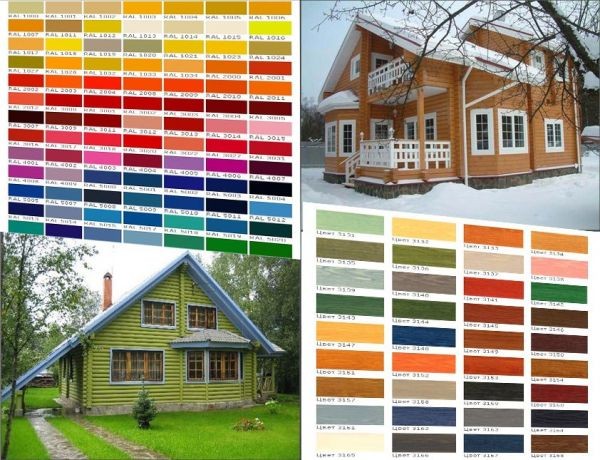
- The choice of paint depending on the surface
- How to choose facade paint for exterior work
- For wood
- For brick
- For foam block
- For concrete
- Which facade paint is the best and why?
- AKTERM Facade Pliolite
- Paint composition
- Where is it used?
- Video on the topic
- 60 rubles per liter! How to make high-quality paint from simple ingredients // FORUMHOUSE
- HOW TO CHOOSE THE CORRECT FACADE PAINT FROM DULUX AND MARSHALL
- How to paint a wooden house? How to choose facade paint and brushes so that it does not fade for 15 years
Features of facade paints

Any type of surface, including brick, concrete, and wood, can be painted on the facade. The coating’s composition can change depending on the base material.
The length of time it will be served directly influences the appropriate coloring composition selection.
In addition to having a decorative purpose, facade paint cladding should incorporate enhanced indicators of physical factors (strength, moisture resistance).
The coloring substance’s adhesive qualities are crucial because they guarantee the coloring’s quality by adhering to the surface.
Every type of base—concrete, brick, or wood—has a unique composition for exterior painting that is made while taking the base’s physical characteristics into consideration.
About facade paints for plaster
A building’s walls can be constructed from a number of materials, including brick, concrete, and plaster. The damaging effects of wind, rain, and sunlight are applicable to all of them. Therefore, the use of specialized compounds is required to protect facades. Plaster, for instance, can be treated with façade paints, which serve two important purposes and are therefore a recommended option:
- Providing protection for plaster from adverse weather conditions such as rain, snow, wind and ultraviolet radiation. This extends the life of the walls.
- Preventing mold and mildew. High-quality facade paints are characterized by good vapor permeability, which prevents moisture condensation on the wall surface when temperature changes.
Dye consumption per sq. meter of wood
Manufacturers list the amount of dye needed to get the desired outcome on the packaging. However, the precise quantity of paint needed to cover a square meter of a wall or other wood surface varies depending on the substrate’s density, roughness, texture, and curves.
It’s crucial to take into account the type of paint used, the area’s climate, and the tool that was used. To facilitate the computation of the necessary dye volume, the following standard consumption rates are applied to one liter of universal paints and varnishes:
- Painting along the grain of a sanded hardwood surface – 16 square meters;
- Wood processing across the grain – from 4 to 6 square meters;
- Painting lumber along the grain – from 8 to 10 square meters.
Construction and finishing companies typically include these consumption standards in their estimates.
For outside work, selecting the appropriate façade paint is crucial to keeping your house weatherproof and improving its curb appeal. You can use this guide to sort through the options while taking climate, surface material, and desired finish into account. If you are aware of these important factors, you can choose paint for your home’s exterior that is both beautiful and long-lasting, in addition to looking fantastic.
Table of types of facade paints depending on the base
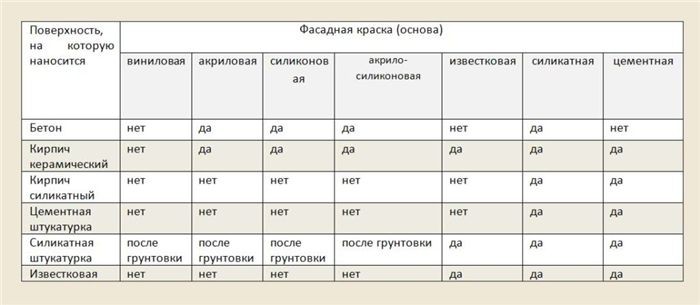
Types of facade paints
Based on the amount of binder, the composition of the outer paint coating is categorized. Certain components are carefully chosen to guarantee superior coloring in the coloring material meant for a specific coating.
Facade paint varieties include:
Silicate
Liquid glass is the foundation of these coloring compositions. Paints are members of the mineral paint family. Dye comes from natural sources.
This type’s primary benefit is that it is UV radiation resistant. Furthermore, silicate compounds
- do not deform under large temperature changes;
- mechanically resistant to natural phenomena;
- biologically stable;
- vapor permeable.
These coatings have a reputation for being long-lasting.
Drawbacks:
Because the materials used to make facade silicates are toxic, protective paints must be used when painting. Silicate paints are mechanically unstable, irreversible, and incompatible with paint coatings.

Limestone
Slaked lime is the primary ingredient in lime paints.
Benefits
- vapor permeable;
- resistant to mold formation;
- inexpensive.
Drawbacks:
- unstable to precipitation;
- limited color options;
- get dirty easily.
Although tinting this composition is possible, it is not always a recommended method because of the potential for precipitation-related stains to form.
Cement
Portland cement, along with coloring pigments, serves as the primary binder for these paint coatings.
The qualities of cement compositions are comparable to those of lime ones; their incapacity to withstand bacteria is their sole drawback, which lowers the façade covering’s quality indicators even more. They are more resistant to precipitation than compositions made of lime cement.
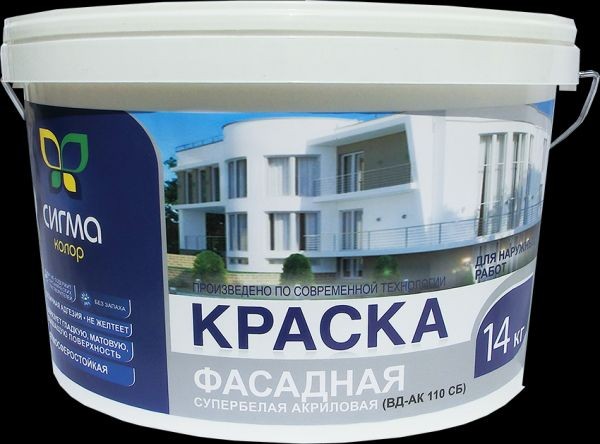
Acrylic
Acrylic resins are present in these paint coatings. Acrylic compositions come in a wide range of colors, and external painting is their most common application.
Benefits
- large selection of colors;
- abrasion resistant;
- almost do not absorb water;
- mechanically stable;
- elastic.
Drawbacks:
The low level of vapor permeability of acrylic paint coatings is their primary drawback. Paints with an acrylic base can be highly costly.
Silicone
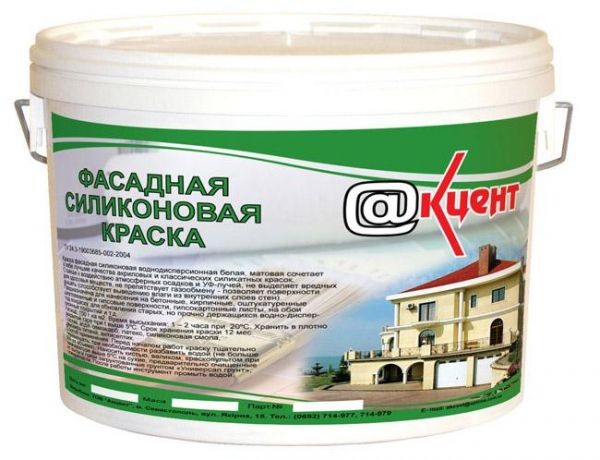
The foundation of silicone compounds is a water-emulsion structure. most often when painting exterior walls.
Benefits
Water is effectively repelled by silicone materials, which is crucial for facade coatings.
Furthermore, silicone compositions offer several benefits:
- mechanically stable;
- resistant to precipitation;
- vapor permeable;
- resistant to temperature changes;
- do not fade or crack in the sun;
- do not have static attraction: do not attract dust.
The silicone-based material can be applied to a wide range of materials because of its strong surface adhesion.
Drawbacks:
The materials made of acrylic resin are more elastic than silicone coatings. This kind is found in pricey compositions.
Apart from the aforementioned mixes, there are also oil-based coloring compounds available, but their use is dwindling because of their numerous drawbacks in comparison to their more sophisticated counterparts.
High-tech coatings are also available; rubber is one of the most elastic and costly compounds.
Rubber
In addition, there are sophisticated coatings like rubber, which are the most elastic yet costly mixtures. However, this kind of paint is becoming more and more popular as an exterior coating layer for façades because of its benefits, which include resistance to water, high vapor permeability, temperature changes, and environmental friendliness. Read our article here to learn more about the benefits, drawbacks, and features of using this material.
Observe that "Universal" rubber paint from "Mizar" (Saint Petersburg) is the most widely used in Russia and, objectively speaking, the most profitable product available today. Complete details about the manufacturer and this model are also available in the content found at the provided link.
With comparable, if not superior, properties to comparable products such as Super Decor Rubber Consumption, which is up to 150 grams per square meter and nearly four times less. Consequently, the facade coloring will be four times less expensive when utilizing the "Mitsar Universal."

It should be mentioned that some producers blend rubber colors at a low cost by using styrene-acrylic latex. Thus, after 3–4 weeks of intermittent exposure to water and/or when exposed to UV radiation from the sun, such a coating cracks and crumples.
In contrast, the Mitsar Universal exhibits zero production from the Mitsar company. Its enhanced moisture and waterproof qualities make it suitable for use in areas such as artificial reservoirs and pools.
The choice of paint depending on the surface
It’s crucial to consider the precise application and the right shade combination when selecting dye products. The material that the supporting structures are constructed of has a significant impact on the external design’s strength and stability. Basic specifications for the paint and varnish coating of the facade include resistance to temperature changes, humidity, and solar radiation, as well as compatibility with the base.
Facade cladding must have greater mechanical strength, chemical inertness, and resistance to weathering because it is subjected to challenging and occasionally extreme conditions.
For instance, a coating meant for wood may start to peel off on a concrete substrate after very little use because of inadequate adhesion.
The instructions that come with the package go into great detail about how the dye works with concrete or wooden substrates. Specifically, facade paints based on silicones, acrylics, silicates, or rubber are advised for the protective finishing coat on concrete walls.
There are oil paints on the market as well. This choice isn’t always the best, though, as surface preparation costs a lot of money and time, and it doesn’t offer the required breathability.
How to choose facade paint for exterior work
The coating material that you intend to apply the coloring composition to must be taken into account before selecting façade paint.
For wood
It can be challenging to select a paint composition for wood because wooden walls:
- prone to rotting;
- absorb moisture;
- not fire resistant.
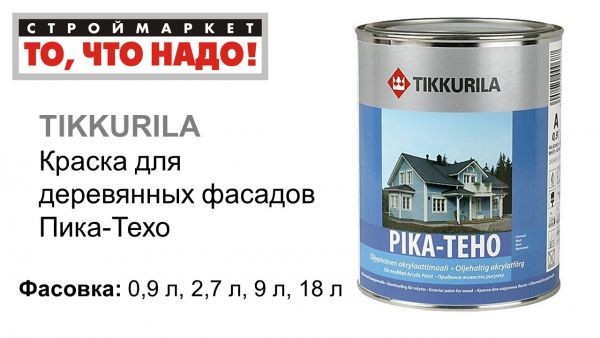
The best paint for wood would be a coloring composition because it is highly elastic, resistant to moisture, and adheres well to wood surfaces.
Acrylic is the best cladding material for wood. It’s easy to apply, has a fairly long service life, and adheres well to the wooden surface while allowing the wood underneath to "breathe."
Wood can be painted with both transparent and tinted paints. The natural texture retains its structure when a transparent coating is applied. Because transparent materials allow for vapor to pass through, they aid in relieving moisture from the surface.
For brick
Brick surfaces require specific coloring properties because the material tends to remove accumulated salts, which detracts from the appearance. On a brick wall, moss and peeling can also develop. Because of this, it is advised to paint the brick surface a few years after the building was constructed.
Painting supplies must fulfill the following criteria in order to paint brick:
- resistance to chemicals;
- vapor permeability;
- resistance to precipitation;
- mechanical stability.
A material with good elasticity is needed to cover a brick wall in order to prevent cracking or deformation during temperature changes that cause the coating’s brick base to contract (expand).
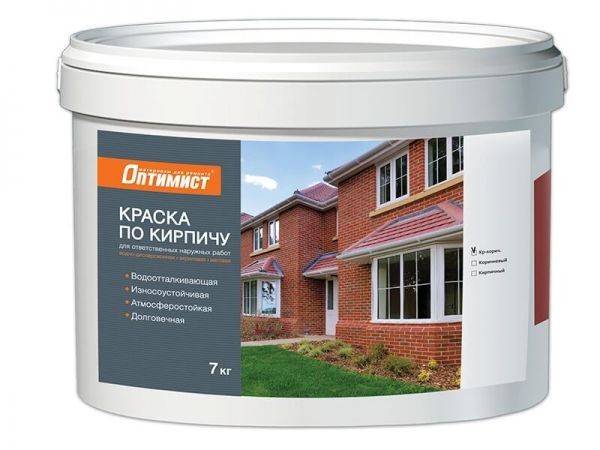
An acrylic coating might be the best choice for brick because it lets the material "breathe," resists moisture, and stops efflorescence from forming.
Sand-lime brick should be painted with silicate compounds or cement.
Almost any type of coating can be applied to ceramic bricks.
Water-based paints work well for painting brick as well, but be aware that they are moisture-sensitive and should not be used to finish facades that see a lot of precipitation.
For foam block
Because foam block walls are very porous, paint that is both water-repellent and vapor-permeable is needed to shield the pores from dust and moisture. Rubber, albeit a more costly option, or silicone coatings work best for foam blocks.
To prevent the creation of cold bridges, carefully seal all seams before painting with silicone compounds.
If not, the paint will flake off and crumble.
For concrete
Paint is frequently applied to dull, gray concrete to enhance its color, create a decorative effect, and safeguard the foundation. Concrete can be destroyed over time, even though it is a reasonably durable material.
For concrete paint, the following specifications should be met:
- frost resistance;
- moisture resistance;
- environmental friendliness;
- color fastness.
You can use any composition for concrete, but you should consider each type’s unique qualities as they could have an adverse effect on the outcome:
- water-based – weakly protects against moisture;
- oil – do not have vapor permeability and require thorough preparation of the surface for painting.
Application of rubber, silicone, or acrylic coatings is advised by manufacturers.
Which facade paint is the best and why?
Facade paint producers work hard to make sure their products are high-quality, long-lasting, and meet painting specifications.
It is standard procedure to incorporate different components into dyes during production, which enhances their optimal quality. Now let’s look at paint ratings on the home market.
The most well-known producers of facade paints are:
- Akterm (Russia);
- Marsall (Türkiye);
- Empils (Russia);
- Alpina (Germany);
- Dufa (Germany);
- Tikkurila (Russia);
- Beckers (Sweden).
These manufacturers’ main source of fame is their ability to produce consumer-satisfied, high-tech, high-quality paint and varnish products.
Let’s examine Akterm Paint, the top performer in our rating, in more detail.
AKTERM Facade Pliolite
Domestic paint is an elastic, crack-resistant coating that saves heat and energy. It is made using the original recipe from the Research and Production Company Insulating Technologies.
Plyolite thermoplastic resins are the basis for the paint. They provide materials strength and penetration into their loose surfaces.
Intended for usage outside. simultaneously serves as a paint and a thermal barrier on any surface. It guards against freezing in the winter and stops overheating and the growth of mold and mildew in the building during the summer.
Vital. has the benefit of shielding the structure from the sea and wind, which is beneficial for coastal regions.
Benefits of changing the façade:
- combines well with various surfaces: wood, metal and brick, plastic and concrete, gas and foam blocks; with acrylic primers and water-based paints;
- does not require preliminary priming of the surface;
- allows use after enamel and water-based paint;
- tinted with different tinting pastes; easy to apply to surfaces without smudges;
- dries quickly and thoroughly;
- environmentally friendly; does not contain organic solvents and volatile compounds;
- the paint can withstand ultraviolet radiation and temperatures from -50° to +50°;
- does not affect the foundation;
- allows you to significantly reduce the intervals between major and cosmetic repairs; durability – 20 years.

Paint composition
Crystalline calcium carbonate (marble), talc, dearomatized white spirit, acrylic copolymers (plyolite resins), and titanium dioxide (rutile).
60% or less dry residue (by weight).
AKTERM thinner 105 is the thinner.
Base A density: 1.42 kg/l.
Where is it used?
The greatest variety of uses:
- construction of housing stock;
- construction of metal structures, including roofs of industrial and public buildings;
- treatment of tanks, reservoirs, pipelines;
- coating of surfaces of automobile, air, railway and water transport and containers.
Paint is used not only on the exterior but also inside of buildings, on roofs, in basements, and to cover the slopes of windows in order to prevent heat loss. This is critical because up to 35% of the heat escapes through the slanted windows.
Another way to reduce noise is to paint joints when building panel houses.

Leading manufacturers’ materials fulfill all the requirements for environmentally friendly coloring products. Painting compositions are created in a wide variety and categorized based on the kind of work.
As a result, while selecting a facade paint cladding, consideration should be given to the attributes of the coloring compositions, weather, and the features of the base that needs to be painted, in addition to the manufacturer’s level of popularity.
For exterior work, selecting the appropriate façade paint is essential to the longevity and aesthetics of your house. Understanding the particular requirements of your project is the first step. Think about the surface you are painting, be it metal, brick, stucco, or wood. Different paint types are needed for different materials in order to achieve the right durability and adhesion.
Your decision is also greatly influenced by the local weather. To avoid peeling and cracking, choose paints with flexibility and weather resistance if you live in an area with high humidity, extreme temperatures, or a lot of rain. Furthermore, UV resistance is necessary to maintain the color’s vibrancy and stop it from fading over time.
The paint’s finish is another crucial element. Glossy finishes are perfect for trim and doors because they are more moisture-resistant and easier to clean. Larger wall surfaces look better with matte or satin finishes because they can help conceal flaws and give the impression of more subtlety.
Finally, think about how the paint you select will affect the environment and your health. To reduce harmful emissions and provide a healthier environment for your family, choose paints that are low- or no-VOC. There are lots of excellent, environmentally friendly solutions out there that don’t sacrifice longevity or performance.
You can choose the ideal façade paint for your house by taking into account the kind of surface, the surroundings, the desired finish, and the weather. This thoughtful choice will protect and preserve your home for many years to come, in addition to improving its curb appeal.


