
For centuries, hydraulic lime has been a versatile building material used in construction and renovation projects. Its distinct qualities set it apart from other forms of lime. It is created by burning limestone that contains clay and other impurities. You can use this knowledge to inform your decision-making when deciding how to use it in your projects.
The capacity of hydraulic lime to solidify and harden in water is one of its essential qualities. This makes it a great option for buildings with moisture exposure, like basements, exterior walls, and foundations. Hydraulic lime can cure in damp conditions, offering strength and durability in a range of environments, in contrast to non-hydraulic lime, which depends only on air to harden.
Breathability is another noteworthy characteristic of hydraulic lime. It permits moisture to permeate, avoiding moisture buildup and lowering the possibility of mold and mildew. Because of this, it is especially appropriate for older structures that must maintain a proper humidity balance. Furthermore, the flexibility of hydraulic lime allows it to adapt to the natural movement of buildings without cracking.
Hydraulic lime is comparatively easier to work with than a lot of other building materials. It provides smooth to textured finishes and can be used in renders, plasters, and mortars. Because of its adhesive qualities, it can adhere firmly to a variety of substrates, increasing the construction’s overall stability.
Selecting hydraulic lime for your building or remodeling project promotes sustainability and guarantees structural integrity. Because it can be obtained locally and produces less carbon dioxide during production than modern cements, it is a more environmentally friendly choice. Its extended lifespan and low maintenance needs further enhance its eco-friendliness.
- Hydraulic lime – properties and characteristics
- Raw materials for the production of hydraulic lime
- Hydraulic lime and roasting of production raw materials
- Wetting of hydraulic lime
- Possible applications in the construction industry
- What is cementation index (CI) + formula
- Table of parameters for hydraulic CaO standards
- Video on the topic
- Self-supporting insulation made from firewood and hydraulic lime
- Differences between chalk and lime – a detailed story
- BUILDING AIR AND HYDRAULIC LIME BUILDING GYPSUM
Hydraulic lime – properties and characteristics
A reaction with water causes hydraulic lime to partially harden. This is one of the characteristics that sets the produced product apart from other varieties of lime, which solidify due to a chemical reaction involving carbon dioxide and air.
The characteristics of hydraulic lime lie halfway between Portland cement and regular lime. Production, however, essentially uses the same procedures.
Hydraulic lime contains calcium silicates, which are comparable to the primary ingredients of Portland cement, in addition to calcium oxide, which makes up the majority of the regular material.
Pozzolanic material and regular calcium oxide can be combined to create cement with characteristics akin to hydraulic lime.

It is possible to make hydraulic lime more robust than traditional material. As a result, this kind of product can be applied in certain situations where traditional lime is inappropriate, particularly when there is water present.
Hydraulic lime is a rare product of developing nations’ industries. Even so, there is always a good chance that the production of these building materials will rise in cases where Portland cement is regarded as an expensive or scarce ingredient.
Raw materials for the production of hydraulic lime
The primary raw materials used in manufacturing are a certain amount of clay and limestone that contains calcium carbonate (clayey limestone). Along with alumina, two crucial clay constituents, a silica content of 15–35% characterizes a substantial portion of limestones suitable for the production of hydraulic lime.
Clayey limestones are typically identified by a noticeable presence of blue or gray tones in the structure. The matte fracture surface of the rock, which does not reflect sunlight, is another characteristic that sets it apart. Similar to other varieties of limestone, argillaceous limestones react when a small amount of diluted sulfuric or hydrochloric acid is added.
"Marlstone," or soft limestone, is a common raw material that appears to be best suited for the hydraulic lime production cycle.

The majority of limestones differ in terms of the kind of clay minerals found in the same deposit as well as their clay content. Even with strict quality control throughout the manufacturing process, this point leads to the production of a product with notable variances in strength and setting time.
Hydraulic lime and roasting of production raw materials
The following goals are achieved by calcining clayey limestones:
- Divert carbon dioxide gas to produce a quicklime form of the product (CaO), as in the production of conventional lime.
- Stimulate a chemical reaction between the quicklime and minerals in the clay component to form calcium silicate compounds.
If the firing temperature is 50–100°C higher than that of conventional limestone, the latter reaction is triggered. When producing hydraulic lime, kiln temperatures can get as high as 1200°C. For the time being, the majority of kiln designs are excellent for producing hydraulic lime.
This production option will, however, result in a shorter kiln firing time because less carbon dioxide removal is required. Some coniferous species do not burn with enough heat production to reach the necessary temperatures when used as fuel. It makes sense to use a different fuel in this situation:
- coal,
- other types of wood,
- charcoal.
Different temperatures are fired in a kiln to produce hydraulic limes with different properties. As a result, it is hard to provide precise information about the firing time or the necessary fuel quantity.
The kind of raw material utilized and the kiln’s capacity will also affect these figures. The parameters for a particular project can only be established through experimentation or real-world application.
Wetting of hydraulic lime
The existing quicklime should be sufficiently wetted, but not so much that the calcium silicate components start to solidify. The quicklime lumps should ideally be reduced to a fine, dry powder during the hydration process.
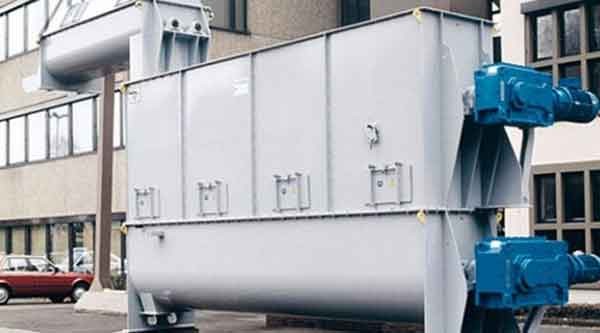
Either a mechanical hydrator or a hard, level surface can be used for manual wetting. Generally speaking, the hydration reaction is slower and less intense than with ordinary quicklime.
Hot water must be used in certain situations, and if there is a lot of hydraulic lime present, the CaO must be ground right before hydration.
Hydration can turn calcium oxide that contains 10–15% quicklime into a powder. Frequently, after burning limestone close to the upper limit of the temperature range and with a high percentage of clay in the raw material, clinker-like fragments known as grabbers are left behind. A screen should be used to remove these pieces, and each should be crushed separately.
The product can then be utilized as Roman or natural cement. The product in this instance has characteristics that are similar to Portland cement. Hydraulic lime can be combined with the product to increase strength and decrease setting time.
Even with different raw materials, the manufacturer can meet strength standards thanks to this mixing process. If the finished product is not going to be used right away, it should be kept in a dry place and preferably in sealed bags.
All of the clinker generated during the firing stage of Portland cement production is ground into a fine powder using pricey ball or tube mills. With hydraulic lime, on the other hand, mills are not needed unless you want to grind grabs or quicklime product for hydration.
Portland cement is less appropriate for small-scale production than hydraulic lime due to these and other factors, including less complicated equipment requirements.
Possible applications in the construction industry
Hydraulic lime is primarily used as a mortar. Nonetheless, using this kind of binder is also appropriate:
- as plaster for floors and ceilings,
- as a cement for the production of unreinforced limestone concrete blocks.
Usually not advised to be used on ferrocement or reinforced concrete unless initial testing has been completed and/or professional advice has been obtained.
Any sand that is already present in the raw material should be considered when making the mortar mix, and only enough sand should be added to achieve the necessary properties of the mortar mix.

Generally, depending on the desired qualities, 1 part hydraulic lime is added to 2.5, 3 or 4 parts sand by volume. The recommended usage time for the prepared mortar is four hours. But "soft" mortars can be applied for extended periods of time.
If more strength is needed, pozzolan may be added as long as it is thoroughly combined with the lime before sand and water are added. The resulting mortar has a plasticity that is halfway between Portland cement and regular lime.
The criteria for cooking technology are as follows:
- chemical composition,
- subtlety,
- setting time,
- compressive strength,
- overall strength,
Are crucial characteristics of materials made of cement. The table below shows a comparison of these hydraulic lime properties’ values from Indian and American (ASTM) standards.
What is cementation index (CI) + formula
The cementation index (CI) or the ratio of silica to lime, or SiO2/CaO, is the primary factor that determines a product’s degree of cementitiousness.
Other minerals that might be present in the product are taken into consideration by the so-called cementation index. The following is a classification of hydraulic limes based on the cementation index:
- Soft (CI: 0.3-0.5).
- Moderate (CI: 0.5-0.7).
- Highest degree (CI: 0.7-1.1).
The following formula yields the CI coefficient:
%CaO+1.4 * %Mg / (2.8 * %SiO2+1.1 * %Al2O3+0.7 * %Fe2O3)
The Indian Standard distinguishes between just two varieties of hydraulic lime.
- Class "A" – the highest grade product for structural purposes.
- Class "B" – half-processed product for masonry.
After seven days of use, hydraulic lime reaches a compressive strength level of 0.5-1.0 MPa (N/mm2), and after six months, for a standard 1:3 mixture with sand, it reaches a level of 3-7 MPa (N/mm2).
The degree of hydraulics and the specifics of the process will determine more accurate values. By contrast, the compressive strength of Portland cement is 17 MPa after 7 days and 28 MPa after 6 months.
Table of parameters for hydraulic CaO standards
| Properties | Indian standard | American standard | |
| Class "A" | Class "B" | ||
| Minimum content of calcium and magnesium oxide, % | 60 | 70 | 65 |
| Maximum content of calcium and magnesium oxide,% | 75 | ||
| Maximum magnesium oxide,% | 5 | 5 | |
| Minimum content of silica, alumina and iron oxide, % | 25 | 15 | 16 |
| Maximum cementation value | 0.6 | ||
| Minimum cementation value | 0.6 | 0.3 | |
| Size | Without 2.36 mm sieve, no more than 5% on the 850 µm sieve and no more than 10% of the fraction passing through the 850 µm sieve on the 300 µm sieve | Same as class "A" | Residue no more than 0.5% on a 600 micron sieve and no more than 10% on a 75 micron sieve |
| Setting time | Within 2 hours before initial recruitment and within 48 hours before final recruitment | Within 2 hours before initial recruitment and within 24 hours before final recruitment | |
| Minimum compressive strength | 1.75 MPa after 14 days and 2.8 MPa after 28 days | 1.25 MPa after 14 days and 1.75 MPa after 28 days | Average 1.7 MPa after 7 days and 3.4 MPa after 28 days |
| Sustainability | Maximum expansion 10 mm according to Le Chatelier test | Same as class "A" | Mortars should not expand more than 1.0% according to ASTM tests |
Hydraulic lime is a long-lasting and breathable building material that is both eco-friendly and adaptable. It is different from regular lime in that it sets when wet, which makes it perfect for a range of building and remodeling tasks, particularly when the weather is damp. Its exceptional adhesion to a variety of surfaces and high flexibility, which lowers the chance of cracking, are among its special qualities. Hydraulic lime also helps to maintain healthy indoor environments by letting buildings "breathe," which inhibits the growth of mold and moisture buildup. This makes it a well-liked option for both brand-new construction and historic building restoration.
| Property | Characteristic |
| Composition | Made from limestone with clay impurities |
| Setting time | Sets slowly over days or weeks |
| Water resistance | Improves after setting, making it suitable for wet conditions |
| Flexibility | More flexible than other types of lime |
| Uses | Ideal for historic building restoration and eco-friendly construction |
One particularly useful and important material for building and remodeling projects is hydraulic lime. Its special qualities, which include its breathability and capacity to set underwater, make it perfect for a range of uses, such as rendering, plastering, and masonry. Hydraulic lime, in contrast to other binders, provides a harmony of strength and flexibility, guaranteeing that structures can withstand a range of loads and weather conditions over time.
Hydraulic lime’s compatibility with conventional building materials is one of its main advantages. Because of this, it is especially useful for historic building restoration, where maintaining the structure’s original integrity is essential. Because of the permeability and natural composition of the material, it can be used in harmony with older construction methods, lowering the possibility of moisture-related damage.
Hydraulic lime also has the benefit of being environmentally friendly. It has a smaller carbon footprint than cement because it takes less energy to produce. Furthermore, hydraulic lime can be recycled and utilized again in a variety of ways, supporting environmentally friendly building methods.
All things considered, hydraulic lime has many advantages in both building and remodeling. For many projects, its eco-friendliness, durability, and compatibility with conventional materials make it the material of choice. Hydraulic lime is a dependable and sustainable solution for long-lasting results, regardless of whether you’re working on a new construction or historical restoration.


