
Installing corners and plastic profiles on window slopes can significantly improve the appearance and functionality of your windows when it comes to finishing the interior. These profiles do more than just make your windows look better; they also protect the edges and create a seamless transition between materials.
The angled or vertical surfaces that lie between the window frame and the wall are called window slopes, sometimes referred to as window sills or jambs. They are prone to deterioration over time because they are frequently exposed to sunlight, moisture, and temperature fluctuations. By adding plastic profiles, you can help shield these slopes from the weather, extending their lifespan and requiring less upkeep.
Because plastic profiles for window slopes come in a variety of patterns and hues, you can easily coordinate them with your external facade or interior decor. There are profiles to fit every taste and architectural theme, whether you like a more traditional or modern, minimalist look. Their adaptability makes them a well-liked option for both builders and homeowners.
Installing corners and profiles on window slopes is a simple task that can be completed by professionals or do-it-yourselfers. Usually, it entails taking precise measurements and cutting the profiles to fit along the window slopes’ edges. Ensuring a tight fit and a smooth finish through secure attachment improves the windows’ overall appeal and adds to the living space’s cohesive design.
Description of the element
When finishing plastic slopes, this type of fittings refers to decorative accompanying elements. As previously mentioned, when working with different materials, a corner on a slope window can be used to mask the joints of the corners.

When a stiff PVC sheet is bent using a "hot" technique, unique technologies are used to create the decorative plastic corner.
Kinds
The product is all-purpose and frequently used to smooth out joints and corners on surfaces composed of different finishing materials. Three versions of different types of plastic corners are available, each with a different manufacturing material.
| Made of metal | |
| Made of wood | |
| Made of plastic |
Customers are increasingly drawn to plastic components used to complete the slopes of plastic windows. Any interior color scheme can be matched to colored elements. Several materials can be replicated by the laminated surface.
Where is it used?
Plastic slope corners are frequently utilized for a variety of tasks. It has the ability to serve both practical and aesthetic purposes.
- colored elements decorate the corners of window and door openings;

- To install the plasterboard structure, you will need elements of metal to fix the angles. Guide metal corners are used when constructing slopes made of plaster. The positive quality of this method is that the guides are not removed, but remain in the body of the structure, ensuring its strength;
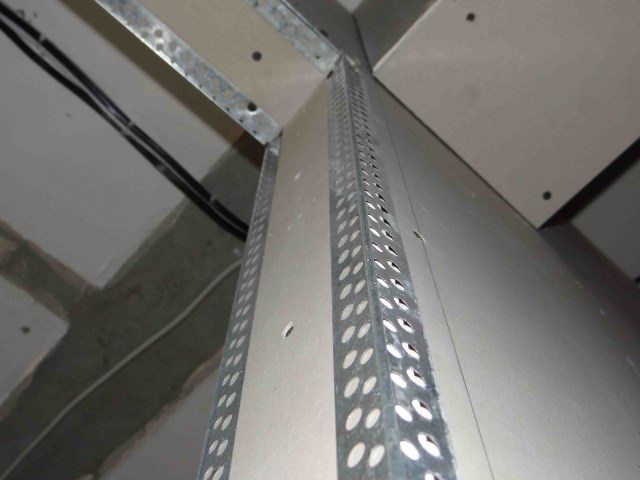
- when wallpapering walls, pasted corners for slopes will protect the corners of the walls from damage;
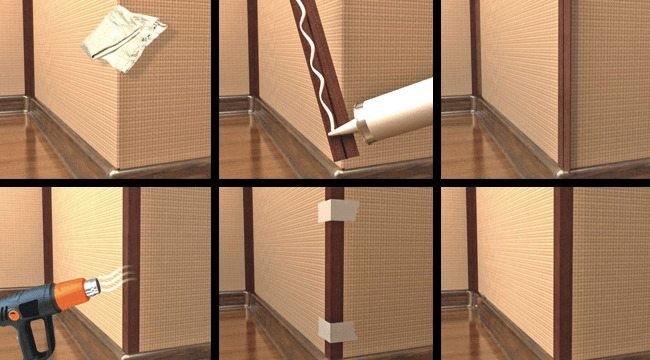
- installation of corner strips is carried out for finishing joints when working with various materials. Elements can be used for external slopes.

Classification
The type of finishing work and its intended purpose determine the plastic elements.
| Name | Appearance |
|---|---|
| Equilateral. They are used when finishing window slopes. |
|
| Versatile. Most often they are used to decorate arches. |
|
| T-shaped. Used for window slopes when it is necessary to mask the joint between them and the wall. | |
| f-shaped. Used for finishing joints and for reliable fixation of plastic plates in grooves. The starting profile provides a decorative appearance to the end and levels the overall plane. f – shaped profile is used for finishing the window opening. |
|
| Removable. They have a latch, which facilitates repair work that does not require removing the slope profile. |
There are two types of corner installation: internal and external, depending on the type of work done.
Dimensions
The dimensions chosen depend on whether the work will be done indoors or outdoors. Additionally, the kind and quantity of flaws and damage to the corner are evaluated.
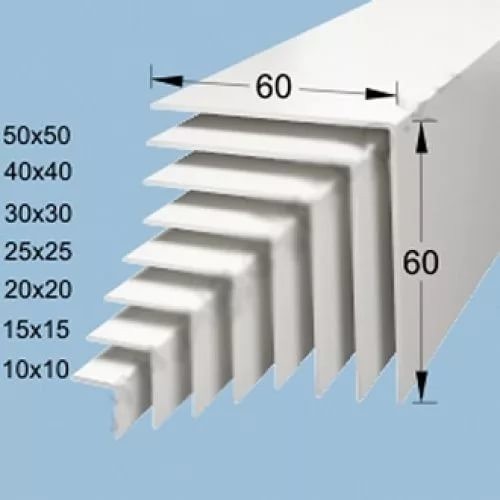
Installing corners on a slope will only require the use of 10 x 10 mm or 20 x 20 mm elements. For the decoration of external windows, wider elements are utilized.
We provide clear instructions and helpful hints to help you install corners and plastic profiles on window slopes. Our assistance includes selecting appropriate materials and guaranteeing accurate measurements, all of which contribute to a polished appearance that amplifies longevity and appeal. This post offers concise, detailed instructions to streamline your project and guarantee that your window slopes are both aesthetically pleasing and structurally sound, regardless of whether you’re starting from scratch or renovating an existing space.
Peculiarities
Because of these elements’ advantageous characteristics, they are now widely used in many different fields.
- used to mask the corner joints of a variety of materials;
right angles are formed at the finishing area; - These are durable elements, the service life of which is estimated at tens of years;
they are easy to install and process; - the presence of several types of materials from which these products are made allows them to be used in different conditions and for different jobs;
a wide range of colors and textures for the appearance of the fittings;
they are affordable; - like the PVC profile for slopes, the fittings are highly moisture resistant;
- despite the fact that plastic slopes are susceptible to the formation of condensation on their surface, neither they nor the corners rot or become moldy;
- installation of plastic elements on slopes made of plaster allows you to form perfectly even corners;
- during repair work, metal perforated products are used to strengthen joints and corners;
- PVC profiles and corners are safe for the environment and people;
- due to the low weight of the PVC profile and corner, the structure is not loaded;
- they are resistant to mechanical stress and are not subject to deformation under the influence of the sun.
The material’s brittleness, which makes it easily harmed during processing, and the potential for hazardous material leakage during a fire are drawbacks.
Glue selection
It is essential to give preference to adhesive compositions that are suitable for use with PVC products.
Although silicone sealants are frequently used for product gluing, it’s vital to keep in mind that they eventually lose their properties and can be washed off with water. The merchandise might consequently come loose.
"Liquid plastic" technology has become more and more prevalent in the installation and finishing of slopes on plastic windows.
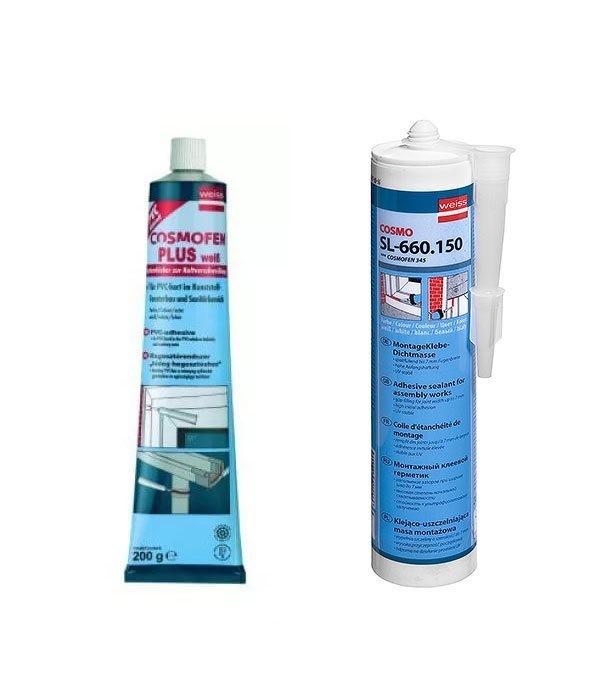
The liquid plastic glue with the same name is used for this purpose. There are lots of good things about this material:
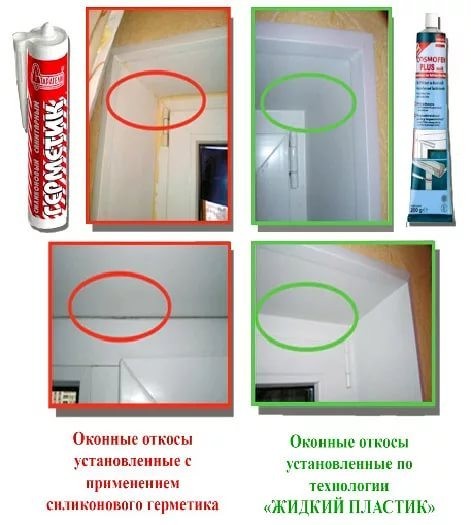
- it does not lose its performance even after ten years;
- it does not turn yellow over time like silicone sealant;
- allows you to create an integral monolithic structure when finishing a window opening.
It can be applied as glue for the initial profile. The adhesive used on window sills is liquid plastic. Plastic window trim is also installed using this contemporary material.
A critical step in improving your windows’ visual appeal and functionality is installing plastic profiles and corners on window slopes. In addition to enhancing the window area’s aesthetic appeal, correctly fitting these components guarantees improved insulation and moisture protection.
For a clean look, when installing corners, make sure they are firmly fastened and aligned. In addition to offering a smooth transition between surfaces, corners are essential for keeping water out of the house and preserving the structural stability of window slopes.
Conversely, plastic profiles provide greater design and functional flexibility. They can be made to fit the design of your windows and blend in with your home’s exterior. These profiles are a sturdy option for extending the life of your window slopes because they are simple to maintain and weatherproof.
To ensure a snug fit, proper installation of these components requires precise measurement and cutting. When installing the corners and plastic profiles, careful attention to detail guarantees that they not only look good but also effectively shield your windows from the elements.


