
Modern magazines and blogs often praise kitchens without upper cabinets. It looks amazing in photos: spacious, airy, beautiful wall finishes, and perfect order. This image creates a feeling of freedom and impeccable style, and many people want to replicate it in their own homes.
However, in real life, things may not be so rosy. The main problem is that the kitchen is primarily a workspace where you need to store a lot of things. Without upper tiers, all the load falls on the lower cabinets and pedestals, which quickly become overloaded.
As a result, instead of the promised minimalism, you can end up with constant chaos on your work surfaces. Dishes, spices, cereals — all of this needs to find a new place. This often leads to things taking on a life of their own on the countertop, negating the entire aesthetic effect.
Therefore, before deciding on such a bold step, it is worth honestly assessing your habits. Are you ready for a radical reduction in supplies and impeccable organization? Or are practicality and convenience more important to you than trends? The answer to this question will determine whether your kitchen will be just a pretty picture or a truly comfortable place.
- The main problem: where to put things
- The reality of open shelves
- The secret of designer photos
- Who would really benefit from this type of kitchen
- Practical inconveniences
- Savings turn into expenses
- Compromise solutions
- Mistake #1: Being inspired by inappropriate examples
- Mistake #2: Underestimating the amount of stuff
- Mistake #3: believing in willpower
- When it's not too late to return the cabinets
- An alternative view: in defense of functionality
The main problem: where to put things
In a standard kitchen, upper cabinets take up about 50% of the total storage space. Remove them, and you will be faced with the question: where to store grains, spices, rarely used dishes, and appliances?
A family of three accumulates at least the following in the kitchen: 20-30 plates of various sizes, 15-20 cups, dozens of glasses and tumblers, pots, pans, baking dishes, a blender, a mixer, a multicooker, jars of grains, pasta, tea, coffee, spices, canned goods, and oils.
All of this does not physically fit into the lower cabinets, unless you own a commercial restaurant with a separate pantry.
The reality of open shelves
Instead of upper cabinets, designers suggest open shelves. They look stylish in photos: a couple of beautiful plates, a potted plant, a stylish jar of pasta.
In reality, after a week, a greasy film from cooking accumulates on the shelves. Dust settles daily. Every item on the shelf needs to be wiped down when cleaning, which takes 30-40 minutes a week.
Open shelves also create visual noise. Even beautifully arranged dishes look chaotic if there are too many of them. The ideal order seen in magazines requires that shelves be filled to a maximum of 30% of their capacity.

The secret of designer photos
In beautiful photos of kitchens without upper cabinets, you will never see:
- Cereals in regular bags;
- Jars of jam from grandma;
- Stacks of food containers;
- Spare set of dishes for guests;
- Rarely used appliances;
- Small household items such as foil, bags, sponges.
Where does it all go? There are three options: either this is a photo shoot in an empty apartment where no one lives. Or the owners have a huge storage room behind the scenes. Or this is a second, formal kitchen, and they cook somewhere else.
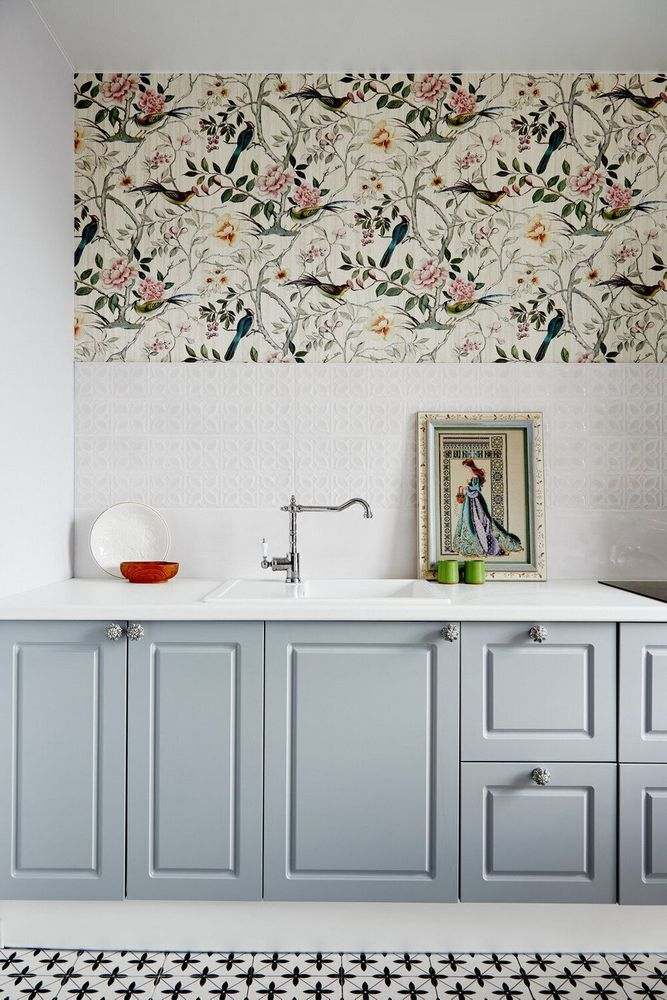
Who would really benefit from this type of kitchen
There are categories of people for whom a kitchen without upper cabinets is a conscious choice:
- Minimalists. People who actually own three plates, two pots, and don't stock up on food. There are very few of them.
- Owners of large apartments with a pantry. If you have a separate 4-6 square meter storage room, you can do without upper cabinets in the kitchen.
- Those who don't cook. If the kitchen is only used for reheating ready-made meals and making coffee, there is no need for a large amount of storage space.
- Owners of very large kitchens. In 20-25 square meters, you can organize enough storage space in the lower tier and islands.
For others, giving up upper cabinets becomes a daily headache.
Practical inconveniences
After six months of living without upper cabinets, typical problems arise:
- Things start to wander. If there is no space in the kitchen, dishes appear in the living rooms, appliances are placed on the balcony, and cereals are stored in the bedroom.
- Countertops become cluttered. Everything that does not fit in the lower cabinets remains in plain sight. The kitchen looks untidy no matter how often you clean it.
- It is inconvenient to cook. Need a spice? You have to bend down. Need a plate? You have to sit down. Dozens of unnecessary movements during a single meal.
- There is nowhere to put tall items. Oil bottles, jars, and tall glasses do not fit well in the lower drawers—they hit the countertop when pulled out.
Savings turn into expenses
Many people choose a kitchen without upper cabinets to save money—less furniture, less expense. But the savings are illusory.
After a few months, you have to buy more:
- Additional shelving in other rooms;
- Storage systems for the pantry;
- More containers and organizers;
- Balcony furniture for storage.
As a result, the cost of storage ends up being more than the price of upper cabinets.
Compromise solutions
If you really want simplicity but need functionality, there are intermediate options:
- Partial rejection. Upper cabinets on only one side of the kitchen, with an open wall or shelves on the other. This creates airiness and enough storage space.
- Upper cabinets up to the ceiling. Instead of the standard 70 cm, make cabinets 2.4-2.6 meters high. They look lighter and provide more storage space.
- Glass facades. Upper cabinets with glass look lighter than solid ones, but they hide the contents and protect them from dust.
- Cabinets only above the work area. Above the dining table or part of the kitchen, there is a free wall, and above the stove and sink, there are closed cabinets.

A kitchen without upper cabinets does look stylish and airy — it's a favorite trick of designers and bloggers. But in real life, such a kitchen quickly becomes inconvenient: there is nowhere to store dishes, pots, and food, so you have to keep everything in plain sight or down low, which is not always practical. It's beautiful, yes, but at the expense of comfort. For most people, such kitchens are the exception rather than the everyday solution.
Mistake #1: Being inspired by inappropriate examples
Most beautiful kitchens without upper cabinets belong to:
- Professional photographers who do not cook at home;
- Bloggers who have a second working kitchen;
- Owners of large apartments with storage rooms.
- Families without children who eat at restaurants.
Repeating their choice in a typical apartment with a family is a recipe for disappointment.
Mistake #2: Underestimating the amount of stuff
Before giving up on upper cabinets, take EVERYTHING out of them and lay it out on the floor. Realistically assess the volume. Think about where it will fit.
People usually think, “I don't have that many dishes,” but when they take them out, it turns out to be three sets of plates, ten pots, and twenty jars of spices.
Mistake #3: believing in willpower
“I will keep the open shelves tidy” is a promise that will be broken in two weeks.
After a day at work, you don't have the energy to arrange your cups neatly and dust every jar. Open shelves require time and energy that are lacking in everyday life.
When it's not too late to return the cabinets
If you have already designed a kitchen without upper cabinets and regret it, all is not lost.
- The top tier can be added later. Furniture makers make cabinets to fit your kitchen exactly. Yes, it's an extra expense, but living in discomfort is more expensive.
- Many people bring back the upper cabinets after a year or two and feel a huge sense of relief.
An alternative view: in defense of functionality
A kitchen is a workspace, not a museum hall. Its main task is convenience, not matching a picture from a magazine.
- Upper cabinets were not invented for the sake of luxury, but to solve a practical problem — to store as many things as possible in a minimum amount of space.
- Ergonomics proves that storage at eye level and slightly above is the most convenient. That's where the upper cabinets are located.
The idea of a kitchen without upper cabinets really looks fantastic in photos. It gives a feeling of airiness, spaciousness, and light modern style. But before you decide on such a bold step in your own home, it is worth weighing all the pros and cons soberly.
The main compromise is the loss of a huge amount of storage space. You will have to think about where to move all the utensils that usually live upstairs. Lower cabinets up to the ceiling, tall pencil cases, an island with drawers, open shelves — all of these can be substitutes, but often require even more space and budget than the classic option.
Ultimately, this design is a matter of priorities. If aesthetics and a sense of freedom are paramount to you and you are ready for strict minimalism, then you will enjoy the result every day. But if your kitchen is a place of active cooking for the family and functionality is your top priority, then giving up the upper cabinets may become a source of daily irritation. Beauty that comes at the expense of convenience is not always worth it.


