
Foam glass has become a popular and efficient alternative for building insulation. This material, which is made of recycled glass, has a number of important qualities that make it ideal for a wide range of building and remodeling applications.
The outstanding thermal insulation qualities of foam glass are among its primary features. Because of its closed-cell structure, which traps air inside tiny glass cells, it effectively reduces heat transfer. In addition to minimizing thermal conductivity, this design improves building energy efficiency, which lowers heating and cooling expenses and helps maintain constant interior temperatures.
Moreover, foam glass is remarkably durable despite being lightweight. Its long-term insulating effectiveness is maintained because, unlike certain conventional insulation materials, it does not settle or deteriorate over time. Because of its durability, it is especially useful in situations where structural integrity and moisture resistance are essential, like underground installations or under concrete slabs.
The ability of foam glass to withstand moisture and water absorption is another noteworthy benefit. Foam glass does not absorb water like organic insulation materials do, which can result in the growth of mold and a decrease in the effectiveness of insulation. Because of this feature, it can be used in humid areas where moisture control is crucial, such as basements, foundations, and roofs.
Foam glass has a wide range of applications in both commercial and residential construction. It is frequently used as insulation in floors, walls, and roofs because it effectively blocks heat without adding undue weight to the building. Its adaptability reaches specialized uses, where its lightweight and thermal stability are beneficial, like insulating around pipes and tanks.
All things considered, foam glass sticks out as a cutting-edge insulating material that combines excellent performance and environmental sustainability. Because of its distinctive qualities, architects, builders, and homeowners who want to maximize environmental impact while improving building comfort and energy efficiency find it to be a compelling option.
Foam glass insulation is distinct because of its special qualities and range of uses in remodeling and building. Excellent thermal insulation is provided by its sturdy, lightweight construction, which makes it perfect for both residential and commercial buildings. Foam glass ensures long-lasting performance in a variety of environmental conditions because it is resistant to moisture, combustible, and compression. It is widely used for floors, walls, roofs, and even subterranean applications. It provides effective energy savings and supports sustainable building methods. Foam glass is an attractive option for contemporary construction projects looking for efficient insulation solutions because of its versatility and environmental advantages.
- Foam glass – what is it, characteristics, application
- Characteristics
- Application
- Advantages and disadvantages
- Varieties
- Features of choice
- Video on the topic
- Foam glass – properties
- Foam glass: all basic properties
- Foam glass slabs
- Foam glass is the best insulation for the home! How to choose insulation? Foamed glass for thermal insulation
- Foam glass, properties, application, history
- Professional opinion – foam glass
- Foam glass insulation. Foam glass – what is it?. Features of foam glass installation.
Foam glass – what is it, characteristics, application
Foam glass is an artificial thermal insulation material made of silicate glass with a cellular air-foamed structure. It was discovered nearly a century ago, but it wasn’t until recently that it was widely utilized as insulation. This was made possible by a number of its useful qualities, the most important of which are its high levels of heat and sound insulation, wide margin of safety, light weight, fire safety, and water resistance.
The material’s production cycle comprises the subsequent primary stages:
- Grinding of raw materials – pieces of silicate glass.
- Mechanical mixing of powder with gas-forming agents (mainly carbon).
- Laying the mixture into a mold or conveyor.
- Sent to the melting furnace.
- Heating up to 1000 °C.
- Melting the powder to a thick viscous mass.
- Gas release accompanied by melt foaming.
- Cooling of the heated mass.
- Formation into a finished product – blocks, slabs, granules.
The only real distinction between this foam glass and regular household glass is that the former has a solid monolithic structure, while the latter has a porous-cellular structure.
Characteristics
The following external characteristics set this type of thermal insulation material apart:
- Porosity of the structure within 80-90%. In this case, the pore dimensions reach sizes from 1 to 10 mm.
- A variety of shades – green, cream, black – depending on the composition of the original components.
- Variability of release forms – blocks, slabs, granules, shaped products.
- A variety of installation methods on any surface – mortar, mechanical fasteners, glue, etc.
The following characteristics of foam glass insulation represent its technical qualities:

- The minimum density is about 100-200 kg/m³, which guarantees a very low load on the foundation and structures.
- High compressive strength – 40-100 tons/m², due to which the material is successfully laid under powerful concrete screeds.
- Low thermal conductivity – 0.4-0.6 W/m*C, which is 1.5-2 times lower than that of wood.
- Sound absorption coefficient sufficient for comfortable conditions – 50-100 dB per slab with a thickness of 100 mm.
- Water absorption volume – no more than 2%. This characteristic makes foam glass almost completely water-repellent and absolutely impervious to steam.
- Inertness to thermal changes and fire safety. The material does not burn, is not afraid of severe frosts and can withstand heating up to 300-500 °C in the standard version, and about 1000 °C with special additives. This allows it to be used in places with a high risk of fire spread.
- Resistance to aggressive substances and environmental safety.
The stability of foam glass insulation’s insulating properties over the course of its full service life—which extends to the structure’s operational period—is one of its most significant practical features.

Application
Foam glass thermal insulation material is used in the following situations in daily life:
- For external or internal insulation of the main walls of the house. The material is ideally suited to silicate bases – concrete, brick, blocks – since it itself has a similar base, and therefore has the same coefficient of thermal expansion.
- For insulation and waterproofing of underground rooms and structures – foundations, basements, basements, garages.
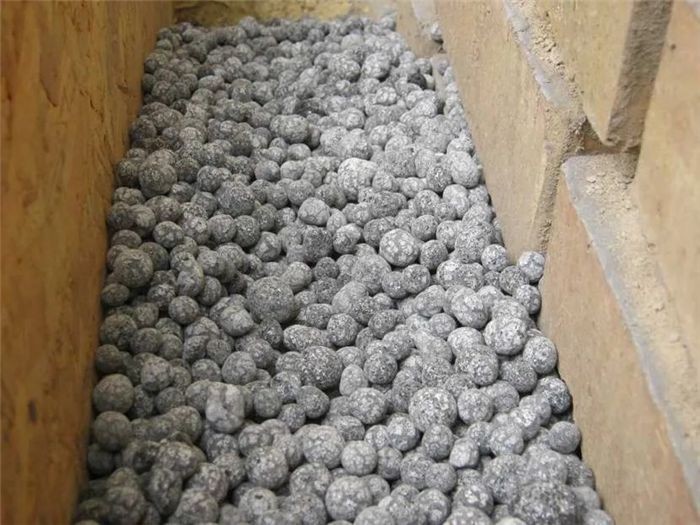
- Foam glass in the form of granules is widely used both as an additive to concrete mass to increase its thermal insulation properties, and as backfill in the cavities of frame walls, floors, ceilings, roofs.
- For thermal insulation of heating and water supply lines, sewer lines – in the form of shaped products.
Speaking of which, Local landscaping often uses foam glass granules, either in their pure form or combined with other bulk materials. They can be used, for instance, to create bedding on clayey and swampy soils, to lay out pathways, to build greenhouse foundations, and to insulate subterranean containers.

Advantages and disadvantages
The benefits of foam glass insulation are as follows:
- Optimal practical characteristics.
- Preservation of thermal insulation properties and dimensions throughout the entire period of operation.
- Environmental Safety.
- Inertness to natural factors of destruction – microorganisms, insects, rodents, rust, etc.
- Durability.
- Ease of processing.
- Compatibility with all building materials.
- Easy to install.
- Fire safety.
- High sound absorption rates.
- Strength.
- Resistance to chemicals.
- Inertness to temperature changes.
However, using foam glass as insulation has a number of drawbacks.

- High price. It is one of the most expensive thermal insulation materials, since the production technology involves high energy costs and the use of special installations.
- Minimum Impact Resistance. Under such loads, products are quickly damaged. This must be taken into account during transportation and installation, since after installation the thermal insulation layer, as a rule, is not subject to such factors.
- Vapor tightness. Contributes to the accumulation of dampness in the room and the formation of an unhealthy microclimate.
- Lack of aesthetics. Additional finishing required after installation.
Counseling! The best adhesive to use when laying material on a flammable substrate is polycement adhesive, like wood. because of its adequate elasticity and adhesive capacity.
Varieties
Based on the form of release, the insulating material of the type under consideration can be classified into the following types:
- Slabs or sheets of standard sizes.
- Blocks of various sizes.
- Molded products – for thermal insulation of pipes, fittings, adapters.
- Granules or crumbs.
When combined with other building materials, foam glass slabs and blocks are frequently utilized as the primary thermal insulator for a variety of structures’ walls, floors, partitions, ceilings, and roofs. To insulate communications, different forms are used. Granular material is used for cavities and surfaces, either in its pure form or in combination with other materials, depending on the application, conditions, and intended use:
A video explaining foam glass:
Granular material is less expensive than blocks and sheets, which is the primary distinction. Granules are used more frequently as a result of this.
Note: There is a low-cost equivalent available in the building materials market that is based on liquid glass. The substance is more akin to adhesives in composition and has a porous structure. It goes without saying that the quality is far worse than the original. Its cost savings of two to three times is its only comparative advantage.
Features of choice
It is important to consider the thickness of the thermal insulation layer needed to attain the desired level of comfort when selecting foam glass. Various materials each have unique qualities.
- For external insulation of a brick or concrete wall, you will need to lay material 100-120 mm thick.
- For thermal insulation of structures made of monolithic wood, as well as various modifications of cellular concrete or expanded clay concrete, a layer thickness of about 80-100 mm will be required.
- When insulating from the inside, the layer size should be at least 50-60 mm.
An example of a floor screed on granulated foam glass is shown in this video:
The bulk version is more appropriate for thermal insulation of horizontal ceilings, such as those found in basements, attics, and interfloor partitions. because it offers superior insulation and makes cavity closures more efficient. The characteristics of the structure and the particulars of the surrounding climate determine the layer’s thickness.
| Main characteristics of foam glass as insulation: | Lightweight, durable, non-combustible, moisture-resistant, excellent thermal insulation properties. |
| Scope of application: | Used in roofs, walls, floors, and foundations for both residential and commercial buildings. Suitable for both new construction and renovation projects. |
In the building sector, foam glass insulation is distinguished by its special qualities and broad range of uses. Its cellular structure, which is made up of microscopic glass bubbles, offers outstanding thermal insulation qualities. Because it effectively reduces heat transfer, this material is ideal for energy-efficient residential and commercial buildings.
Foam glass’s resilience to moisture and long-term durability are two of its key benefits. In contrast to numerous conventional insulation materials, foam glass doesn’t retain moisture or deteriorate with time. Because of this feature, it’s especially useful in humid environments where it can be difficult to maintain insulation performance.
Foam glass not only provides thermal insulation but also acoustic insulation. Because of its dense structure, interior spaces can be quieter by reducing the transmission of sound. Because of its dual purpose, it is the recommended option for projects that want to improve both acoustic quality and thermal comfort.
Application-wise, foam glass is used in a variety of construction settings. It is frequently used on walls, floors, and roofs where long-term durability and moisture resistance are essential. Because of its resilience to severe weather and low temperatures, it is also utilized in industrial settings like pipelines and cold storage facilities.
All things considered, foam glass insulation is a dependable and practical answer to today’s building problems. It still contributes significantly to improving building performance and sustainability because of its unique blend of thermal efficiency, moisture resistance, and sound absorption qualities.


