
Windows with adequate sound insulation are crucial for establishing a calm and quiet living space. By reducing outside noise from neighbors, traffic, and other sources, these windows help you live in a more tranquil and cozy environment.
There are several varieties and styles of sound-insulated windows, and they all provide varying degrees of noise reduction. It will be easier for you to choose the best windows for your house if you are aware of the primary features of these windows.
The main characteristics of sound-insulated windows, such as the components utilized, the glass’s thickness, and the building methods that enhance their efficiency, will all be covered in this article. We will also go over the various kinds of sound-insulated windows that are available and offer some helpful advice on how to select the one that will work best for you.
By the time you finish reading this article, you’ll know more about what makes a window effective at reducing noise and how to choose the right windows to improve your home’s tranquility.
| Characteristic | Description |
| Material | Windows with good sound insulation are often made from materials like PVC, wood, or aluminum, which help reduce noise. |
| Glass Type | Double or triple glazed windows with laminated or acoustic glass are ideal for soundproofing. |
| Seals | High-quality, airtight seals around the window frames are crucial to prevent sound from entering. |
| Frame Construction | Frames with multiple chambers and reinforced profiles offer better sound insulation. |
| Installation | Proper installation is essential to ensure the windows" soundproofing capabilities are maximized. |
| Selection Tips | Consider the noise level in your area, choose the right glass type, and ensure the windows have good seals and frame construction. |
- What are soundproofing structures??
- Application area
- Requirements
- Specifications
- Varieties
- Based on profile material
- By profile type
- By glass type
- By design
- How to choose the right one?
- Which frames are better – TOP brands
- Rehau
- Montblanc Grand 80
- Profile KBE 88
- Salamander
- Veka
- Installation features
- General pros and cons
- Reviews of structures with high sound insulation
- Average prices in the Russian Federation
- Video on the topic
- How to choose windows? Main mistakes and important details.
- Which windows to choose?
What are soundproofing structures??
Specialized glass structures and frames with soundproofing properties are known as soundproof windows, and they can reduce street noise by more than 35 dB.
A translucent portion of a window structure, a sound-proof double-glazed window is made up of three or more glasses joined into a single sealed structure by means of spacer frames that form chambers, or air spaces. Their quantity has a direct bearing on the window unit’s properties, including noise and heat insulation.

Expert studies show that a window’s overall sound insulation is 70% dependent on the double-glazed window’s features and characteristics. Furthermore, the following variables affect window soundproofing parameters:
- Tightness of fit to the window opening.
- Glass thickness. Thick ones better protect the room from street sound.
- Window frame width. The wider they are, the higher the noise protection characteristics.
- Number of cameras. Noise-proof windows are made with three chambers or higher, depending on the noise level that needs to be dampened.
- Filling the chambers with xenon, krypton, sulfur hexafluoride and argon increases the soundproof characteristics of the unit.
- Quality of seals.
Application area
Installing noise-proof windows is not always necessary because they are fairly expensive structures. The fundamental SNiP II-12, which was published in 1977 and specifies acceptable noise levels for various types of premises, establishes the standards for such installations.
Consequently, this level shouldn’t go above 30-35 dB in residential areas. Installing noise-proof windows is not necessary if an apartment or house is situated in a quiet area, away from transportation infrastructure, and the noise level within the rooms meets or falls below the established standard.
It takes more than just installing noise-proof windows to lower the noise level in a room; if there is additional structural noise in the home, the walls, ceilings, and floors must also be shielded from the noise.
However, it’s imperative to identify the sources of the increased noise first. Measurements from specialized laboratories are used for this. Selecting a noise-proof window model should be done if these studies reveal that street noise enters the room through the windows.
If, for instance, street noise levels during the measurements were 80 dB, the window’s noise absorption properties should be 80-35 = 45 dB. A block with at least the fifth class of protection is needed for this room. You can select a soundproof window model with three seals, five chambers, a width of 92 mm, a capacity to absorb 46 dB, and a maximum glass unit thickness of 60 mm from the German brand "Salamander."
Given the typical noise levels for various urban locations, a comparable selection of noise-proof windows can be made for them:
- government institutions and offices up to 50 dB;
- schools, libraries up to 40 dB;
- bedrooms up to 20 dB.
Standards for the private sector are 5 dB lower. The owner shouldn’t try to fully soundproof the home because complete quiet also has a detrimental effect on people’s wellbeing by making them feel claustrophobic and anxious.
Requirements
The living conditions within the premises are determined by their class of production. Sixth class windows offer the highest level of protection, eliminating noise pollution up to 50 dB; fifth class windows, 45 to 50 dB; fourth class, 40 to 45 dB; third class, 35 to 40 dB; second class, 30 to 35 dB; and first class, up to 30 dB.
Requirements for soundproof windows based on the building’s intended use and the surrounding environment:

- apartment above the 3rd floor – second class;
- apartment with access to a quiet courtyard – first class;
- apartment and house near the highways – third class;
- window with access to a highway or railway – fifth class;
- apartment or house near an industrial zone – fifth and sixth grade.
Specifications
Their general technical characteristics are also different from standard windows because the increased noise insulation qualities force certain changes in the designs of such windows.
When it comes to soundproof designs, double-glazed windows are crucial. The thicker glass, asymmetrical inter-glass distance, and arrangement of varying glass thicknesses set it apart from the standard one. Laminated glass is added to certain modifications to improve protection.
Estimate the sound insulation Rw using various glass unit formulas.
- 6-12-44.2.36 dB;
- 10-12-66.2.41 dB;
- 6-12-44.2.40 dB;
- 10-12-66.2.44 dB;
- 2-20-66.2., 50 dB.
The window’s set of features will also vary based on how well-insulated the glass unit is from sound. For instance, the following technical details apply to REHAU SYNEGO six-chamber double-glazed windows with 44 dB of sound insulation:
- soundproofing, 5 cl.;
- noise absorption – up to 44 dB;
- wind resistance – class A;
- thermal protection – 0.98 m 2 *C/W;
- tightness, moisture resistance – class A;
- service life, 60 years;
- construction depth, 80 mm
- glass unit thickness, 51 mm
- heat transfer coefficient of the 2nd seal circuit – 1.0 W/m*K;
- for the 3rd seal circuit – 0.94 W/m*K;
- burglary safety, class RC3;
- price, 6706 rub./m 2 .
A calm and quiet home atmosphere is largely dependent on having windows with adequate sound insulation. These windows are perfect for homes in noisy areas because they are made to minimize the amount of outside noise that enters your house. There are many varieties of sound-absorbing windows available, such as those with laminated glass and double glazing. To achieve the greatest amount of noise reduction when choosing these windows, take into account elements such as the type of frame, the thickness of the glass, and the quality of the sealing. You can select the ideal windows to improve the comfort and tranquility of your living area by being aware of these features.
Varieties
Windows can be made sound-insulated by utilizing a variety of design techniques.
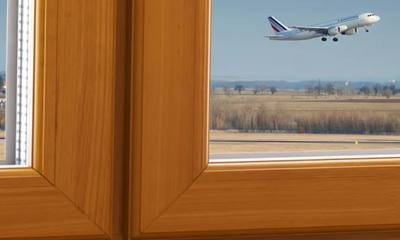
Among them are:
- increasing the thickness of glass and their number in a double-glazed window;
- the width of the air chambers and the composition of the inert gas inside;
- sealing system and strength of connection of the double-glazed window with the profile.
Generally speaking, soundproof windows are categorized based on several attributes:
- profile material;
- his type;
- types of double glazed windows.
Based on profile material
Boxes and frames made of plastic hardly reduce noise at all. Because of its rigidity, PVC cannot absorb sound waves. However, the design of the profile itself is crucial for these windows; in order to accept 3-chamber double-glazed windows, the frames beneath them must be at least 70 cm deep.
Benefits
- soundproofing;
- energy saving;
- thermal protection -0.8 m 2 *K/BT;
- high installation accuracy;
- high strength with closed reinforcement system.
The large specific gravity of 1 m 2 windows and the high cost of plastic noise protection profiles are their drawbacks.
The most widely used five-chamber double-glazed windows that block noise are:
- Russian brands Trocal Inno-Nova Ideal-7000;
- KBE;
- Veka;
- Rehau.
In today’s market, wooden noise-absorbing windows featuring single or double-paired panels are also widely available. This offers adequate sound absorption even in the absence of specific double-glazed windows. Asymmetrical glazing is installed as part of the design; the inner sash has a double-glazed window, and the outer "P" single-layer glass measures 4 mm.
Hence, Swedish Joinex windows with paired sashes 4/(40-60) /4/12/4 and an external triplex offer protection of 50 dB and weigh significantly less than Finnish noise-proof Domus blocks, which have a frame width ranging from 105 to 220 mm and a glazing formula of 3/(80-195)/4/10/4. These window systems typically cost $25,000 for every square meter.
Benefits
- high strength, thanks to the use of 4-layer laminated veneer lumber;
- window thermal insulation 1.05 W/m2K;
- window sound insulation up to Rw=50 dB;
- environmental friendliness;
- long service life over 50 years.
The high price, difficult installation, and requirement for additional mounting frame installation are drawbacks.
By profile type
The sound insulation effect of the profile design is also influenced, albeit much less so than that of a double-glazed window. The profile system for soundproof windows needs to have the following features:
- large installation width;
- maximum number of cameras;
- with a front wall thickness of at least 2.8 mm.
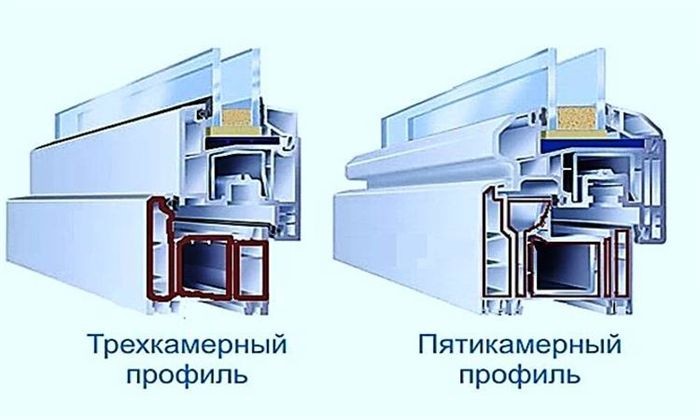
Experts recommend selecting a 70 mm profile with six chambers, such as the WDS 7S / WDS 8S with wide 40/44 mm double-glazed windows, for a strong acoustic effect.
Benefits
- high mechanical characteristics due to the thickness of the outer walls of 2.9-3.0 mm;
- high-quality weld;
- reinforced closed reinforcement 1.5-2.0 mm;
- rigid structure, able to withstand large wind loads;
- small deformation from foundation subsidence;
- high thermal protection 1.25 m 2 x°C/W;
- high noise protection up to 47 dB;
- increased impact resistance at T –30°C;
- long service life of 45 years.
The numerous internal partitions help to explain why the profile’s high installation depth guarantees the steady fixing of window fixtures and frequent use of window sashes.
The high cost and difficulty of installation associated with these systems stem from the larger size and weight of the window unit.
By glass type
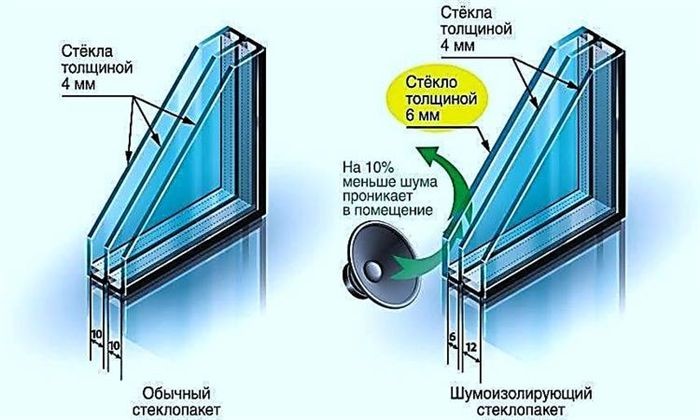
With nearly 80% of the total area devoted to this function, the type of double-glazed window has the biggest impact on the window’s soundproofing qualities. It turns into a big membrane in this way, allowing street noise to enter the space. Three useful techniques are employed by the manufacturers to make the double-glazed window noise-proof and lower the amount of street noise:
- Installing triplex instead of standard glass. The triplex design consists of 2 glasses, between which a durable and fairly elastic polymer film is placed. This glass composition transmits less sound compared to monolithic glass.
- Multi-chamber double-glazed windows with different distance widths, passing through which sound waves reduce their volume.
- Double-glazed windows with argon. Inert gas not only increases the thermal resistance of the structure, but is also the best sound insulator. More viscous argon resists the passage of sound waves much more effectively, reducing sound volume by 25-30%.
Triple-chamber double-glazed windows and above achieve the best soundproofing results. Sulfur hexafluoride, rather than argon, is used in special quiet double-glazed windows to ensure 100% insulation of the room from street noise.
Benefits of noise-reducing double-glazed windows
- high window strength;
- increased level of security;
- energy efficiency;
- high sound absorption.
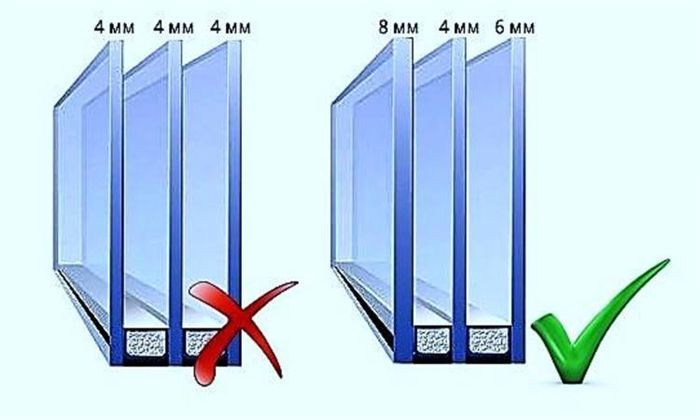
One of the drawbacks is that these double-glazed windows are very expensive.
Average effectiveness of noise insulation for various "quiet" double-glazed window formulas:
- 4/16/4 (Ar), 32 dB, 4300 RUR./m 2 ;
- 4/6/4/12/4 33 dB, 4150 rub./m 2 ;
- 6/10/4/10/4 (Ar) 34 dB, 4700 rub./m 2 ;
- 6/10/4/10/4 (SF6 and Ar) 38, 4800 RUR./m 2 ;
- 4/12/9 (triplex) 42, 6500 rub./m 2 ;
- 4/10/4/10/9 (triplex) 44, 6800 rub./m 2 .
"Ar" and "SF6" stand for argon and sulfur 6-fluoride, which are used to fill the chambers, and the glass formula reliably displays the thickness of the glass and air spaces in millimeters.
By design
Glass is a hard substance with very little acoustic properties. While waves striking a glass sheet are partially reflected, the sheet also starts to vibrate, which transmits noise and directs it farther into the house. The noise level is only partially reduced by thicker glass.
Since there is currently no substitute for glass in nature, it is theoretically impossible to design a double-glazed window with sound protection comparable to that of a wall structure due to the properties of glass. As a result, designers of noise-absorbing window systems alter their general layout in addition to improving its features.
These techniques include sealing the perimeters in the contact area between the PVC sash and the glass unit elements and using acoustic sealants. In order for these materials to act as a damper and lessen the vibrations of the window sheet, they should be as elastic as possible. EPDM and silicone work best for these uses.
The organization of noise protection then moves toward window frames and frames. Studies carried out in the Glaverbel lab have demonstrated that mullion windows can considerably improve sound absorption over windows with continuous glazing when the canvas is divided into two horizontal sections by an impost or even by employing more frequent binding.
The sound insulation of double-glazed windows deteriorates when decorative beads and other various decors are installed. They become unstuck and start to make noise by themselves when exposed to temperature variations. They also begin to rattle more.
How to choose the right one?

If the home or apartment is noisy, laboratory testing must be done before selecting a noise-proof window. This can be done by bringing in experts from the SES or another specialized organization with access to special sound level meters to determine the source of the pollution and its importance.
If the noise is coming from the street and the room’s walls, ceiling, and floors are not contributing to its transmission, you can choose a quiet window by determining the amount of noise that needs to be attenuated.
Every contemporary window comes with a quality certificate that lists the noise insulation value (or "Rw"); a lower value of 35 dB indicates a quieter window; the higher the value, the quieter the window.
You should carefully examine the structure for the presence of cracks in the contact areas where the window sashes and the frame meet the wall opening before replacing a noisy window with a "quiet" one. A leak in the system could be the cause of the increased window noise.
Which frames are better – TOP brands
All well-known window manufacturers use these three fundamental noise reduction principles to create quiet modifications. These "quiet" window models are thought to be the most well-liked among them in terms of the ratio of cost to quality and sound protection.
Rehau
Features:
- PVC;
- Premium Geneo profile;
- width 86 mm;
- 6 cameras;
- glass unit up to 54 mm;
- two compaction circuits, 50 dB;
- 10000 rub./m 2 .
Benefits
- excellent value for money ratio;
- large selection of models.
A drawback is that the wall thickness in some models is less than 2.8 mm.
Montblanc Grand 80

Features:
- PVC;
- width 80 mm;
- 6 cameras;
- 49 dB;
- 7900 rub./m 2 .
Benefit:
- good price-quality ratio;
- reliable noise protection;
- fire safety and high service life of more than 60 years.
No flaws were discovered.
Profile KBE 88
Features:
- PVC;
- width 88 mm;
- 6 cameras;
- 48 dB;
- price-7800 rub. m 2 .
Benefits
- long service life;
- best price-quality ratio.
No flaws were discovered.
Salamander

Features:
- PVC;
- category A;
- bluEvolution;
- width 92 mm;
- 3 sealing circuits;
- 6 cameras;
- glass unit up to 60 mm;
- 46dB, price – 26,000 rub./m 2 .
Benefits
- high quality;
- factory warranty over 5 years.
The cost is extremely high.
Veka
Features:
- Alphline;
- PVC;
- width 90 mm;
- 6 cameras;
- 45 dB;
- 9600 RUR./m 2 .
Benefits
- compliance with European quality;
- soundproof double glazed windows and high-quality seals.
Defect: Exorbitant cost and brief 40-year lifespan of service.
Installation features
Not only is the quality of the window’s construction crucial to the installation process, but so is the caliber of the installation, which guarantees that all structural elements are tight.
As a result, the contractor installing the window unit needs to be aware of the following:

- To seal the mounting seam, you will need to use only high-quality mounting foam, and before applying it, you must thoroughly clean the surfaces from dust and treat them with a primer.
- If the technology for creating an assembly seam is violated, additional sealing with special acoustic mastic is necessary.
- Adjusting the fittings should ensure that the sash fits tightly to the PVC frame; a gap of 1 mm reduces noise insulation by 20-25 dB. The pressure of the window sash to the frame must be adjusted so that the paper sheet cannot move freely between them.
- Perform enhanced sound insulation of window slopes by laying a layer of mineral wool under plasterboard or PVC panels.
- Create an additional third sealing loop on the window sash.
Only silicone elastic products are suitable for "quiet" windows in terms of window seal quality.
General pros and cons
When installing a "quiet" window, an owner needs to be aware that there are benefits and drawbacks to these kinds of structures. To avoid being let down by such a costly purchase later on, it is best to get to know them beforehand.
The advantages vary depending on the following: the type of window, how it is designed, how it operates, the PVC profile’s multi-chamber structure, the type of sound-absorbing seal used, how much pressure is applied, the double-glazed window’s acoustic qualities, and how professionally the installation was done.
Experts who discuss the general advantages of installing "quiet" windows include:
- noise insulation level not lower than 42 dB;
- reduction of glass vibrations to a minimum;
- high strength glass unit;
- long service life;
- window energy efficiency;
- creation of normal living conditions in the house for heat and sound protection.
In reality, these advantageous features of noise-reducing window systems result in a threefold increase in cost over a standard window, which can block out noise up to 32 dB on its own.
There are also several drawbacks in the manufacturing process of quiet windows, including:
- heavy weight that not every window sill can bear;
- a thick frame takes up a lot of space in the window opening, making it more difficult to provide thermal protection along its contour;
- low light output due to the installation of multi-glazed windows.
Reviews of structures with high sound insulation
Regretfully, not all window sellers are truthful with their clients; occasionally, they sell blocks with typical noise absorption levels of 20 to 30 dB, and occasionally even lower, under the pretense of being "quiet" windows. Therefore, it is preferable for the buyer to read reviews about a particular model on forums before making a purchase. Numerous true tales exist regarding the caliber of sound-absorbing windows.
Here are a few of them:

- Glazing the loggia with triple glazing and installing valves reduced the noise in the apartment by 29-31 dB.
- To increase the noise protection of an existing window, it is recommended to install a second strand of a 58 mm budget series PVC window to dampen the speed of the sound wave. True, you will have to forget about large window sills.
- The 16M1-16-12M1 double-glazed window with inert gas (SF6) and an opening internal sash has high noise-proofing characteristics, but to create natural circulation, the installation of a supply wall valve is required.
- After 10 years of operation, the window became “noisy”, experts advised replacing the double-glazed window with a new one with the formula 6-22-4i/8 triplex-20-4i or installing an additional strand with a single-chamber double-glazed window. According to the second option, the result was very high not only in terms of protection from street noise, but also in terms of heat loss.
- Russian sanitary and epidemiological supervision does not consider those models that cannot provide a level of noise protection when the sash is open to be heat-protective windows; such windows must be marked with a GP of at least 28 dB.
- After the customer installed a Rehau window with bells and whistles, upon inspection it turned out that its noise insulation was lower than that of an old wooden window in Stalinka, after which the window company paid him compensation in full in court.
More thorough reviews are available to read here, here, and here.
Average prices in the Russian Federation
All noise-proof windows are high-priced items; the protection option chosen by the designers, the brand of the manufacturer, the quantity of chambers, and the material of the window all play a major role in how much they cost. The priciest options made in the West are constructed of wood.
In terms of price-quality protection ratio, the quietest Windows with maximum sound insulation available on the domestic market are thought to be:
- Rehau, PVC, premium Geneo profile, 6 chambers, 50 dB, 10,000 rub./m 2 .
- Montblanc Grand 80, 49 dB, 7900 rub./m 2
- KBE 88, 6 cameras, 48 dB, price – 7800 rub./m 2 .
- Salamander, bluEvolution, 6 cameras, 46 dB, price – 26,000 rub./m 2
- Veka, Alphline, 6 cameras, 45 dB, 9600 rub./m 2
To create a peaceful and cozy living space, windows with adequate sound insulation are crucial. They contribute to a more tranquil home by lessening the effects of outside noise. Making an informed choice when choosing the best windows for your house can be aided by being aware of the key features of these windows, including their materials, designs, and technologies.
There are several kinds of sound-absorbing windows available, and each has benefits of its own. Windows with double or triple glazing are common options because they provide good sound absorption. Effective sound insulation is also offered by windows with specific soundproofing coatings and laminated glass. You can select windows that best suit your needs and tastes by taking these factors into consideration.
There are a few basic guidelines that should be followed when choosing windows with sound insulation. Seek windows with higher Sound Transmission Class (STC) ratings; these windows are more capable of reducing noise. Take note of the materials’ quality and the windows’ construction. For best results, installation must also be done correctly. You can improve your home’s sound insulation and take pleasure in a quieter living environment by keeping these things in mind.


