
Because MDF panels are inexpensive and versatile, they are becoming a popular option for both residential and commercial construction. The process of converting leftover hardwood or softwood into wood fibers, mixing it with wax and a resin binder, and then forming panels under high pressure and temperature results in medium-density fiberboard, or MDF. The end product is a smooth, stable, and dense material with a wide range of uses.
MDF panels are known for their smooth surface, which makes them perfect for veneering and painting. Since MDF lacks knots and grain patterns found in natural wood, achieving a uniform finish is made easier. Because of this, it is a recommended option for making bespoke furniture, cabinetry, and interior design elements. It is possible to create complex designs and fine finishes with it that would be difficult with solid wood because of its consistency and ease of machining.
MDF panels are renowned for their stability and durability in addition to their beauty. Compared to solid wood, they are less prone to warp or crack, which makes them appropriate for settings with varying humidity levels. This stability guarantees that MDF constructions and furniture pieces keep their appearance and functionality over time, adding to their longevity.
MDF panels are frequently utilized in wall paneling, shelving, and even the building of soundproofing components in addition to furniture and cabinets. Because of their dense composition, which reduces sound transmission, they are a good option for home theaters, offices, and recording studios. Furthermore, MDF is frequently used for interior doors and moldings because it offers a more affordable option than solid wood while maintaining a similar aesthetic appeal.
Despite the many benefits of MDF panels, it’s crucial to handle them carefully, especially when sanding or cutting, as the dust can be dangerous if inhaled. During installation, adequate ventilation and protective gear are crucial. Notwithstanding this small disadvantage, MDF panels are an essential component of many contemporary building and remodeling projects due to their many advantages and adaptability.
Medium-Density Fiberboard, or MDF, panels are a common and affordable material used in building and remodeling projects. Made of high-pressure-bonded wood fibers and resin, MDF panels have a smooth surface ideal for veneering and painting. They are perfect for wall paneling, furniture, cabinets, and decorative molding because of their stability, toughness, and ease of machining. MDF panels offer an economical and high-performing practical solution, whether you’re building custom pieces or remodeling a space.
- Where and how they can be used
- DSP or MDF: which is better to choose and why
- Which is better: laminated chipboard or MDF, and what is the difference between these materials
- How to choose and buy MDF panels for walls, floors, ceilings or furniture
- How to attach MDF panels to the wall and ceiling with your own hands
- Video on the topic
- How to install MDF panels. detailed instructions.
- 🔨What are MDF panels? Let"s look at the composition of the material and where to use it.
- What is MDF board, its features and types.
- 🍒Decorative MDF panels and PVC: types, properties and their main differences🛀
- 🧢MDF panels or plastic panels? What to choose? Understanding the materials.📒
- MDF Panels for Walls
- MDF wall panels "Pine" from Leroy Merlin – honest review, review
Where and how they can be used
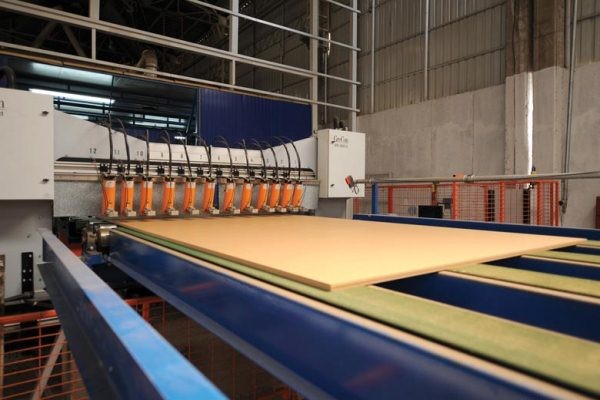
MDF is an acronym for finely dispersed fraction. By pressing the wood fibers under high pressure, their density matches average values, and thus these boards are made.
Manufacturing of MDF panels
The resultant slabs have a wide range of applications. MDF serves as a foundation for a wide range of produced factory goods. Let’s look at a few key applications of this information in daily life:
-To finish floors and ceilings, MDF sheet panels are utilized;
-using MDF panels to cover walls is also fairly common;
-making furniture, the exteriors of which can be adorned with carved details or have a smooth surface;
-MDF is frequently used as a soundproofing material because of its qualities, which enable a significant reduction in audibility between rooms;

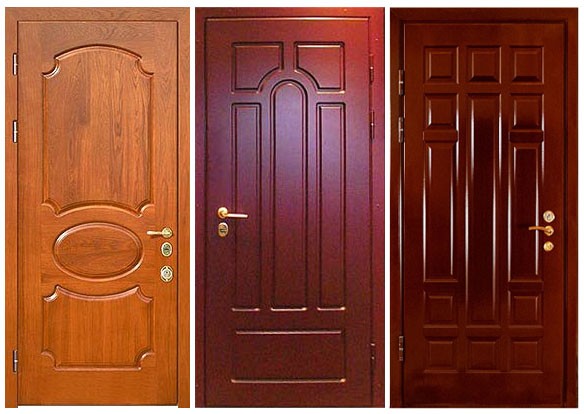
The modification of steel doors is one of this material’s more uncommon but highly common uses. MDF is applied to an existing surface as a decorative lining to enhance its look. Simultaneously, MDF lining for entry doors is available in a range of colors and styles.
The fact that only entirely safe materials—particularly carbide resins—are used in the production process of this material has led to its extensive use. Furthermore, these plates possess exceptional technical qualities, including resistance to heat and moisture, and they don’t allow mold or other types of fungi to grow on their surface or within their chips. Because of all of this, MDF stamps are a strong rival to real wood.
DSP or MDF: which is better to choose and why
The MDF has been putting a lot of pressure on chipboard lately. Is there a difference between these remarkably similar materials and why did this happen? Let’s attempt to determine the reasons behind and if such a configuration of positions is warranted.

First and foremost, it’s important to keep in mind that chipboard is a type of wood chipboard, created by pressing wood chips and adding a unique binder, just like MDF. It is true that the second option has a number of noteworthy distinctions and benefits, which in some cases became a deciding factor in the debate over its acceptance.
Distinctive features between MDF and chipboard
Chipboard has far less capacity to hold components that are screwed into it. When it comes to furniture manufacturing, there is a risk of connected parts coming loose. Door knobs, kitchen cabinet doors, and many other items can just fall off. Furthermore, because the holes are prone to rapidly loosening, it is impossible to refasten the portion that has fallen. Because of their significantly higher density, MDF furniture boards can firmly hold objects fixed within them.
Environmental friendliness is a significant factor when choosing a material. When wondering what is better – chipboard or MDF for the kitchen, you need to take into account that the first option is absolutely not environmentally friendly. Moreover, it is unsafe for health, since the resins used in the manufacturing process are capable of releasing formaldehyde – a specific substance that has a negative effect, primarily on the respiratory tract, as well as on human mucous membranes and skin. At one time, formaldehyde was included in the list of carcinogenic substances that can contribute to the development of diseases such as cancer. It is worth noting that due to its high environmental friendliness, children"s furniture made from MDF is highly valued.
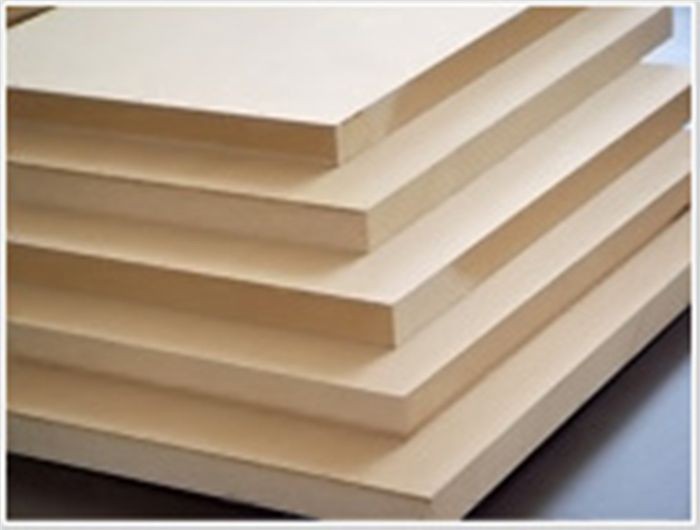
Now that you know why MDF is used in furniture and other products and what makes it better than chipboard, you might think this material is perfect. This is essentially accurate, provided that its high cost is not considered, as it frequently serves as the primary barrier to acquisition.
MDF panels are good for the environment and human health.
Panels are typically sold without the final coating, which entails additional expenses. Of course, you can purchase MDF sheets that have already been coated, or you can handle this yourself. In any event, this is a small price to pay for people who are concerned about the wellbeing of their loved ones.
Which is better: laminated chipboard or MDF, and what is the difference between these materials
When it comes to chipboard, it is assumed that everyone has heard of the material at least once. Nonetheless, common users frequently become confused by the acronym LDSP. With the exception of the extra laminated coating, this particle board is actually the same. Previously, this technology allowed for the enhancement of chipboard’s original properties as well as an expansion of its uses.

Because laminated chipboard has an extra layer of protection, it is therefore far less prone to mechanical damage. Additionally, purchasing a ready-made slab in practically any color will be far less expensive. Nevertheless, laminated chipboard is not as moisture-resistant as MDF, which prevents it from being used in bathrooms. The question of whether MDF or laminated chipboard is better for the kitchen does not come up for the same reason.
A chipboard board with a laminated coating is called LDSP.
The issue of laminated chipboard’s environmental friendliness is still present. Even with all efforts to lower the formaldehyde content, there is still a chance that you will come across a fake. For this reason, it is important to carefully review the certificates that are affixed to every product batch. Hence, we once more conclude that MDF or laminated chipboard is superior for furniture and home décor, especially considering that laminated MDF boards are continually available.
How to choose and buy MDF panels for walls, floors, ceilings or furniture
You should consider the different features of the MDF panel you have purchased and, in certain situations, concentrate on the most significant indicators based on your intended use of it.

For creating kitchen furniture, painted MDF panels are therefore superior to others. They don’t break down from repeated contact with water because they have a higher resistance to moisture.
MDF with a film that repels moisture for protection
This won’t be sufficient to decorate the bathroom, though. In this instance, it is preferable to use double-sided lamination to achieve a material with increased moisture resistance. By doing this, the panel will be shielded from the inside as well as the outside.
Veneered material is appropriate if you intend to perform any finishing work on the furniture’s facade. However, using regular tile is perfectly acceptable if finishing a sizable area is the goal.

Regarding manufacturers, if the packaging clearly states that the product is made in Europe, you can expect the quality you want. Numerous Russian cities are home to the representative offices of Sweden, Germany, and Poland. However, even though they will be less expensive, Chinese goods are unlikely to meet your needs for the right amount of strength and moisture resistance. Moisture-resistant MDF panels for décor in bathrooms
But before you buy anything, make sure to examine the product externally, regardless of the manufacturer you choose. If an MDF frame profile needs to be purchased, the same guidelines will apply. The following guidelines are followed when performing the inspection procedure:
-verify that the surface is chip-free and smooth;
-feel the panel to ensure that its surface is smooth; any bumps or depressions should be avoided as they may weaken the panel;
-MDF board ought to be odor-free;
-every panel needs to be the same color;
-also keep an eye on the indicator that describes the material’s degree of swelling due to moisture contact. The accepted norm for this value is 17%.
Additionally, keep in mind that MDF wall panels can vary in thickness before making a purchase. Because they are lighter and require less storage space, thin ones make work much simpler. Nevertheless, because of their fragility, they may shatter if handled carelessly while in use. Although thick ones are more dependable and stronger, it is not advised to use them to decorate extremely small spaces because they will take up already-limited area.
Metal entry doors with MDF panels covering them
How to attach MDF panels to the wall and ceiling with your own hands
It’s possible to figure out how to attach MDF panels to a wall or ceiling on your own, even if you’ve never worked with such material. Additionally, you must first gather the necessary supplies and tools. Simple pencil, a construction level, a corner for marking a right angle, a metal hacksaw, a hammer drill, a screwdriver or hammer, dowels, and screws are all included in this list.
The surface that will be used for the fastening must first be cleaned. It needs to be completely free of dirt and dust. Furthermore, a comprehensive examination is required to rule out the presence of mold and fungus.
Should you have to construct an MDF panel ceiling by hand, you will require wooden blocks to serve as the frame’s transverse sections in addition to hangers and guide profiles. Simple wooden blocks or specialized plastic sheathing will work just fine for attaching MDF panels to the wall.

Counseling! It is advised to use clamps to facilitate the fastening process. This will make the task much easier overall and enable you to fix portions of the covering on the sheathing.
Installing MDF wall panels on lathing by yourself
Making accurate markings for the sheathing is crucial because it will enable you to precisely secure each component later on. The picture of the MDF panel ceilings shows you how to do this properly. At this point, it’s critical to remember that there needs to be enough space for lamps and other communications between the fixed panels and the actual ceiling.
Marking the location of the first lathing strip attachment—horizontal or vertical—is another step in the installation of MDF wall panels. After all sheathing components are attached while keeping the necessary space, the installation of MDF wall panels starts. Simple clamps or self-tapping screws are used to fix them.
Counseling! The official Soyuz website offers products that are both certified and of the highest caliber. They meet all standards and requirements, which makes MDF wall panels made of them extremely valuable.
This is not to suggest that hand-installing MDF panels on a wall is an intricate procedure. Instead, it is tedious and demands continuous focus and extremely accurate computations.
| Characteristic | Description |
| Material | Medium-density fiberboard, made from wood fibers bonded with resin |
| Durability | Strong and stable, resistant to warping |
| Finishes | Available in various finishes like paint, veneer, and laminate |
| Applications | Used in furniture, cabinetry, wall panels, and flooring |
| Maintenance | Easy to clean and maintain with regular dusting and occasional wiping |
| Cost | Affordable compared to solid wood and other materials |
| Eco-friendliness | Made from recycled wood fibers, reducing waste |
MDF panels are an affordable and adaptable option for a range of building and remodeling tasks. They are a popular option for both residential and commercial interiors because of their smooth surface and simplicity of customization. MDF panels offer a robust and aesthetically pleasing alternative for installing furniture, wall paneling, or cabinets.
MDF’s shapeability and finishability are among its main benefits. This makes it possible to create elaborate patterns and a variety of finishes, such as veneers and paint. Furthermore, MDF ensures longevity and resilience in daily use because it is stronger and denser than many other types of engineered wood.
MDF panels are frequently utilized in living rooms, offices, kitchens, and bathrooms. They are perfect for drawing consistent, tidy lines in any area because of their smooth surface and resistance to warping. Additionally, they are more affordable than solid wood, which makes them a desirable choice for projects on a tight budget without sacrificing quality.
All things considered, MDF panels are an elegant and useful option for anyone wishing to improve their area. Because of their durable qualities and adaptable design, they are a dependable material for a range of applications in the building and remodeling industries.


