
Because of its superior thermal and acoustic qualities, mineral wool insulation is a common choice for building and renovation projects. It is spun and compressed into mats or boards, and it is made from natural minerals like diabase or basalt that resemble wool. Millions of tiny air pockets are formed by these fibers, trapping sound waves and heat to effectively insulate against noise and cold.
The ability of mineral wool insulation to withstand fire is one of its main benefits. Mineral wool is non-combustible and resistant to extreme heat, unlike certain other insulation materials that can melt or release harmful gases. Because of this characteristic, it is a recommended choice for improving a building’s fire safety, particularly in locations where fire resistance is essential.
The longevity and moisture resistance of mineral wool are two more noteworthy qualities. Because it doesn’t decay or encourage the growth of mold or mildew, it can be used in moist areas like bathrooms or basements. Furthermore, mineral wool has minimal maintenance needs and long-term performance due to its chemical inertness and lack of deterioration.
The process of installing mineral wool insulation is simple and usually involves cutting mats or boards to fit snugly between rafters, joists, or studs. It offers adaptable thermal and acoustic insulation solutions and can be applied to walls, floors, and roofs of buildings. Because mineral wool is fibrous, handling it requires careful safety measures, but modern products are made to cause the least amount of irritation to the skin and respiratory system.
- Characteristics and properties
- Types of mineral wool
- Glass wool
- Slag
- Basalt wool
- Advantages and disadvantages
- Glass wool
- Slag
- Basalt wool
- In what cases should it use it
- Popular manufacturers and prices
- Criterias of choice
- Insulation technology
- Outside
- From the inside
- Video on the topic
- Mineral wool or stone??? Which insulation do we prefer?? Advantages and disadvantages!
- Basalt mineral glass wool for thermal insulation and sound insulation, sound insulation, how they differ
- Insulation. TeploKnauf or Rockwool? Glass wool or stone wool? (personal opinion)
- Selection of stone wool and rules for its installation // FORUMHOUSE
- How I “destroyed” 150,000 rubles // Why I threw out basalt wool from a cold attic?
Characteristics and properties
The buyer is guided by multiple criteria when selecting a particular type of insulation. Technical attributes and features hold a significant position among them. Ultimately, their effectiveness in keeping the room cold, their longevity, and their ease of installation all depend on them.
The primary technical indicators of insulation, according to experts, are:
- thermal conductivity of mineral wool is the most important characteristic. The coefficient varies between 0.035-0.077 W/(m K) (the lower the value, the better the heat is retained). Thermal conductivity depends on the type of raw material from which the insulation is made, its thickness and density;
- the fiber diameter according to GOST 4640-93 should be 0.5-12 microns, in fact it is produced in the range of 3-15 microns (the average is 4-12 microns);
- thread length is 5-50 mm. Note that the elasticity of the material and its bending and tensile strength depend on this characteristic;
- maximum permissible operating temperature – +1000 o C (basalt wool);
- the density of mineral wool ranges from 20 (light slabs) to 250 (hard mats) kg/m 3 (on the packaging it is designated “P” or “PZh”, where the letter “Zh” indicates hardness). The indicator depends on: thermal conductivity, resistance to various deformations (bending, compression, tension), weight load on the insulated elements of the house structure.
Apart from the specified technical attributes, one must also consider the dimensions and form of mineral wool release, as these factors impact how easy it is to perform thermal insulation work. Rolls and mats are available for purchase. The insulation has a maximum length of 10 m and a maximum width of 1.0 to 1.5 m when rolled up. The primary measurements of mineral wool slabs are 125 cm in length and 61 cm in width. Thickness ranges from 2 to 25 cm.
Among the primary characteristics to consider are:
- flexibility – needed when insulating surfaces with complex geometry, for example, a pipeline;
- fire resistance – allows you to prevent contact of hot house structures with flammable materials;
- vapor permeability is an important property when insulating walls – they must “breathe”;
- hygroscopicity – affects the thermal insulation properties and mechanical strength of the material.
Types of mineral wool
Producers of insulation using mineral-based raw materials provide:
- glass wool;
- slag wool;
- stone (basalt) wool.
Every material has unique technical qualities and properties.
Glass wool
Glass waste from glass factories is used to make fiberglass insulation, along with a combination of limestone, sand, soda, borax, and dolomite. At roughly +1400 degrees Celsius, all of this melts, and the molten mass is then forced through rotating dies.
The threads range in length from 1.5 to 5 cm and in thickness from 5 to 15 microns. Coefficient of thermal conductivity: 0.035–0.052 W/(m K). Operating temperature range: -60 to +450 degrees Celsius. The fibers gradually crystallize, which causes shrinkage and all the associated effects. The material can lose up to 80% of its volume due to shrinkage processes that are accelerated by moisture or humid environments.
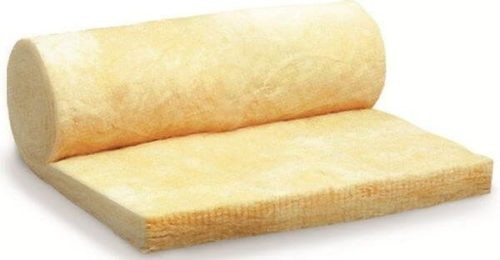
Extensively employed in both industry and residential construction as thermal insulation.
Slag
By forcing the molten mixture through a grate, blast furnace slag—a byproduct of the metallurgical industry—can be turned into slag wool. The end product is a fiber that can reach 1.6 cm in length and a diameter of 4 to 12 microns (μm). The thermal conductivity coefficient of the resultant material ranges from 0.046 to 0.048 W/(m K). In this instance, a mat density of 350–450 kg/m 3 yields the best indicator. Operating temperatures between -50 and +250 o C are allowed.

Wet fiber reacts with water due to the presence of sulfur in the raw material to produce sulfuric acid, which corrodes iron and concrete. As a result, slag wool is not frequently used in residential construction.
Because of its high fragility, the insulation’s properties and characteristics preclude its use for insulating industrial building facades and various types of pipes.
Basalt wool
Granite (gabbro) and basalt rocks are used to make stone fiber insulation; occasionally, insulating mats composed of granite fibers are referred to as stone wool, but this is unimportant because gabbro wool is rarely available for purchase. Different technical indicators apply to different materials. Regarding stone wool:
- thermal conductivity coefficient – 0.048-0.077 W/(m K);
- fiber thickness – 5-12 microns, length – 0.5-1.6 cm;
- maximum operating temperature +600 o C.
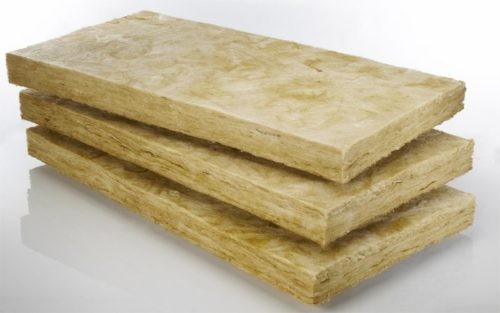
Basalt fiber possesses:
- diameter – 5-15 microns;
- length – 2.0-5.0 cm.
With a thermal conductivity coefficient ranging from 0.035 to 0.039 W/(m K), basalt wool mats can be used in temperatures between –190 o C and +1000 o C.
Moreover, the insulation has a high degree of sound insulation from airborne noise and almost no hygroscopicity, making it possible to insulate buildings from the outside without the need for waterproofing. For these reasons, specific soundproofing sheets are made. However, as you can read in the work "Soundproofing the floor in an apartment under a screed with your own hands," basalt fibers are not a sound barrier against impact or structural noise.
Advantages and disadvantages
Every variety of mineral wool has advantages and disadvantages of its own.
Glass wool
Glass wool has several benefits that affect consumers’ decisions, which is why insulation is still very popular:
- budget cost;
- very good thermal insulation characteristics;
- versatility – you can insulate any structural element of a building and more;
- resists mold and mildew well – quartz fiber is not a basis for the proliferation of microorganisms;
- environmental friendliness – the material is not an allergen and does not emit harmful substances when heated;
- convenient delivery from the retail outlet to the place of work;
- fire safety – belongs to the class of non-combustible materials (indicated “NG” on the packaging);
- tolerates high temperatures, which is why industrial furnaces are lined with glass wool to preserve heat, and chimneys to prevent fire of wooden structures;
- simple installation technology – the work can be performed by a home craftsman without experience in thermal insulation work;
- low specific gravity, creating virtually no load on insulated structures.
Among the drawbacks are:
- high hygroscopicity, which reduces the insulation effect to zero in conditions of high humidity;
- relatively short service life – about 10 years. Manufacturers" claims about a long service life, more than 30 years, are not confirmed by practice – shrinkage occurs over time, even in a dry room;
- low resistance to alkalis – they react and are destroyed;
- causticity – protection of the body and respiratory organs is required during work;
- attractive to rodents – they like to make moves and make nests, despite the taunting.
Slag
Slag wool has several benefits, including:
- low price – the raw material is blast furnace waste, which metallurgists do not know what to do with (only about 10% is recycled);
- high thermal insulation abilities, still inferior to other types of mineral wool;
- like fiberglass, easy installation;
- good sound absorption of airborne noise, but not shock or structural noise;
- long life, but only in dry places;
- biological resistance to microorganisms (mold, fungus).
- weak resistance to water with high hygroscopicity, as a result of which sulfuric acid is formed in an environment with high humidity, destroying the structure of the house;
- high fragility and thorniness of the fiber, requiring protection of the body and respiratory tract with protective clothing, gloves and a respirator;
- low resistance to vibration loads – settles, sharply increasing thermal conductivity;
- the presence of formaldehyde in the composition of volatile compounds;
- loss of properties due to sudden temperature fluctuations – shrinks.
Due to the aforementioned drawbacks, slag wool is no longer used in residential construction.
Basalt wool
Basalt fiber-based thermal insulation material utilizes the finest qualities of its raw materials:
- durability – manufacturers provide a guarantee of 25-30 years of service with a total service life of at least 50 years;
- The highest resistance to heating: withstands the temperature to +1000 o C;
- weak hygroscopicity – when you try to pass water through the mat, it will not get wet: only 0.095% of moisture is absorbed after 24-hour soaking.
Furthermore, insulation offers several other benefits:
- low thermal conductivity coefficient allows you to effectively insulate any house structure;
- good absorption of airborne noise due to the porous structure and random arrangement of fibers – up to 57 dB. However, little helps against impact and structural noise – the wrong structure of the material;
- does not become covered with mold and mildew – stone fibers are not the basis for the proliferation of microorganisms;
- is not damaged, unlike glass wool, by rodents – due to the stiffer fibers, mice and rats do not make passages and nests in the insulation;
- versatility – can be used inside and outside the building, insulate a wooden, concrete, brick house or aerated concrete building;
- easy to transport and carry;
- Simple insulation technique – work can be done on their own;
- resistance to chemical reagents;
- high elasticity, which allows you to maintain dimensions throughout the service life;
- environmentally friendly – the existing formaldehyde resin releases harmful and toxic substances when heated in such small quantities that the human body does not react in any way.
There is one more benefit that is often overlooked: decorative plaster can be applied directly to the insulation when it comes to insulating the walls or facade of an apartment or house from the interior.
- high price;
- the presence of connecting seams, which over time reduce the level of thermal protection – a relative minus, since the critical drop in properties is far away (the problem partially arises only when the mats are rigidly fixed to the wall using glue or special dowels);
- during work, unpleasant dust is generated, from which it is necessary to protect the lungs using personal protective equipment.
In what cases should it use it
The availability of specialty brands of mineral-based insulation, such as "Warm walls," "Warm roofs," and so on, makes choosing easier thanks to modern technology. In the event that no names are given, you should concentrate on the operating circumstances, as these determine the material’s thickness, specific gravity, and hygroscopicity.
Yes, mineral wool should be wrapped in fiberglass rolls with a specific gravity of 11–15 kg/m3 for use as insulation on the roof of a home or attic with a complex surface that has many protrusions and depressions. This insulation forms a thermal contour with the fewest possible seams by fitting snugly to the base of the insulated structure.
Glass wool with the same density, but in the form of mats, can be used for internal thermal insulation work on walls. In glazed balconies and loggias, a denser material (20–30 kg/m3) is required for the walls.
Glass wool can be utilized to insulate any of the house’s structural components. Here, the only restriction is moisture. Finishing should, as a last resort, totally shield the insulation from excessive humidity and water contact.
Saunas, "wet" facades, foundations, and baths can all be insulated with basalt wool (but only from the inside). This is the best solution because of its extremely low hygroscopicity. Insulation selection must take specific gravity into account. Ground floors, attics, and flat roofs are good places for the lightest, lowest-density brands. This kind of cotton wool works well as pipeline insulation as well.
Using denser stone wool (100–150 kg/m3), the interior cavities of brick and frame homes are insulated. For the floors and ceilings, mineral wool with the same specific gravity is required for insulation.
The walls and ceilings made of reinforced concrete are insulated using a more robust and heavier material (150 kg/m 3). Stone cotton wool has a matte density of roughly 200 kg/m 3 and can be used as fire protection.
You can always look for an alternative if you are unsure about using mineral wool for any reason.
Popular manufacturers and prices
The technology employed and the degree of control over standard compliance always determine the quality of the product. Among the best in this regard, per customer reviews, are:
Rockwool. Danish business with multiple Russian subsidiaries. creates insulation out of basalt and gabbro fiber. The attributes of the products include:
- good heat and sound insulating properties – mats are used to insulate recording studios;
- fire safety;
- durability;
- environmental friendliness.
Croatia. The Finnish company PAROC provides fireproof and energy-efficient basalt wool insulation for acoustic applications, residential construction, and other uses. Superior merchandise free of counterfeits—the business keeps a close eye out for the emergence of false information.
One major drawback is that prices are relatively high, which hinders sales in Russia.
Iseki. Global insulation manufacturer with headquarters in Paris that specializes in quartz (fiberglass) and basalt (stone fiber). produces things on its own in Russia. Because of the products’ exceptional price-quality ratio, the brand is able to dominate sales not just in Europe but throughout the world.
TechnoNIKOL. One Russian producer of basalt fiber insulation goes by the TechnoNIKOL brand. possesses factories abroad, such as in Belarus, Lithuania, the Czech Republic, England, etc. ranked among the TOP 5 biggest producers of waterproofing and heating materials. The products stand out for their excellent quality and affordable costs. The business invented dust-free stone wool (Rocklight brand), which makes thermal insulation work easier. It was the first in the world to do this.
IZOVOL is a Russian company that produces basalt products that are reasonably priced and of decent quality. The products are used to insulate roofing components, facades, and interior walls. While all quality indicators meet European and Russian standards, the rating is impacted by minor fiber shedding that occurs during the work process. Izovol is particularly popular for pitched roof and attic insulation.
The cost of mineral insulation:
Criterias of choice
The following standards should be followed when selecting mineral wool for insulation:
- thermal conductivity. It is individual for different types of mineral wool. When choosing, you need to focus on the lowest value of the indicator, but at the same time remember that it is not advisable to buy thermal insulation material with a heat transfer coefficient of more than 0.050 W/(m K). In this case, it is better to opt for insulation made of polystyrene foam or expanded polystyrene;
- specific gravity. This parameter is important for several reasons. Firstly, it determines the thermal insulation properties of the material, secondly, the rigidity of the insulating layer depends on the indicator (whether it will settle or not), thirdly, the density forms the weight load on the insulated structures – the higher it is, the more weight the roof, ceiling and walls. For example, mineral wool for insulating walls under decorative plaster should have a specific density of at least 150 kg/m3, for siding – 100-125 kg/m3, indoor partitions – 75-90 kg/m3 (here mineral wool performs more of a function protection from air noise than insulation);
- thickness. The indicator affects heat and sound insulation properties, strength and protection from high temperatures, including open fire. Experts believe that the thickness of mineral wool for insulating walls inside a building should be in the range of 5.0-15.0 cm, external – 5.0-20.0 cm, floor – 2.0-5.0 cm, pitched roof and attic ceilings – 5.0-20.0 cm, flat roofs – 3.0-17.0 cm;
- hygroscopicity – important to consider when determining places for insulation. For example, glass wool for foundations, external insulation and balconies is not recommended due to increased environmental humidity or the likelihood of condensation;
- vapor permeability and fire resistance – you can not pay attention to indicators, since all types of mineral wool allow the walls to “breathe” and do not burn;
- shape of the insulation – when choosing between rolls and slabs, it is necessary to take into account the geometry of the insulated surface so that the number of connecting seams is minimal;
- the arrangement of the fibers should be chaotic (there is mineral wool on sale with a vertical fiber direction for floor insulation);
- tensile strength and flexibility – data will be required only if pipes are insulated or combustible structures are protected from a hot chimney.
Take note: the packaging for products made in the country contains the indicators that are taken into consideration. They have the form in the picture and are tabulated there.

Generally, imported goods are identified by a code that looks something like this: A place where: MW-EN13162-T5-CS (10) 40-TR15-WS-DS (TH)-MU1
- MW – shows the type of insulation, namely mineral wool, but without specifying the origin of the fibers (it is impossible to see whether it is glass wool or basalt wool);
- EN13162 – standard;
- T5 – the amount of deviation of the finished product from the declared thickness. Less is better;

- CS (10) 40 – compressive strength. In the example given, at a pressure of 40 kPa, the insulation will reduce the thickness by 10%;
- TR15 – tensile strength under mechanical load perpendicular to the plane of the mat or roll. Indicated in kPa;
- WS – shows the amount of water absorbed during a short-term immersion, expressed in kg/m2 . The indicator should not exceed 1 kg/m2;
- DS (TH) – shows by what amount the linear dimensions of the insulation will change when heated to 70 o C compared to a temperature of 23 o C (when purchasing mineral wool, the indicator can be completely ignored);
- MU1 – vapor permeability. Presence is indicated by the number “1”, absence – “0”.
Insulation technology
Several technologies are used during the building’s exterior and interior insulation projects.
Outside
The facade can be insulated in a few different ways:
- "well" system;
- "wet" method;
- ventilated facade.
The first method involves inserting insulating boards inside the wall. In this instance, the latter’s structure consists of an internal base wall composed of brick or foam blocks, an external cladding made of sand-lime brick, and fiberglass or basalt wool.
The "wet" method entails covering stone wool with decorative plaster that is two to three centimeters thick, and affixing insulation mats to glue with extra fixation using five special dowels.
When facing walls with slabs, the ventilated facade method is used to insulate high-rise buildings and wooden houses. Essentially, it consists of covering the entire wall with sheathing and filling the formed cells with insulation sheets. Either glue or wide-headed plastic dowels are used to secure the mats. Siding, or PVC panels, are fastened to the sheathing. The technique works well because the dew point stays inside the wall, preventing moisture condensation inside the insulation and on the facade’s surface.
From the inside
A frame constructed from wooden slats or a metal profile insulates the walls from the interior of the apartment. Slabs of mineral wool are pushed firmly in between the sheathing’s ribs and covered with plywood or plasterboard. Decorative plaster is sometimes used, but in this instance, glue and plastic dowels are used to further secure the insulation to the wall.
A flexible and efficient option for raising a building’s thermal efficiency is mineral wool insulation. It has good thermal and acoustic insulation qualities because it is made of recycled materials and natural materials like basalt or diabase rock. By creating air pockets within its fibers, this kind of insulation lessens the amount of heat that passes through ceilings, floors, and walls.
The ability of mineral wool insulation to withstand fire is one of its main benefits. Mineral wool does not burn or aid in the spread of flames, in contrast to certain other insulating materials. Because of these qualities, it is a recommended option when building to improve fire safety and adhere to building code requirements.
Mineral wool is not only resistant to fire, but also to moisture, mold, and vermin. Because of its durability, the insulation is guaranteed to continue performing as intended over time, even in harsh environmental circumstances. Its effective insulating qualities are preserved and mold growth is inhibited due to its non-absorption of water.
Mineral wool insulation is a sustainable solution in terms of the environment. It is frequently constructed from recycled materials and, at the end of its useful life, is recyclable as well. Compared to other insulation types that might need more energy-intensive manufacturing processes, this has a lower environmental impact.
To sum up, mineral wool insulation is a dependable and sustainable option for improving building insulation. Because of its fire resistance, durability, sustainability, and thermal efficiency, it is a recommended choice for both new construction and renovation projects that aim to increase occupant comfort and energy efficiency.
Excellent thermal and acoustic insulation qualities are provided by mineral wool insulation, a versatile material used in building and renovation. Constructed from repurposed or organic materials such as slag or rock, it effectively minimizes heat and sound transfer within buildings, augmenting both energy efficiency and comfort. Because it is non-combustible, it provides an extra layer of safety and can be used in both residential and commercial buildings. Notwithstanding its advantages, optimal installation is necessary to ensure its longevity and efficacy. Utilizing its full potential to create sustainable and cozy living spaces requires an understanding of its composition and installation methods.


