
A warm water floor’s screed needs to be prepared by building a strong foundation for the heating system and the finished floor covering. The screed, which is essentially a layer of concrete or a comparable substance, must be properly prepared in order for it to be sturdy, level, and effective at dispersing heat. The formulation of the screed mixture, which establishes its strength and thermal conductivity, is essential to this process.
Three main ingredients are usually found in a screed mix: cement, sand, and water. Sand gives the mixture body and enhances workability, while cement serves as the binder that keeps the mixture together. When water is added in the right amounts, the cement begins to hydrate, which causes it to harden and become stronger over time. Any screed mix is built upon these fundamental components.
In order to give the screed the proper strength and consistency, proportions are essential. Sand and cement are often mixed in a volumetric ratio of 1:3. This implies that you would need three parts of sand for every part of cement. After that, water is added little by little until the mixture has a semi-fluid, workable consistency. Depending on the type of cement and sand used, the surrounding temperature, and the required setting time, the precise amount of water may change.
There are extra considerations for screeds used with warm water underfloor heating systems. Improved thermal conductivity in the screed is necessary to guarantee effective heat transfer from the pipes to the surface of the floor above. To create a mixture that strikes a balance between strength and thermal performance, this frequently entails adding specialty additives or slightly altering the ratios.
Thorough mixing is necessary prior to application in order to achieve a consistent mixture of all ingredients. This guarantees that the screed layer will always be of the same quality. After mixing, the screed needs to be quickly spread out and leveled to the necessary thickness, which usually ranges from 50 to 100 mm based on the requirements of the floor’s load-bearing capacity and the heating system’s specifications.
- Requirements for the grade
- What is included in the filling solution??
- Concrete
- Astringent
- Coarse aggregate
- Fine aggregate
- Water
- Plasticizers
- Fiber fiber
- The ratio of the number of components
- Concrete
- Additional components
- Instructions for preparing the mixture
- Possible errors and difficulties
- Useful video
- Video on the topic
- Concrete components for heated floors.
- SCREED FOR WATER HEATED FLOOR (COMPOSITION, SEQUENCE, QUALITY CHECK)
- How to make a Warm Floor Screed
- Preparing screed for pouring heated floors at home
- HOW TO FILL A WARM FLOOR SCREED? SOLUTION RECIPE! WHAT TO REINFORCE? HOW TO LAY? NIGHT WORK! CLICK HERE!
- Composition of concrete mixture for heated floors
- How to pour a concrete screed on a warm water floor. Proportions. All technology from A to Z. (TO.Mittens)
Requirements for the grade
Not all concrete is appropriate for installing a water-heated floor on top of when pouring a floor screed. The following specifications are placed on the construction of this structural element, which serves as a sturdy base for a finished floor covering and dependable protection for pipe communications:

- The concrete strength class must be at least B15 for residential premises and at least B20 – B25 for public buildings.
- Unfortunately, the tensile strength of concrete cannot provide the necessary mechanical strength of the screed, but it must be at least Bt 2.5 – Bt. Despite this indicator, a concrete screed, when installing a water-heated floor, in the case of laying it on top of polystyrene insulation, must be reinforced with a mesh or individual rods, from which a flat knitted frame is formed.
- The frost resistance index of such a screed does not play a big role, since, in most cases, a warm floor with a liquid coolant is used exclusively in a heated space. Thus, the frost resistance grade should be from F50 to F
- Considering that the water heated floor is assembled from welded HDPE or steel pipes, leakage during normal operation of this engineering equipment is unlikely. At the same time, such an emergency situation cannot be excluded, and therefore, when preparing concrete, it is necessary to take care of water repellents that provide a water resistance grade of no less than W4 – W. If such characteristics cannot be achieved for some reason, then it is allowed to use penetrating liquid polymer waterproofing after the concrete has gained strength.
- The thickness of the screed must ensure a number of important conditions – the protective layer relative to the reinforcement must be at least 10 mm, the distance between the flat frame mesh and the heated floor pipes must be from 10 to 15 mm, and the top protective layer must also be 10 mm. In this regard, taking into account the diameter of the pipes from 15 to 25 mm, the thickness of the screed should be from 70 mm or more. The average recommended layer thickness is 110 – 140 mm.
Only if these conditions are satisfied will the design offer the necessary level of dependability and last for at least the standard amount of time, which is 25 years or more, without requiring significant repairs or screed replacement.
What is included in the filling solution??
Concrete for screeds installed in homes or public spaces is made up of both basic and additional ingredients, each of which has unique granulometric composition, mechanical and physical characteristics, and other characteristics. Below is a detailed description of each part of this type of concrete screed, along with a list of materials’ average retail prices, manufacturer examples, and requirements.
Concrete
Components:
- Cement – from 15 to 25%.
- Sand, as fine aggregate – from 50% to 75%.
- Crushed stone, as a coarse aggregate – from 0% to 25% (as needed).
- Plasticizers, antifreeze additives, water repellents and other modifying components – from 1% to 5%.
- Water – according to consistency, depending on the mobility of the mixture – from 70 to 120 l/
m 3, recommended mobility – from P3 to P4.
Conditions:
- Cement – strength grade from M300 to M500, minimum moisture content of bulk material, age – no more than 30 days from the date of manufacture (the date is usually indicated on the bag).
- Sand – it is allowed to use quartz quarry or washed river sand, the maximum size of the material fraction is from 2 mm to 3.5 – 4 mm.
- Crushed stone – if the coarse aggregate is changed, it should be based on granite, have crushed edges, the fraction of the bulk material should be from 10 to 20 mm.
- Plasticizers are used as needed when it is necessary to increase the setting period of the plastic mass, to carry out concreting in winter, or to provide an increased class of water resistance of the material.
- Water – must be clean, flowing, free of organic components, traces of pollution, limescale and other foreign particles. To accelerate the chemical reaction after hydration with cement, the water temperature must be at least +10 o C.
Concrete mixing units, which are found in nearly every district of all of our nation’s territorial divisions and have a population of more than 30,000–50,000, are the manufacturers of the finished product. This is because property owners and construction contractors always need this material, and the final liquid solution should only be delivered within 30 to 40 kilometers.
Costs:
- Cement-sand mortar grade M150 – 3000 – 3300 rubles./m 3 .
- Solution brand M200 – 3300 – 3400 rub./m 3 .
- Solution brand M300 – 3400 – 3600 rub./m 3 .
- Concrete B15 on gravel – 3800 – 4200 rubles./m 3 .
- Concrete B20 on granite crushed stone – 4300 – 4500 rubles./m 3 .
- Concrete B25 – 4700 – 5100 rub./m 3 .
Astringent
The hydraulic binder contains various additives that improve the material’s mechanical and physical qualities in addition to burnt clinker clay. Its purpose is to prepare mortar or concrete for floor screed. This concrete part is produced in a factory and doesn’t need to be altered after being purchased.
Conditions:
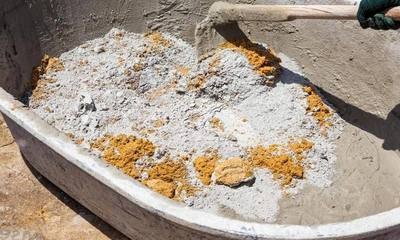
- Exact compliance with the grade declared by the manufacturer with real physical and mechanical parameters that allow you to get concrete of the required strength class.
- Minimum humidity of bulk material (no more than 25% – 30%) to prevent premature hydration of cement and the onset of a chemical reaction with its subsequent hardening.
- Absence of sand, solid particles, dust and other foreign matter – cement must be sifted, have a uniform color and composition.
Producers:
- Rusean.
- Holcim.
- Adana.
- Novamix.
- Achinsky.
The price range is 400-1100 rubles. for one bag, 50 kg, based on the producer and brand.
Coarse aggregate
Granite is mined in its finished form and then crushed to obtain the necessary fraction of bulk material. It is used as a coarse aggregate (if this ingredient is provided by the project and is required to ensure the strength of the finished concrete screed).
Conditions:
- The minimum fraction of the crushed chip should be at least 10 mm, the maximum – 20 mm, for the convenience of laying bulk material and subsequent compaction of the concrete mixture.
- Crushed stone should have chipped edges and an uneven surface to enhance adhesion with the cement binder.
- Bulk material must have a constant fraction, which indicates good sieving at the places of its processing.
- Before preparing concrete, it is recommended to wash the crushed stone so that there are no traces of dust, clay deposits and other impurities left on it.
- Before purchasing crushed stone, you should check the certificate for this product, as well as protocols on environmental surveys to ensure there is no background radiation.
Similar to sand, crushed stone is extracted from granite rock deposits in those areas. Generally, these types of territorial divisions have quarries set up, where any fraction of granite crushed stone is prepared by crushing it and then sorting it using vibrating screens.
Costs: 5200–6400 rubles per square meter.
Fine aggregate
Ingredients: naturally occurring quartz or river sand extracted from quarries or other deposits.

Conditions:
- Sand fraction – not less than 2 mm and not more than 3 – 4 mm.
- Sand composition should be uniform.
- The bulk material should not contain clay or organic particles.
- The recommended sand moisture content should not exceed 40% – 45%.
Locations of extraction: all regions of the Russian Federation have sand quarries and other deposits.
Costs:
- Quartz quarry sand – from 2400 to 2800 rubles. per 1 m 3 .
- Washed river sand – from 2800 to 3300 rubles. per 1 m 3 .
Water
In addition to its well-known chemical formula, H2O, tap water contains impurities of calcium, magnesium, chlorine, and other mineral components that guarantee its purity and appropriate chemical preparation.
Conditions:
- Water should be clean and transparent.
- The water should not contain traces of organic components that can cause it to bloom and form mold on the concrete screed.
- The recommended water temperature is from +10 to +20 o C and above.
The most common method for mixing screed concrete is to use regular tap water from the neighborhood water utility.
Costs:
- According to the tariffs of supplying companies, as a rule, from 20 to 35 rubles. for 1 m 2 .
- Imported water is calculated, taking into account the delivery distance, at a rate of 25 to 50 rubles. per 1 km, for every 5 – 10 m 3 .
Plasticizers
Components:

- Technical lignosulfonates are synthesized components that slow down the chemical reaction and give the finished concrete high mechanical strength.
- Polycarboxylic ingredients, which significantly delay the setting period, ensure the elasticity of the hardened substance.
- Polymer additives, according to the manufacturer’s recipe.
- Pure distilled water.
Conditions:
- Ecological clean composition – the basis of a liquid or bulk substance should not be toxic components that cause allergic reactions in dependent people or irritation of the respiratory tract.
- Ready solubility in water.
- Effectiveness, according to the quality certificate and regulatory requirements.
- Economical consumption of the additive, which indicates a high concentration of active substances.
Producers:
- Alphabet.
- "Teno".
- "Optimist".
- "Diola".
- Sika.
Costs: Depending on the amount of active ingredients and the substance’s range of application, prices for one liter can range from 50 to 250 rubles.
Fiber fiber
Fully assembled, factory-made material with synthetic and composite ingredients that strictly adheres to each rival manufacturer’s patented technology during the kneading, pressing, and heat-treating processes.
In the event that a metal or composite mesh is not feasible or has insufficient strength, the primary prerequisite for these materials meant for screed structural reinforcement is complete compliance of the actual operational and physical-mechanical characteristics with the quality certificate, which is attached to each batch of goods.
Producers:
Costs: 250–400 rubles per kilogram.
The ratio of the number of components
It takes more than just understanding the physical and mechanical properties of each component and their composition to produce high-quality concrete or cement-sand mixtures.
It is essential to knead all the ingredients in accordance with a carefully thought-out, intricate recipe in order to get the desired result. The precise ratios of every element in the concrete screed, in the event that the tube has a coolant circulating within its structure, are listed below.
Concrete
The ratios of each primary ingredient must be considered when making concrete for screed, which is used to arrange a water-warm floor:

- Cement – from 15%, provided that concrete with class is obtained to 20. In case of inalienability of pouring into a concrete screed with a class from B25 and above, a hydraulic binder is added in an amount of 20% to 25%.
- Sand – from 50%, if the maximum amount of cement is accepted, and crushed stone is also present in the concrete. The maximum amount of sand can be up to 75% – 80%, provided there is no crushed stone.
- Crushed stone – added as coarse aggregate only when necessary, if the project provides for high-strength and wear-resistant screeds. The proportion of crushed stone is from 0% to 25%.
- The amount of water depends on the desired degree of workability of the concrete mixture. For indicator P3 – from 70 to 90 l/m 3, and for mobility P4 – from 100 to 120 l/m 3 .
- The recommended concentration of fiber fiber in the concrete screed should be at least 80 g/m2, with a thickness of up to 10 cm.
The ultimate formula relies on the kind of concrete that is needed and on how well-graded it is against water and frost. These parameters determine the percentage of aggregates, the type of cement, and the quantity and presence of polymer additives in the plastic mass composition.
Additional components
Apart from the primary constituents, the screed might also comprise supplementary ingredients that need to be precisely measured in order to produce concrete of superior quality. Suggested ratios for these components range from the following numbers:
- Antifreeze additive – from 0.5% to 1%.
- Water repellents – no more than 0.8%.
- Plasticizers – up to 1.5%.
- Other modifying ingredients – within 1%.
- The total amount of modifying additives is not allowed to exceed 3% – 4%
Without plasticizers or other modifying additives, screed concrete must be mixed and laid under nearly perfect conditions. These structures cannot be used normally with heated floors because shrinkage through cracks causes the concrete’s surface to immediately show signs of disintegration.
Instructions for preparing the mixture
If installing a water-heated floor necessitates preparing a solution or concrete for screed laying, it is advised to engage professionals who not only possess the specialized equipment required for excellent mixing of all components but also offer a long-term guarantee for the outcome.
If this isn’t feasible, you should follow a specific technological roadmap when working on the task yourself:
- For mixing, you will need an electric concrete mixer with a receiving hopper, the volume of which is at least 150 – 200 liters, as well as industrial scales with a division price of 100 g, for accurate dosage of all components of the material.
- Based on the volume of the hopper of the device for mixing ready-mixed concrete screed with a water-heated floor, the proportions for a given amount of material are determined by recalculating the initial ratio per 1 m3 .
- Cement, fine and coarse aggregate (crushed stone and sand) are dosed into the loading hopper, after which the mixer starts working and begins mixing these dry ingredients.
- Kneading is carried out for 3 – 5 minutes until a uniform shade and composition of the material is achieved.
- When the dry ingredients are completely mixed, water is added to the finished composition, the amount of which is limited to 1 – 2 liters.
- As water is added, all components of the future concrete continue to mix in the mixer at low speeds.
- Water is added until the mixture reaches the desired plasticity and all cement particles are wetted with liquid.
- If the finished solution requires fiber fiber to provide structural reinforcement to the screed, it is mixed together with water.
- At the final stage, plasticizers, as well as antifreeze additives or water repellents, are mixed and dosed in a special measuring cup or other container with a scale.
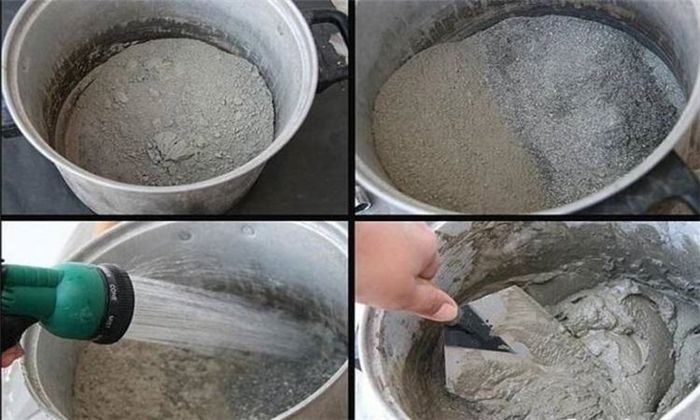
It is advised to lay concrete in a screed as soon as preparation is complete because, in the absence of plasticizers, it sets in 1 to 1.5 hours and, with certain additives, can stay liquid for up to 2.5 hours. Plastic concrete and cement-sand mortar undergo a chemical reaction that accelerates polymerization, which has a major impact on strength properties.
Knowing the appropriate parts and how much of them to use when preparing a screed solution for a warm water floor is essential for a successful installation. This article examines the essential components—cement, sand, and water—and describes the ideal proportions to use in order to create a screed that is both strong and effective. Homeowners and builders can guarantee a well-prepared screed that improves the functionality and lifespan of their underfloor heating systems by exploring these essential elements.
Possible errors and difficulties
Beginners can commit several serious errors and infractions when preparing concrete or cement-sand screed mortar, which entails installing a heated water floor in its structure. They may also run into some challenges that have unfavorable outcomes:
- Selection of low-quality ingredients or cement with a low strength grade – the required class of concrete is achieved only by purchasing materials whose physical and mechanical characteristics fully comply with the requirements of the project.
- Incorrect dosage concrete components – each ingredient must be precisely calculated in the required quantity. Not only strength indicators, but also frost resistance and water resistance grades largely depend on the concentration of cement, concrete, crushed stone and other components. In addition, if the amount of concrete or other materials is exceeded, the owner of the premises risks spending more money on preparing the screed material.
- Too little water in concrete – the rigid mixture does not fit well, the chemical reaction occurs in it too quickly, which is why the master does not always have time to level it over the entire plane of the room.
- Too much water in concrete – liquid concrete spreads over the entire plane, penetrates into the holes between the beacons, and, as it hardens, moisture evaporates from the surface, which always causes a decrease in elevation and the need to install a self-leveling floor, and also increases the risk of shrinkage cracks.
- No plasticizers – without modifying components, concrete may not gain the design strength, and, during operation, the risk of its destruction from constant temperature changes increases due to the circulation of the coolant in the additional heating system of the room.
- Violation of mixing technology material – the chemical reaction occurs with disturbances, which affects the load-bearing capacity of the future screed, and many components of concrete simply do not have time to react with water or with each other, which entails delamination of the structure already during the hardening process.
Before beginning to dose and mix ingredients, it is advised that you familiarize yourself with master classes and video lessons from professionals and experts on the Internet. These individuals frequently post their educational videos in the public domain or on independent forums, to help you avoid all the mistakes mentioned above.
Useful video
There is more information regarding the solution’s composition in the video:
| Components | Proportions |
| Cement | 1 part |
| Sand | 4 parts |
| Water | As needed for workability |
A warm water floor’s screed solution is made by mixing certain ingredients in exact amounts. This procedure guarantees that the floor transfers heat effectively and offers structural support. Cement, sand, and occasionally additives like plasticizers or water-retaining agents are the main ingredients.
After the mixture dries, cement serves as the binder in the screed, keeping everything together. The strength and drying time of the screed can be impacted by the type of cement that is used. When the warm water system is in operation, the sand—which is typically coarse or sharp—provides bulk and aids in distributing the heat evenly across the floor surface.
The ratios of cement to sand change depending on the warm water system’s requirements and the screed’s thickness, among other things. One part cement to four or five parts sand by volume is a typical mixture. This ratio makes sure that strength and workability are balanced, making it simple to lay and level screed.
To activate the cement and get the right consistency, water is added to the dry mix. Water should be added gradually and thoroughly mixed to prevent an excessively wet or dry mixture that could weaken the screed’s structural integrity. Plasticizers and water-retaining agents are additives that can help maintain the moisture levels necessary for proper curing, while other additives can enhance workability.
In conclusion, careful consideration must be given to the selection and blending of the components when preparing a screed solution for a warm water floor. Builders can produce a screed that not only maintains the floor’s structural integrity but also improves the heating system’s efficiency, assuring comfort and longevity, by knowing the functions of cement, sand, water, and optional additives.


