
Choosing the appropriate building material is essential for any project involving building or renovation. Because of their longevity and visual appeal, ceramic bricks have long been a preferred option. Ceramic bricks, which are made from natural clay and fired in a kiln, have a number of merits.
The strength and longevity of ceramic bricks is one of their main advantages. They are renowned for their resilience to harsh weather, such as moisture, heat, and cold. They are a dependable option for interior and external walls due to their resilience, which guarantees longevity and low maintenance over time.
Additionally, ceramic bricks have superior thermal insulation qualities. Because of their dense structure, which absorbs heat during the day and releases it gradually at night, they help regulate indoor temperatures. This has the potential to lower long-term heating and cooling expenses by improving building energy efficiency.
The ability of ceramic bricks to withstand fire is another benefit. Ceramic bricks are naturally fireproof because the manufacturing process requires high temperatures. In addition to improving building safety, this feature might result in lower insurance costs for property owners.
There are certain disadvantages to ceramic bricks despite their many advantages. One significant issue is their weight, which can be more difficult to handle and transport than lighter materials. Furthermore, ceramic bricks may initially cost more than other building materials, but their durability usually makes up for this difference.
In conclusion, because of their strength, ability to insulate against heat, and fire resistance, ceramic bricks are still a popular option in construction. For both builders and homeowners, they are a wise investment in the long run, even though they may need to be handled carefully and have higher upfront costs.
- Types of bricks
- Typical dimensions of ceramic bricks
- Advantages of ceramic bricks
- Video on the topic
- How to Make a Ceramic Block. All the pros and cons
- What is the best material to build a house from?? Ceramic block or brick?
- Ceramic block vs Gas block. What to choose?
- Ceramic brick. How to produce? Advantages and disadvantages.
- CERAMIC BLOCK | Warm ceramics – everything you need to know! Advantages and disadvantages!
- Why you shouldn"t build a house from ceramic blocks ! DK130 only from two-room apartment !
- What to build a house from? Ceramic block versus aerated concrete
Types of bricks
Fired and unfired ceramic bricks have long been separated. Unfired products have not been made in decades; they dry naturally. The process of making baked bricks is currently in progress. The production process complies with GOST 530-2007 and GOST 7484-78.
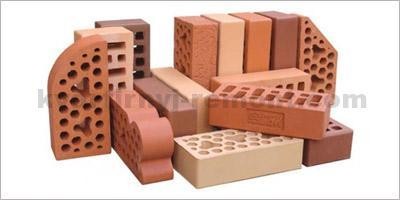
Bricks made of ceramic are divided into various categories. One of them is predicated on the products’ range of application. Ordinary bricks, also known as construction bricks, are used to lay walls. They can be used to install interior partitions and load-bearing structures. Common brick is made in two varieties: hollow and solid, which are covered in more detail below.
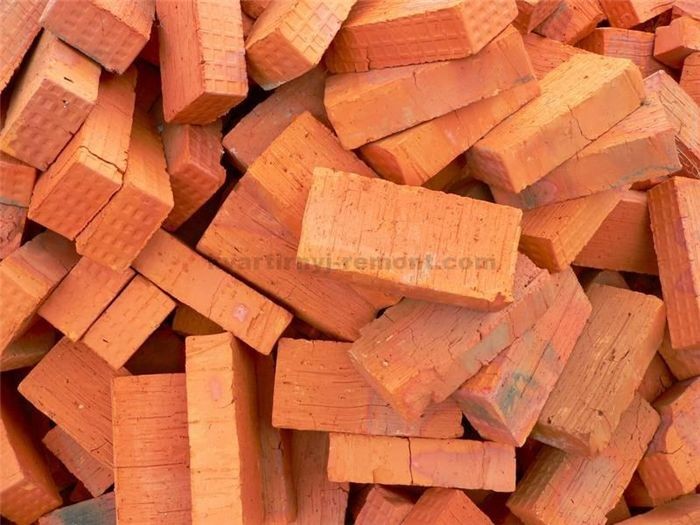
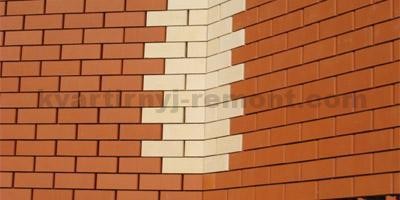
The smooth exterior of facing brick sets it apart from regular brick. In addition to having a beautiful appearance, it also possesses certain qualities, like strength. These products have to withstand a variety of loads because they are in constant contact with the outside world. Facing bricks are separated into two categories based on how they look: those with a smooth surface and those with a corrugated surface. Because this material is paintable, it can be used for both new building construction and historic building restoration.
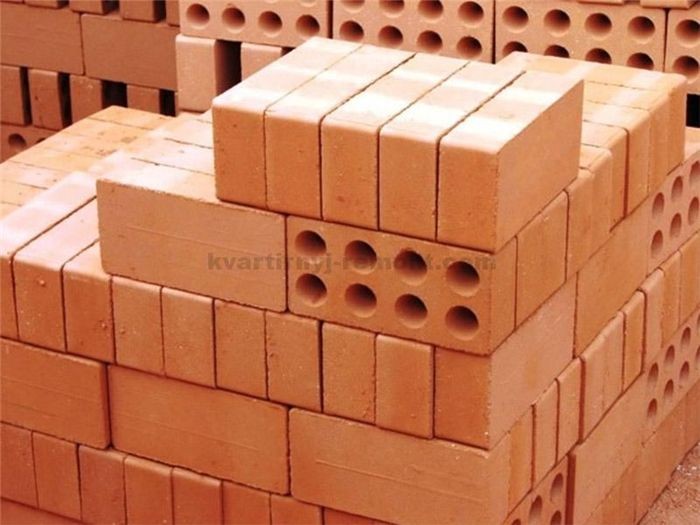
Special varieties of ceramic bricks are produced in addition to the regular ones. Products made of fireclay are specifically made for building chimneys and fireboxes for stoves and fireplaces. Certain manufacturing techniques must be followed in order for this masonry material to withstand direct contact with extremely high temperatures. First, the raw material is mixed with chamotte, a unique kind of clay. Second, the raw material is crushed and remolded following a brief firing.
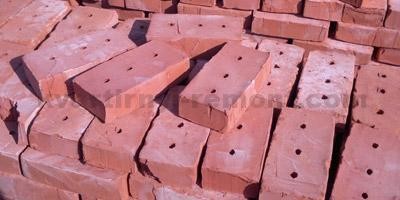
Ceramic bricks come in two primary varieties: solid and hollow. Holes removed from fired clay bars are examples of solid products. Such a bar should weigh between three and four kilograms. The material has a thermal conductivity of between 0.45 and 0.8 W/m². Brick is rarely used for low-rise construction these days due to lengthy construction times, the requirement for a solid foundation, and the high cost of the material.
However, stoves, basement walls, and the bottom of piers and foundations are still all built of brick. In addition, this material is indispensable for building extremely sturdy walls.
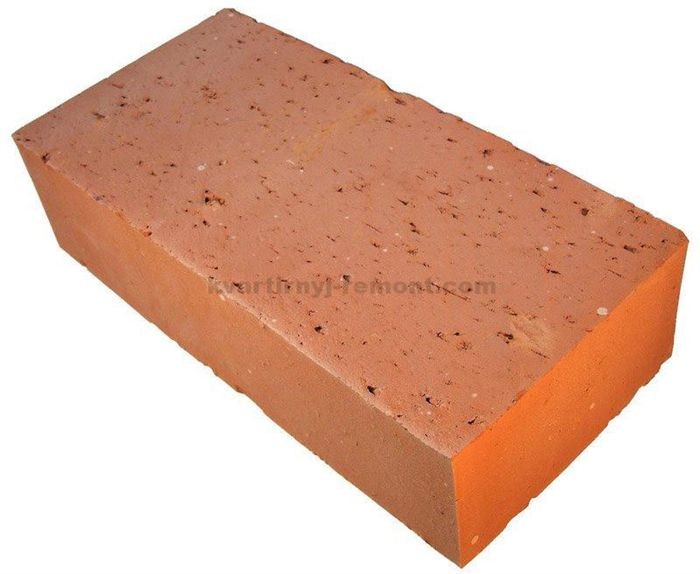
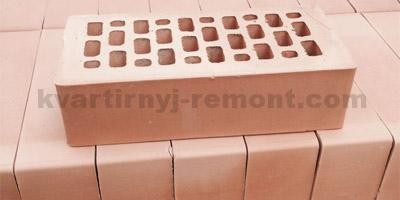
Products that are hollow have holes. They may take the form of a square or a circle. Sometimes they resemble indentations, and other times they pass through completely. These bricks weigh between 2 and 2.5 kg less than solid ones. Additionally, their thermal conductivity is subpar. (0.3–0.55 W/m²). Up to 55% of the total volume may be made up of voids. Internal partitions and low-rise buildings can both be constructed with this material.

Typical dimensions of ceramic bricks
Ceramic bricks’ height and dimensions are directly correlated. This masonry material has constant length and width. It is 25 cm long and 12 cm wide. In essence, the length is determined by multiplying the width by two and adding one centimeter for the solution. Consequently, the size and type of brick are determined by height:
- single – 6.5 cm (marking – 1NF);
- one and a half – 8.8 cm (1.4 NF);
- double – 14 cm (2, 1 NF).
A brick is generally referred to as "Euro" if it is marked 0.7 NF. These products have a height of 6.5 (similar to 1 NF), but their width is 8.5 cm, which is different from the norm. It is an extremely rare material to use in home construction.
1 and 3 NF markings are present. Typically, these products have a height of 6.5 cm; however, in this case, the height is 28.8 cm, and the width is 13.8 cm.
Alphanumeric markings are present on ceramic bricks. A number between 50 and 300 goes well with the letter "M." This figure represents the products’ strength at their maximum pressure. which is capable of withstanding the product when three forces—compression, bending, and stretching—are applied simultaneously. This indicator’s unit of measurement is kg/cm^. High strength is indicated by large numbers.
M50 is a brand that is required for interior partitions or fences. M 75 is the grade used to build walls, excluding load-bearing ones. M 100 is the grade used to build walls, excluding load-bearing ones. One kind of product that can be utilized to build load-bearing structures is M 125. M 150 and 175 are basement floors, foundations, and load-bearing structures.
Sturdier types are also utilized for setting up load-bearing walls, plinths, and foundations.
Certainly! Here"s a one-paragraph main thesis statement for your article: Ceramic bricks are a popular choice in construction due to their durability and insulation properties. They provide excellent thermal mass, helping to regulate indoor temperatures and reduce energy costs over time. Their resistance to fire makes them a safe option for building structures, offering peace of mind to homeowners. However, ceramic bricks can be more expensive compared to alternatives like concrete blocks, and their weight may require stronger foundations. Additionally, the manufacturing process of ceramic bricks can have environmental impacts, though efforts are being made to produce them more sustainably. Understanding these pros and cons can help builders and homeowners make informed decisions about whether ceramic bricks are the right choice for their construction projects.
Advantages of ceramic bricks
The advantages and disadvantages of ceramic bricks have long been recognized by consumers. Let’s attempt to enumerate the primary benefits.
- Long service life.
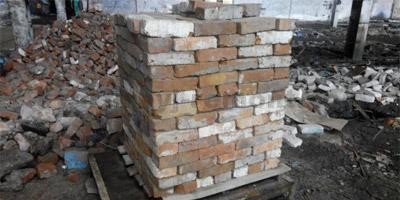
- Wide range of colors. In general, the brick color has become generally accepted, but bricks can be peach and chocolate, yellow and beige, have other shades. Facing bricks come in very interesting shades, and they can also be tinted.
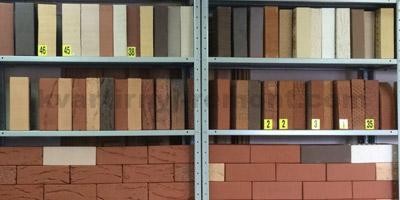
- Variability of sizes.
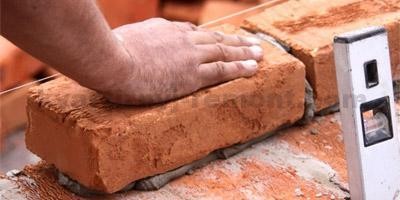
- Ease of laying.
- Environmental safety. This material is made of clay, which does not have any negative impact on humans and nature.
- High level of sound insulation. Brick buildings are distinguished by their good ability to insulate rooms from noise.
- Ability to retain heat for a long time. It is impossible to heat up a brick house quickly, but it also cools down slowly.
- The price is lower than that of clinker products.
| Ceramic Bricks Pros | Ceramic Bricks Cons |
| Durable and long-lasting, resistant to fire and pests. | Relatively expensive compared to other building materials. |
Ceramic bricks are a common choice in construction because of their aesthetic appeal and longevity. The durability of ceramic bricks is one of their main benefits. They are a dependable choice for building exteriors because of their reputation for withstanding a variety of weather conditions. Their organic makeup also aids in providing effective thermal insulation, which lowers energy expenses and helps control interior temperature.
Conversely, when compared to other building materials, ceramic bricks can be more costly. High temperatures are used during the manufacturing process to fire clay, which raises the cost of production. Furthermore, compared to alternatives like concrete blocks, ceramic bricks are heavier, necessitating stronger foundations and possibly raising construction costs.
The low maintenance needs of ceramic bricks are another advantage. They usually don’t need to be repaired or maintained frequently once they’re installed. They also have a tendency to hold their color and texture over time, which adds to a building’s aesthetic appeal without requiring constant maintenance.
Nevertheless, one significant disadvantage of ceramic bricks is their vulnerability to impact damage. Even though they can withstand weathering, considerable force can cause them to crack or shatter. Because of its fragility, careful handling is required during construction and maintenance to avoid structural problems.
In conclusion, ceramic bricks are a popular option for many building projects because they provide a good mix of strength, insulating qualities, and visual appeal. In spite of their higher initial cost and vulnerability to impact damage, their long-term advantages frequently exceed these disadvantages, particularly with regard to energy efficiency and long-lasting aesthetic appeal.


