
Installing a gas meter in a private residence is essential to guaranteeing efficiency, safety, and legal compliance. Gas meters are essential for accurate billing and maintenance because they track the quantity of natural gas used. Selecting the appropriate model and placement technique for the gas meter is crucial for homeowners seeking to maximize convenience and functionality.
Gas meters come in a variety of models, each intended to meet a specific installation requirement. Older homes frequently have traditional mechanical meters that need to be manually read on a regular basis. Digital smart meters, which provide advantages like real-time consumption data and automated reporting to utility providers, are gradually replacing these. The decision between these models is influenced by various elements, including financial constraints, preferred technology, and local utility laws.
There are certain rules and things to keep in mind when positioning the gas meter. Because safety is the top priority, meters should be installed in places with good ventilation and enough room for maintenance access. Common outdoor installations are placed on external walls for easy reading and maintenance without interfering with daily life.
Apart from the placement, installation technique is also very important. Compliance with building codes and safety standards is ensured by professional installation performed by licensed gas fitters. In order to safeguard the home and its occupants from electrical hazards and gas leaks, proper sealing and grounding are crucial.
It is advised that homeowners who are building new construction or remodeling an existing home speak with a licensed contractor or utility provider early in the planning process. They can offer advice on the best gas meter models to use, where to put them, and how to make sure the installation complies with all legal requirements. Gas meters should be positioned with efficiency and safety in mind so that homeowners can minimize gas-related risks while still receiving dependable service.
| Model | Method of Placement |
| External Wall Mount | Installed on the outside wall of the house, easy access for meter readers, protected from extreme weather. |
| Basement Installation | Placed in the basement, protected from weather, requires access through the house for reading and maintenance. |
| Utility Box | Housed in a secure utility box, usually at the edge of the property, provides easy access while keeping the meter protected. |
| Garage Mount | Installed in the garage, protected from weather, requires indoor access for meter reading. |
- How a gas meter works: general operating principle
- Gas meters: law and regulations on the need for installation
- The procedure for installing a gas meter in a private house
- Gas meters for a private home: installation price, necessary conditions
- Gas meter for a private home: commissioning
- Video on the topic
- Which gas meter to choose: with or without “T”
- TOP gas meters for home 2026. Which to choose? Service life and replacement.
- Everything about gas meters in 5 minutes!
How a gas meter works: general operating principle
Private residences are supplied with natural gas for fuel. It is enhanced with additional materials during transportation and storage to make it more palatable and secure for regular use. Methane (75–95%) makes up the majority of the gas supplied to residential buildings; the kind of devices used is irrelevant. Other components of the gas include:
- carbon dioxide;
- propane;
- butane;
- hydrogen sulfide;
- water in vapor state.
Although natural gas has no smell, any leak in a residential area can be detected almost right away. This is a result of odorants being added, which enable methane to be a comparatively safe fuel and are quickly identified by the human nose.
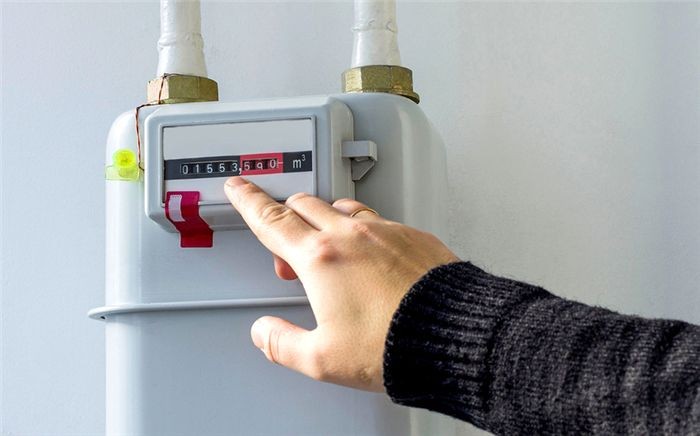
Meters are used to record the quantity of gas used. The housing, the chamber (where gas enters from the gas pipe), the metering mechanism, and the digital display are the four main components of the meters. Various engineering principles, encompassing case features, installation techniques, etc., may serve as the foundation for disparate methods of measurement and information dissemination for various models.
The general idea behind how and in what quantities gas is measured is not hard to grasp. Since the meters only permit a specific volume to flow through, a cubic is used as the natural gas measurement unit. In other words, the total quantity of gaseous fuel used is split into cubes, each of whose digital value is shown on the meter display.
Gas meters: law and regulations on the need for installation
Protests calling for the widespread installation of gas meters either pick up steam or lose it. Since they will only be paying for the actual cubes used after connecting the device, rather than the amount determined by the maximum consumption, consumers are first and foremost interested in accounting. There remain a considerable proportion of gas users who have not installed meters, for a variety of reasons.

The issue of accounting for gas costs is one that the government has taken very seriously. The "On Energy Saving and Increased Energy Efficiency and on Amendments to Certain Legislative Acts of the Russian Federation" law was passed in 2009. This document states that gas meters had to be installed prior to 2015. The requirement proved to be unachievable since it was not only impossible to install meters but also to give users the necessary quantity of devices.
The Law was amended and expanded, and the date was rescheduled. Even the requirement to install meters on a mandatory basis has been removed. Installing the device is currently prohibited for people who use natural gas for cooking and water heating (i.e., have a gas stove and water heater). Installing meters is mandatory for those who use more than 2 m3/h for heating their premises.
The procedure for installing a gas meter in a private house
The first thing to do, if installing a meter is required, is to submit an application to the company maintaining the city’s (or region’s) gas supply networks. You need to have the following with you:
- identification document (passport);
- certificate of ownership of the home;
Technical records for the structure and, if any, the gas equipment that has been installed.

Good guidance. In order to prevent a fruitless visit, you ought to clarify the list of documents with the gas service prior to submitting your application.
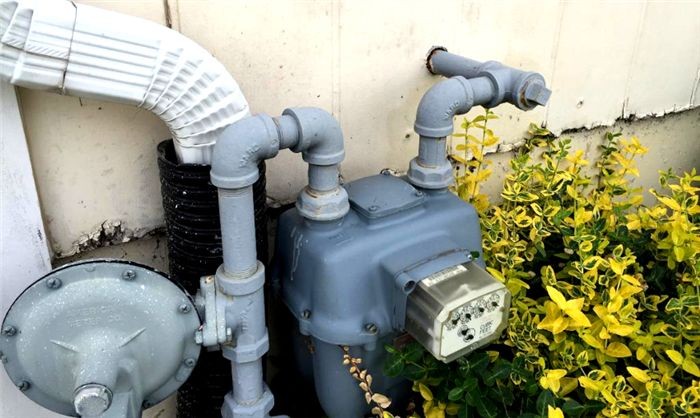
Experts come to determine the best way to install a gas meter. The device’s location is planned in consultation with the owner and with consideration for the requirements. The meter in a private residence may be mounted on the building’s exterior wall or indoors. The device must be accessible and shielded from precipitation and direct sunlight in order to be placed outside.
"Technical conditions for the installation of a gas meter" are the outcome of the site visit and selection process. This document grants you the right to get in touch with the company that will handle the "Project for the installation of a gas meter" in accordance with the specifications.
A group of organizations is designated as having the authority to install, repair, and disassemble gas equipment in resolution No. 410, dated 14.05.13. Since they will be the ones turning on the meter in the end, it is preferable to get installation assistance from experts at a network maintenance company. As a result, service specialists will act as both performers and receivers when doing installation work.

Gas meters for a private home: installation price, necessary conditions
Certain monetary outlays are necessary for gas meter installation. The following are the principal ones:
- purchasing a meter;
- payment for the development of “Technical Conditions”;
- costs of creating an “Installation Project”;
- payment for installation work.
It is important to understand the fundamental specifications for the meter’s placement in order to prevent claims from gas service professionals when the meter is being installed. SNiP 42-01-2002 and SP 42-101-2003 govern them. The following are the guidelines for the gas meter:
- the location must be accessible for installation, maintenance and repair;
- installation height (from the floor to the meter) – at least 1.5 m;
- the meter should be placed at a distance of at least 1 m from gas consuming equipment (dispenser, stove, boiler);
- the metering device can be installed in an adjacent room, separated from the one equipped with gas appliances by a wall with a doorway;
- the meter must be removed from the wall by 3–5 cm to create anti-corrosion conditions.
Residential street gas meters have higher requirements. Due to the increased labor and material requirements, the cost of installing them is much higher than that of installing a room version. In order to shield the gas meter from sunlight and precipitation, it is necessary to install extra pipes and create a canopy or box.
Good guidance. It is preferable to locate the meter in a room with adequate ventilation. In the event that it is missing, experts will forbid installation in that location or demand ventilation.
Gas meter for a private home: commissioning
A metering device’s commissioning is primarily dependent on the caliber and layout of the installation work. They must be completed by professionals with the necessary training, utilizing approved tools and supplies.
Gas service personnel (or other individuals authorized to perform this work) are required to verify the meter’s functionality after installation. The following is brought to light:
- for job stability;
- whether interference occurs during the passage of gas through the device;
- for gas leaks;
At the time of installation, the readings must be recorded.

In the event that no evidence of flaws or malfunctions remains, a work completion certificate is created. This record represents:
- address and date of installation;
- serial number of the meter;
- information about the workers who performed the installation;
- assessment of the stroke of the counter mechanism;
- device readings at the time of connection;
- date of scheduled meter verification.
Customers must pay between 1,500 and 3,000 rubles for the installation of a gas meter, depending on the complexity of the work. The work completion certificate is created in three copies, one of which is given to the customer, and it is attached to the payment receipt.
The device needs to be sealed, so you must contact a gas service specialist. After verifying that the installation complies with the design documentation and finding no issues, he installs a seal and creates a report.
Following the aforementioned steps, a contract is signed with the direct gas supplier outlining the parties’ rights and responsibilities regarding payment and equipment maintenance.

This article examines several models and installation techniques for gas meters in individual residences. Proper placement of a gas meter is essential for efficiency, safety, and legal compliance. We talk about various placement options, taking into account things like safety distances from potential ignition sources, aesthetic considerations, and accessibility for meter reading and maintenance. Homeowners can guarantee the efficiency and safety of their gas supply systems by making educated decisions based on their understanding of these models and techniques.
For both efficiency and safety, it’s important to locate your gas meter in your private residence properly. There are various models and techniques available, each with specific benefits based on the design of your home and local laws.
Placing the gas meter outside the house, usually mounted on an external wall, is one popular method. With this approach, maintenance and meter readings can be easily accessed without requiring entry into the home. Additionally, it reduces the possibility of indoor gas leaks, improving general safety.
On the other hand, some homeowners choose to install them indoors, most frequently in basements or utility rooms. This method might be favored in areas with severe weather, where exposure to the elements outside could impact meter performance. To avoid gas buildup, indoor placements must, however, carefully consider ventilation and safety precautions.
Local building codes and regulations are important considerations when selecting the placement model. These regulations specify the acceptable sites and safety requirements that must be fulfilled in order to guarantee adherence and safeguard against risks. To properly navigate these requirements, speaking with a licensed utility provider or gas technician is imperative.
In conclusion, it is critical to prioritize safety, accessibility, and compliance with local regulations when deciding where to locate your gas meter—whether it be outside or indoors. Every model has advantages, so knowing your unique requirements and circumstances will enable you to make an informed choice that will guarantee the safe and effective operation of the gas supply in your house.


