
Slate is a popular roofing material choice because of its timeless appeal and dependability. But with so many different kinds of slate out there, it’s important to know what they contain and how it might affect your health. Making the right decision can have a big impact on your roof’s lifespan and your home’s safety.
There are various varieties of slate roofing materials, each with special qualities and advantages. The selection can be overwhelming, ranging from more contemporary synthetic options to more conventional natural slate. You can make an informed choice that meets your unique needs by being aware of the differences.
We’ll examine the seven primary varieties of slate in this post, looking at their makeup and potential health effects. At the conclusion, you will know more clearly which type of slate roofing is appropriate for your project and will protect your home’s aesthetic appeal.
- 7 main types of slate and materials for production
- What shapes does slate come in
- The composition of slate and the effect on health: which one to choose
- Technology for making slate from asbestos concrete
- Table of comparative characteristics of slate materials
- How to care for slate so it lasts longer
- Video on the topic
- What is good about chrysotile cement slate?? | Modern construction
- Why is slate harmful??
- ARE FLAT SLATE BEDS HARMFUL FOR HEALTH OR NOT??
7 main types of slate and materials for production
Classifying the product is made possible by the materials used to make slate and the makeup of the filler.
- Natural slate, slate, is obtained from a natural material whose properties are to split into tiles. The use of various solid materials in construction was familiar even to our cave ancestors, who used stones of various thicknesses and densities for simple dwellings. With the development of technology, the range of roofing materials used has expanded significantly, but the word “slate”, which received its name from the original slate covering, has remained.

- Asbestos-cement slate, the base of which is cement with the addition of asbestos fibers, has been used for decades and today requests for it do not subside. Strength, ease of installation, durability and comparative cheapness – this is the secret of the popularity of traditional material. Modern manufacturers have improved the appearance of the product by adding dyes to it.
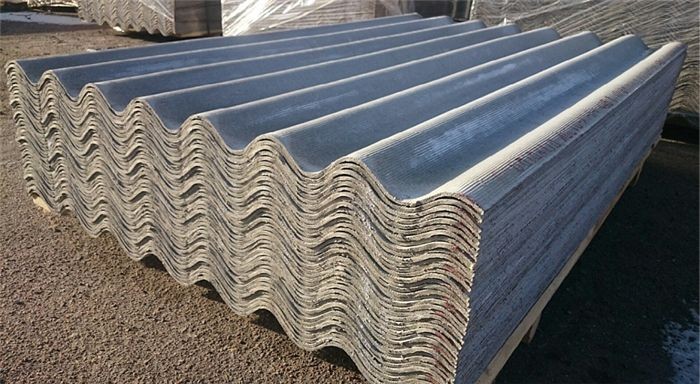
- Bitumen slate (ondulin) – European coating based on bitumen, cellulose or fiberglass. Modern production technology has created a material that is resistant to various climatic conditions.
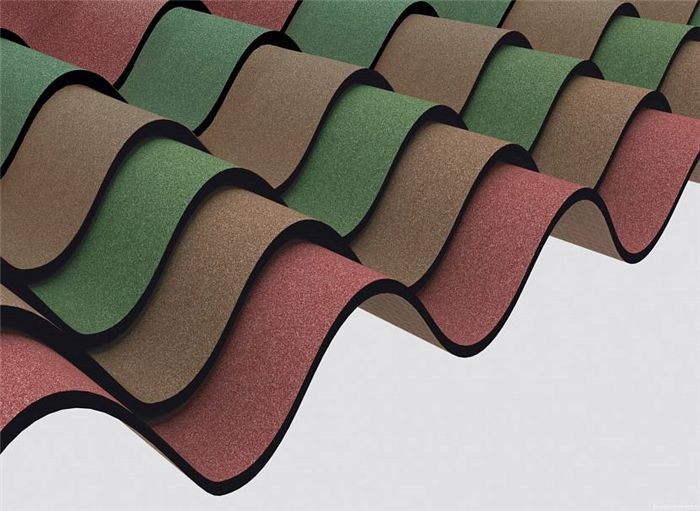
- Rubber made from fiberglass and waste rubber. The most flexible elastic material has high strength, lightness, and ease of installation. It does not conduct electrical discharges, which is important for areas with frequent thunderstorms. If one sheet is damaged, a small area must be replaced, which saves the developer money.
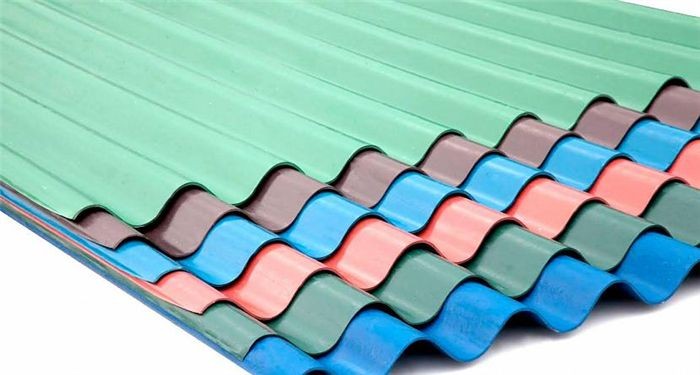
- Metal or corrugated sheeting – a product made of galvanized steel. Ease of installation and affordability have made it a popular material. The product is used where it is necessary to quickly erect a frame structure: hangars, garages, fences. The buyer is provided with different brands of metal slate, differing in size, color and cross-section.
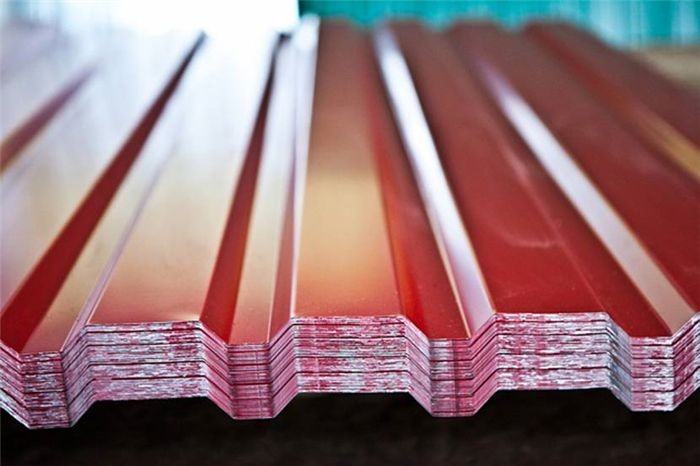
- Fiber cement slate is made without asbestos, the fiber bundle is made of cellulose and mineral filler. Durable, durable material, presented in different styles: “Classic”, “Gothic”. Does not burn, does not lose color. Used for both facade and interior decoration. Neem decorates floors, ceilings, walls. Panels for interior work are divided into those that require maintenance and those that do not require finishing.

- Plastic slate, which is based on a strong, viscous mass of polymers, is represented by modern products: polymer sand – with the addition of sand, polycarbonate – an artificial fusible material, composite (ceramoplast) – natural mineral components and artificially synthesized additives.
Lightweight slabs that don’t place a lot of weight on the foundation represent a broad variety of slate. They let in light and are aesthetically pleasing. Polymer slate requires no complicated installation. The roof doesn’t need to be maintained because of its glossy surface and necessary slope, which allow leaves and precipitation to fall off. The substance is resistant to temperatures between -60°C and +75°C.
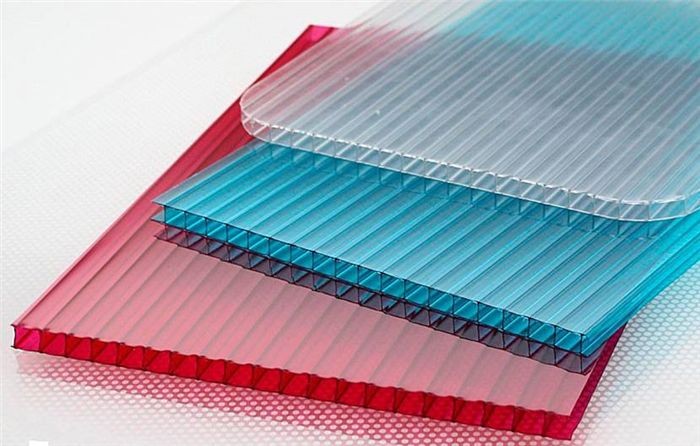
Knowing the composition of slate and its possible effects on health is essential when selecting the right slate for your construction needs. This article examines the seven primary varieties of slate, dissecting their components, advantages, and potential health hazards to assist you in selecting a long-lasting and secure roofing option.
What shapes does slate come in
The market for building supplies allows customers to select a material according to its intended use. For summer gazebos or fences, the roof crossbar’s cross-section can be as follows:
- trapezoidal;
- wavy;
- flat.
In addition to being strong, roofing materials are also aesthetically pleasing. This feature is present in almost all products. Soft slate with a mineral fiber and bitumen impregnation is appropriate for structures with straightforward architectural designs. offered in rolls in addition to sheets.
Utility buildings, small fences, and temporary partitions are constructed from asbestos cement sheets that are flat and designed to cover various useful areas. This is an effort to lessen asbestos’s detrimental effects on people.
Slate tiles, the shape of which is determined by the customer, cover modern luxury homes. The labor-intensive process of manually processing slates yields a worthwhile outcome: the building appears substantial and well-preserved.
Nowadays, plastic slate is the material of choice for summer cottage gazebo plans because it comes in square or rectangular flat sheets thanks to advancements in manufacturing technology. They can be bent to create intricately arranged walls and roofs.
Be aware that surfaces with a trapezoidal or wavy profile are stronger. withstand loads with significant impact.

Thus, the product’s shape is important. Consequently, in order to select the slate that will best complete the tasks assigned, it is crucial to understand what the slate is made of.
The composition of slate and the effect on health: which one to choose
The fact that slate is environmentally friendly is not the least significant of its qualities. Healthy people would select a material that won’t be harmful to their health if they had to choose between gorgeous corrugated slabs. Even after learning the materials that make up wave slate, other owners will still purchase a product that works well. Let’s attempt to determine which slate combination with a lovely "wave" won’t be harmful to your health:
- Plastic slate consists of 70% polyvinyl chloride (homogeneous), with the addition of fiberglass for strength. Does not emit environmentally toxic substances.
- Bitumen slate is made from synthetic and bitumen resins, cellulose fibers, and mineral fillers. Natural materials based on it make ondulin environmentally friendly.
- Fiber cement corrugated sheet is made of cement, PVA fibers, cellulose fibers, limestone. The absence of asbestos is an advantage of the material, which often influences the client’s choice.
- Metal made of steel coated with zinc on both sides, varnish is applied to the inner surface. Sheets are considered an environmentally friendly material.
- Rubber slate, a relatively new material on the market, is made from rubber-fabric waste, fiber optic twisted dense thread, non-toxic.
- Domestic composition of asbestos-cement: 85-90% Portland cement M300 – M500, 10-20% asbestos fiber with the addition of chrysolite, water.
Fibers made of asbestos are dangerous; this has been known since the start of slate production. This kind of coverage is forbidden in the EU. The buyer has the final say over the material they want, and asbestos fiber coating is still in high demand, so production is still ongoing. When manufacturing and cutting slate, craftsmen follow safety regulations.

There is only a difference in how the sheet is rolled; there is no difference in toxicity when we look at the materials that go into making flat slate.
Technology for making slate from asbestos concrete
The typical consumer doesn’t really need to know how slate is made. If someone wants to start a small production facility to make material, that’s a different story. The aspirant entrepreneur hopes to make a profit in addition to investing capital, as the market for products is continuously expanding. Then, he will undoubtedly need to understand the materials used to make slate as well as the technical steps involved in the process.
The laboratory is where a slate unit is formed and finished. Here, technological calculations and characteristics of the final product are controlled. The procedure itself appears as follows:

- Stage 1. Loading material onto sorting belts. Depending on the type of slate, materials are loaded according to the “recipe”. Material crushing, fluffing. Mixing components.
- Stage 2. The base for future slate is formed in the sheet-forming machine. Primary sheet forming.
- Stage 3. Sheets with a moisture content of 25% are cut.
- Stage 4. The wavy box takes the sheet, sucks it in with a vacuum – the result is a product with a familiar wavy shape. The sheets are interlaced with metal spacers. This will give a smooth surface and hold its shape.
- Stage 5. Marking. Plain gray slate is marked on the front side, painted – on the back.
- Stage 6. Curing chamber.
- Stage 7. Product disassembly line. The gaskets are removed and sent to cleaning and lubrication machines.
- Stage 8. “Young” slate lies in a warm warehouse for 7 days.
- Stage 9. Strength test.
- Stage 10. Dispatch if the consumer ordered gray slate.
Consumers can purchase a lightweight sheet or a colored version.
An alternative process is used to create polycarbonate slate. Temperatures as high as 290°C and high pressure are used in this technology.
Table of comparative characteristics of slate materials
This table compares the features of different building materials for those who are still unsure which slate to buy:
| Slate | Natural slate | Asbestos cement | Asbestos free | Bituminous | Made of metal | Rubber | Made of plastic |
| Form | Rectangular tiles, scales, others. | Wave, flat | Wave, flat | Wave, tile, roll | Wave, flat, grooved | Flat, roll | Wave, flat |
| Flexibility | No | Yes | Yes | Yes | Yes | Yes | Yes |
| Strength | Yes | Yes | Yes | Yes | Yes | Yes | Yes |
| Toxicity | No | Yes | No | No | No | Yes | Yes |
| Fire resistance | Yes | Yes | Yes | Yes | Yes | No | Yes |
| Light resistance | Yes | Yes | Yes | Yes | Yes | Yes | Yes |
| Corrosion | No | No | No | No | Yes | No | Yes |
| Weight 1 m², kg | 27 | 9-18 | 10-14 | 3-6 | 2.5-32 | 6.5 | 1.2-3.2 |
| Price 1 m², $ | $60-100 | $2-3 | $5 | $5-6 | $4-5 | $4 | $1.5-15 |
| Life time | 100-500 years | More than 30 years | More than 50 years | 15-20 years | 50 | 30-50 | 40 |
Since any size is selected based on market availability and the intended use of the slate, the product’s dimensions are not displayed in the table. You don’t have to be concerned about not finding the coating in the size or shape you require because manufacturers make it to order.

How to care for slate so it lasts longer
Notwithstanding the advantages of each variety, producers do not conceal the material’s drawbacks:
- fragility, inconvenience of transportation, toxicity (asbestos cement);
- sunburn, fire hazard (ondulin);
- high cost (shale);
- sound conductivity, high electrical conductivity (metal);
- flammability (ondulin, rubber).
Everyone hopes for the product’s stated service life after paying for the material and installation. However, a true owner will do the following useful actions to prolong the life of slate sheets:
- Step 1. Initially, when purchasing, he will choose those that have a protective coating of water-dispersed paints and varnishes. Slate will look good for 10-12 years, but every year the color will fade.
- Step 2. Will do the painting. First, clean the slate from dust, dirt, moss, then paint it with suitable paint. For asbestos this is a special weather-resistant paint with an acrylic base. Rubber paint is also popular; the coating will not only be renewed, but will also become frost-resistant and wear-resistant.
Dusting plastic sheets on a regular basis is part of their maintenance.
Corrugated metal sheets also lose color. Apply alkyd enamel paint to metal.
- Step 3. All repair, restoration, decorative work will be entrusted to specialists with permission, the necessary tools and a wealth of knowledge, experience and skill. When receiving an application, the first thing they will do is ask what the slate is made of in order to determine the scope of work.
| Type of Slate | Impact on Health |
| Asbestos Cement Slate | Contains asbestos, which can cause lung diseases if fibers are inhaled. |
| Fiber Cement Slate | Asbestos-free and safer, but can still produce dust during cutting. |
| Bituminous Slate | Generally safe, but can release toxic fumes if burned. |
| Metal Slate | Safe if properly coated to prevent rust and corrosion. |
| Rubber Slate | Non-toxic and safe, made from recycled materials. |
| Composite Slate | Generally safe, made from a mix of materials, but can vary in composition. |
| Natural Slate | Safe and eco-friendly, but heavy and requires careful handling. |
The longevity of your building and the wellbeing of its occupants may be greatly impacted by your choice of slate for your construction project. There are seven primary varieties of slate to choose from, so it’s critical to comprehend the makeup and potential health effects of each.
Although natural slate is a classic option that is prized for both its longevity and visual appeal, it can be expensive and heavy. Fiber cement slate is a common material for contemporary buildings because it provides an inexpensive, lightweight substitute with fewer health hazards. In contrast, bituminous slate offers good waterproofing but requires careful handling and installation due to the possibility of hazardous chemicals.
Recycled slate can be a great option for people looking for environmentally friendly options because it has less of an impact on the environment and still performs well. Though it might not last as long as natural materials, synthetic slate also has an appearance similar to that of natural slate without the health risks.
The ideal slate for your project ultimately comes down to striking a balance between things like cost, durability, impact on the environment, and health considerations. You can make an informed choice that preserves the building’s structural integrity and visual appeal while guaranteeing everyone’s safety and well-being by carefully weighing these factors.


