
A common and adaptable building material in construction projects are sand blocks. These blocks, which are well-known for their strength and durability, are becoming a popular option for a variety of construction projects, from residential to commercial buildings.
Any building project requires an understanding of sand block sizes. The project’s overall design, cost, and structural integrity may all be strongly impacted by the size of these blocks. In order to ensure that the right block is used for the right purpose, different sizes are used for different applications.
We will examine the different sand block sizes that are on the market in this article. We’ll examine their measurements, typical applications, and the benefits of utilizing particular sizes for certain construction jobs. This guide will give you the essential knowledge you need to choose your building materials wisely, whether you are a professional builder or a do-it-yourself enthusiast.
- What it is?
- What are the width and height?
- Standard indicators
- Non-standard
- Dimensions of cement-sand blocks for different types of walls
- For carriers
- For partitions
- Why is it important to choose the right?
- Video on the topic
- Do-it-yourself sand blocks, subscribe to see more videos
- Sand block village Sokluk Bakha
- sand block house 12.5 × 10 (internal dimensions)
What it is?
A universal building material is sand block. His is utilized in the building of foundations, cellars, and residential, commercial, and utility buildings. Sand blocks are not the same size as regular bricks. As a result, using them considerably lowers expenses. Three regular bricks are replaced by one sand and concrete product. most frequently employed in the construction of partitions and walls that support loads.
What are the width and height?
- GOST 6133-99. The document contains a description of the technical conditions for the production of concrete wall stones.
- GOST 13579-78.The text is devoted to the technical specifications for the types of concrete blocks for basement walls.
The documents offer guidelines for standard sizes, but they also include a list of acceptable size deviations. The GOST-specified ratios must be followed when creating modules out of sand and concrete.
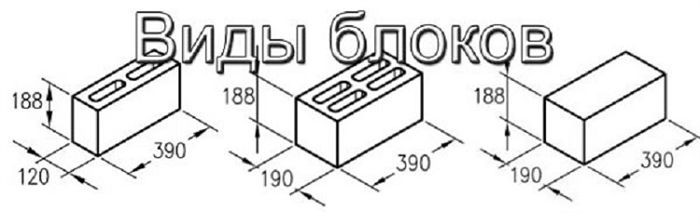
It’s also important to differentiate between different kinds of sand blocks. Classification of products:
- full-bodied;
- hollow;
- facing;
- septal.
Its specifications and features are determined by the kind and function of the building block.
Standard indicators
Normal parameters are type-independent. They do, however, have an impact on the material’s application area. GOST 6133-99 offers the subsequent specifications:
| Magnitude | Minimum size (mm) | Max size(mm) |
| Height | 185 | 300 |
| Width | 90 | 500 |
| Length | 190 | 500 |
The foundation blocks have slightly different dimensions. Their standard measurements, which are 200 x 200 x 400 mm, are marginally bigger. This product is devoid of voids, making the blocks more robust and long-lasting. As a result, using them is advised when building a foundation.
Crucial! This kind can be utilized for load-bearing walls or basement construction.
Changes in millimeters:
- lengths – 880, 1180, 2380;
- widths – 300, 400, 500;
- heights – 280, 580.
Allowable deviations for the primary sand block parameters in accordance with GOST 6133-99 requirements:
| Parameter | Deviation range (mm) |
| Height | ±4 |
| Length | ±3 |
| Width | ±3 |
Additionally, there are allowed values to deviate from perpendicularity by no more than 2 mm and from edge straightness by no more than 3 mm. If any of the listed errors are exceeded, the product falls into the substandard category.
Non-standard

Non-standard parameters encompass sizes that deviate from both the standardized values and the ratio changes that accompany them.
Can be custom-made or used to construct oddly-shaped buildings.
Modules can be produced in the shape of a narrow rectangle or in square form.
The product’s weight should be considered in this situation. If this is a solid block, then its weight will increase significantly if the standard parameters are exceeded. Without specialized equipment, construction will no longer be feasible.
Tinier hollow blocks won’t be strong enough to support the design loads. For each unique project, the product characteristics must be carefully calculated.
Dimensions of cement-sand blocks for different types of walls
Products serve a variety of purposes:
- wall;
- septal;
- facing.
As a result, they must adhere to a number of rules, which determine how big the sand blocks are.
For carriers
Primary measurements: 390 x 188 x 190 mm. Both internal and external walls can support loads. Their wall blocks are wider than other wall blocks. One or two rows can be used for stacking them. Low-rise structures are a good fit for single-row masonry. They make use of hollow blocks.
Crucial! Walls between 2.7 and 3.6 meters high can be constructed with sand blocks that are 300 mm thick (SNiP requirements).
Product measurements (in millimeters) in accordance with GOST 6133-99 for load-bearing walls:
| Length | Width | Height |
| 288 | 288 | 138 |
| 288 | 138 | 138 |
| 390 | 190 | 188 |
| 290 | 190 | 188 |
| 190 | 190 | 188 |
| 90 | 190 | 188 |
In certain instances, 200x200x400 mm foundation blocks can be used to construct walls. For instance, with the necessary thick walls.

For partitions
Smaller partition sand blocks are utilized in this instance. The primary characteristics are listed in GOST 6133-99.
| Length | Width | Height |
| 590 | 90 | 188 |
| 390 | 90 | 188 |
| 190 | 90 | 188 |
The products can be used to build openings and partitions in frame and monolithic homes. The blocks have standard noise insulation performance despite their smaller size.
Sand blocks are widely used in construction and are available in different sizes to meet different building requirements. Standard measurements like 390 x 190 x 190 mm, which are frequently used for walls, foundations, and partitions, are usually included in these sizes. Although the exact measurements may differ depending on the manufacturer and the intended application, knowing these sizes aids in more effective project planning for architects and builders and guarantees that the structure will fit and be strong enough.
Why is it important to choose the right?
The primary block parameters that determine the state of the completed structure are width, length, and height. Secondly, the size determines the kind of masonry.

For instance, the thickness of the block should enable the concealment of communications within the internal walls of a load-bearing type.
Incorrect selection of interior partition dimensions will result in inadequate insulation against sound and heat. It will be necessary to insulate the walls further.
The integrity of the structure could be harmed by careless block parameter selection. If specific construction technology aspects are disregarded, this could become extremely hazardous.
For instance, a foundation made of improperly prepared soil base. Careful calculation is necessary to avoid the formation of wall cracks.
The quantity of material and the expense of purchasing it are significant additional factors that depend on the size that is selected.
| Sand Block Size | Description |
| Standard | Typically 8 inches by 8 inches by 16 inches, used in most construction projects. |
| Half-Size | Measures approximately 8 inches by 8 inches by 8 inches, commonly used for smaller masonry and DIY projects. |
Everyone involved in building or renovating must be aware of the sizes of sand blocks. Sand blocks are frequently used to build foundations and walls. They are available in different sizes to meet the needs of different projects.
The typical range of standard sand block sizes is 390 x 190 x 190 mm to 600 x 300 x 200 mm. These measurements guarantee construction versatility, enabling effective alignment and stacking. Accurate resource estimation and project planning are made easier with the knowledge of sand block dimensions.
Take into account the particular requirements of your project when choosing sand blocks. Larger blocks are best for more substantial constructions, while smaller blocks might be appropriate for intricate work or smaller structures. Maintaining a consistent block size guarantees both ease of installation and structural integrity.
In conclusion, understanding the various sand block sizes and how to use them effectively can have a big impact on how successful and efficient your construction projects are. For stability and longevity in your builds, make sure you always select the appropriate size for the task.


