
Any construction project must start with a strong foundation, and pile foundations are a common option for builders. In order to ensure stability and safety, pile foundations are used to support structures in areas with weak soil conditions. Selecting the ideal solution for your particular project can be made easier if you are aware of the various kinds of pile foundations.
There are several varieties of pile foundations, each with special qualities and uses. Screw piles, driven piles, and bored piles are a few common varieties. Because driven piles are hammered into the ground, they are perfect for locations with unstable, deep soil layers. Conversely, bored piles offer robust support in regions with compacted soil since they are made by boring a hole and then filling it with concrete. Screw piles provide an effective solution for lighter structures because they are twisted into the ground like a screw.
Numerous factors, such as soil conditions, load requirements, and construction techniques, must be taken into consideration when selecting the best type of pile foundation. To guarantee a solid and long-lasting foundation, it’s critical to evaluate the particular requirements of your undertaking. Understanding the various kinds of pile foundations will help you make decisions that will increase the longevity and success of your building project.
Pile foundations are available in a variety of forms to meet a variety of needs. They are crucial for supporting structures on soft or unstable ground. Screw piles, sheet piles, driven piles, and bored piles are some examples of these types. To select the best type for your construction project, it is crucial to comprehend the distinctions between them as each has distinct qualities and uses. Knowing the different types of pile foundations can help ensure stability and longevity for your structure, regardless of whether you’re building on clay, sandy soil, or next to water.
- What is a pile foundation
- Types of piles according to the principle of operation
- According to the barrel manufacturing method
- Types by material of manufacture
- Wood
- Metal
- Concrete
- Varieties by immersion method
- Indentation
- Casting
- Screwing
- Which classification is best for private construction??
- Useful video
- Video on the topic
- Screw piles from A to Z, advantages and disadvantages of this type of foundation
- BASES AND FOUNDATIONS. Lecture 5. Types of piles and pile foundations.
- Types of PILES. What types of piles are there and what are their advantages??
- Comparison of piles for the construction of a country house. Reinforced concrete, screw, bored, TISE.
What is a pile foundation
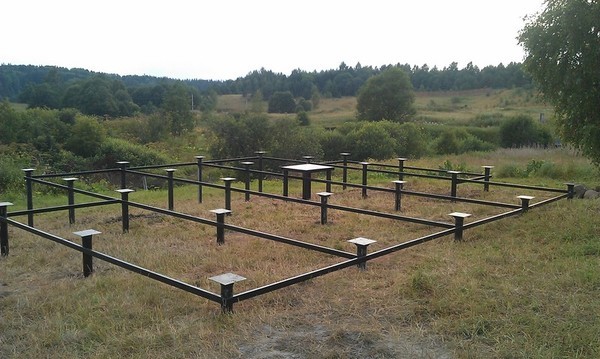
A system of vertical supports completely submerged in the ground and in contact with dense layers is known as a pile foundation. utilized when building on unstable soils, wetlands, peat bogs, and loose sand.
In order to create a direct support for load-bearing walls, the piles’ upper portion is submerged in the ground and tied around the perimeter with grillage, which is a kind of analogue for a strip base.
The grillage may be flush with the ground, above the ground, or buried to a specific depth.
Meanwhile, the grillage merely shifts the weight of the house to the piles, which are the only ones that have direct ground support; it does not rest on its own.
Similar to a pile-grillage foundation, there is a pile-strip type of foundation. The distinction is that the pile-tape foundation’s design offers the tape and the piles equal ground support.
Types of piles according to the principle of operation
There are two kinds of piles based on how the load is transferred to the soil layers that support it:
- Hanging. The support is formed due to the resistance of the soil applied to the side surfaces and pointed ends of the pile. Immersion depth is relatively shallow.
- Rack piles. They are immersed in the ground until full contact with dense incompressible layers of soil appears. Immersion depth can reach significant values.
Because frictional piles depend on it, their load-bearing capacity is lower. The adhesion force of the side surfaces weakens and the support’s resistance to subsidence decreases with changes in the soil’s composition (raising groundwater levels).
High load-bearing capacities of rack piles remain constant despite variations in the state of the upper soil layers. In addition, the immersion depth can go as low as 20 meters, necessitating the use of strong construction tools.
According to the barrel manufacturing method
To create a pile shaft, there are multiple choices available:
- Monolithic. They are a trunk made of a solid mass of material (wooden, reinforced concrete).
- Hollow (shell). They are a type of pipe filled with various materials to increase the load-bearing capacity, or left empty.
Conversely, hollow piles are
- Non-refillable. Immersed in the ground without additional actions. Used in situations where the wall thickness is sufficient to create the required load-bearing capacity.
- Pipe-concrete. After immersion, the outer pipe is filled with concrete to increase strength.
- Shell pile. Has no load-bearing capacity, is a form for pouring concrete.
- Temporary shell. It is a movable pipe, which, after pouring concrete, is moved to a new location.
- Shellless design. Concrete is poured directly into the well. Allowed with appropriate soil composition and condition.
Bore piles are one of the most popular kinds of hollow supports. They are frequently utilized in construction because they don’t require a construction pile driver to be driven.
They don’t endanger the condition of existing buildings and permit construction work to be done in close proximity to them.

Types by material of manufacture
What you can use to create piles are:
Wood
A conventional type still in use in construction that first appeared many centuries ago. No longer are large, heavy buildings supported by wooden piles constructed; however, this material is still frequently used for small auxiliary buildings.
Beams and logs are both utilized. A situation frequently occurs when the size of the tree species growing in the area does not permit piles to be as thick as those required by construction conditions. In these situations, multiple beams are batch spliced together to provide the necessary pillar length and thickness.
Soils that are consistently moist are ideal for using wooden piles. Water will cause the wood to rot and necessitate replacing the pile if it appears and then disappears.
They are made from a variety of tree species, mostly conifers, though piles made of deciduous trees are also common in the area.
Using a construction pile driver is the primary technique for driving wooden piles. A unique cap is used to shield the upper portion to prevent material from splitting or riveting.
The material is primed with a unique compound that shields it from a variety of external influences prior to immersion.
Metal
Metal products that are ready to use are piled up. Among them are pipes with a minimum diameter of 26 centimeters. Screw piles are an exception, with much smaller diameters.
I-beams, channels, and other rolled profiles of the proper size can be utilized in addition to pipes. Pipes can be submerged in both closed and open forms. A conical metal tip is welded to the lower end of the barrel for closed immersion, which makes it easier for the barrel to pass through soil layers.
The free end of the pipe is used for open immersion. At the bottom of the pile cavity, soil seeps into the hole and forms a solid plug. When submerged, it compresses the lower portions, which start to function as the tip.
Screw piles are another kind of metal support. They resemble pipes with conical tips and are custom-made. A short distance away, two or three pairs of blades are fused together.
Such a pile can be driven similarly to how a screw is inserted. Screw piles can be manually driven or driven by construction equipment. This is accomplished by installing a gate on the upper portion and rotating it, which causes the pile to descend.
In this manner, you can work near residential or auxiliary buildings without endangering them.

Concrete
The most popular choice is piles made of reinforced concrete. They are either directly poured into a prepared well at the construction site, or they are specially manufactured in standard sizes.
The most resilient support with stressed reinforcement is represented by finished piles. These trunks, which are common in wet heaving soils, have the highest resistance to lateral loads.
Although cast piles are significantly less expensive, they require more time to install in order for the concrete to strengthen structurally. Square beams with a pointed working end and a side measuring 20 to 40 cm are called finished piles.
Prefabricated piles are used in the form of pipes with a wall thickness of 4 cm for immersion down to depths greater than 12 meters.
Once the required depth is reached, they are buried and connected along their length.

Varieties by immersion method
There are various methods for driving piles:
- Indentation.
- Casting.
- Screwing.
Let’s examine them in more detail:
Indentation
Technical term for using a hammer or pile driver to drive piles. manufactured with specialized machinery.
The technology offers deep immersion and is incredibly dependable and productive.
The drawback is that the earth vibrates a lot, negatively affecting the buildings close by.

Casting
The technology entails drilling a well down to the pile’s complete immersion depth. Following this, a reinforcing frame is submerged and formwork (a polyethylene pipe or roofing felt) is inserted. Concrete is then poured.
To gain structural strength, the completed pile is retained for the necessary amount of time.
The project’s specified concrete hardening time cannot be shortened, as this could lead to the building’s foundation and collapse.
Screwing
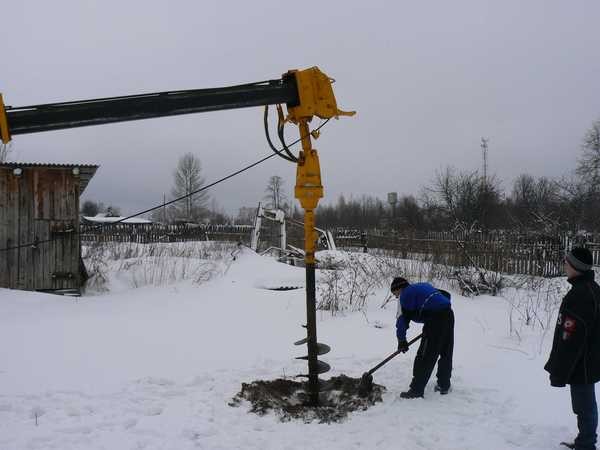
Screw piles are installed using this process. The task is completed fairly quickly. This type’s benefit is that it can be completed manually without the need for construction machinery.
Prior to screwing, the barrel’s position must be immediately aligned vertically.
It is not recommended to reverse these supports while they are being installed because it will weaken the blades’ bond to the earth.
Which classification is best for private construction??
During the design phase, the most appropriate kind of piles are chosen. It is based on the building’s specifications, including its weight, number of stories, and material composition. In addition, consideration is given to the kind of soil, the working environment, the existence of surrounding structures, and other elements.
We determine which kind of piles is the most practical, efficient, and secure by comparing the initial data that is currently available. Borehole (cast) piles are usually preferred because they don’t need to be driven and don’t harm neighboring buildings or structures.
Screw piles have been actively used recently to facilitate construction without the need for earlier excavation (unlevel terrain work is permitted).
Useful video
You will discover the different kinds of piles in this video:
Building stability requires pile foundations, particularly in areas with difficult soil conditions. They reach stable soil or rock layers by deeply transferring the weight of the structure underground. This guarantees the building’s long-term durability and security.
Different pile foundation types are appropriate for different construction requirements. There are specific uses for driven piles, bored piles, screw piles, and helical piles. Selecting the ideal foundation type for your project is made easier when you are aware of these options.
A construction project’s success can be significantly impacted by selecting the appropriate type of pile foundation. It optimizes the cost and duration of construction while also guaranteeing the building’s safety. Regardless of the soil conditions, you can create a stable and dependable structure by choosing the right pile foundation.
Knowing the various pile foundation types and their uses is essential whether you are building a commercial or residential structure. It helps you make well-informed decisions and enhances the general success and safety of your construction projects.


