
The selection of wall finish is an important consideration in home renovation. Wallpaper and ornamental plaster are two common choices that are frequently mentioned. Each has special benefits and can significantly alter the appearance and atmosphere of a space. Whichever option is better for your space, though?
Wallpaper has always been a popular choice because of its enormous range of textures and patterns. It can add color, style, and personality to a space quickly. For people who like to change their decor frequently, modern wallpaper options are a convenient option because they are simpler to install and remove than in the past.
Conversely, decorative plaster provides a more elegant and long-lasting finish. It produces a distinct, textured surface that can be used to imitate stone, marble, or even textiles. For individuals seeking a more opulent and long-lasting finish that gives their walls more character and depth, decorative plaster is perfect.
The choice between decorative plaster and wallpaper ultimately comes down to your personal taste, financial constraints, and the particular requirements of your room. We’ll examine the advantages and disadvantages of each option in this post to assist you in selecting the best option for your upcoming renovation project.
| Criteria | Wallpaper | Decorative Plaster |
|---|---|---|
| Durability | Moderate, may need replacement over time | High, can last many years without major issues |
| Variety of Designs | Wide range of colors and patterns | Customizable textures and finishes |
| Ease of Application | Requires careful alignment and smoothing | Requires skilled application for best results |
| Maintenance | Can be cleaned with mild soap and water | Easy to clean, minor damages can be repaired |
| Cost | Generally less expensive | Can be more expensive due to materials and labor |
| Environment | May contain VOCs, depending on type | Usually eco-friendly, made from natural materials |
| Style | Traditional and contemporary options available | Offers a unique and personalized look |
- Advantages and disadvantages
- Wallpaper
- Decorative plaster
- Comparison of characteristics
- Vapor permeability
- Cost factor
- Resistance to external influences
- Durability
- Complexity of installation technology
- Environmental friendliness
- Moisture resistance
- Which is easier to clean?
- Video on the topic
- Wallpaper or wall painting? Or wallpaper for painting? Or decorative plaster?
- WHAT TO CHOOSE? | Wallpaper, Frescoes or Decorative plaster
- Wallpaper or decorative plaster
- How to choose the right decorative plaster
- Don"t do DECORATIVE PLASTER until you watch this video (episode 5)
- Wallpaper, paint, wallpaper for painting or decorative plaster? What to choose and what is better? Part 2
- Paint, wallpaper, decorative plaster – how to choose and what is better for modern repair?
- Which is cheaper? Decorative plaster or wallpaper?
Advantages and disadvantages
There are a few things to clarify before discussing the benefits and drawbacks of finishing materials.
- Liquid wallpaper is not considered in this material, since a separate work is devoted to their comparison with plaster: “What is the difference between liquid wallpaper and decorative plaster and what to choose?».
- Wallpaper is a collective name for several types of materials that have their own strengths and weaknesses, which will be discussed separately.
- “Decorative plaster” refers to several dozen types of wall finishing materials, differing in mortar components, application techniques, structure and surface texture (more details about decorative plaster can be found in the article “Wall finishing with decorative plaster”). It is pointless to compare each type of plaster, since it is easy to lose comparison criteria in the flow of information. In the work, particular aspects are omitted, some indicators are averaged, which, however, does not interfere with understanding what is better, plaster or wallpaper, and why.
Wallpaper
The various materials used in the creation of wallpaper make it extremely challenging to enumerate its advantages and disadvantages. In this regard, we will list the benefits and drawbacks of wallpaper as a form of wall decoration first, followed by a breakdown of the advantages and disadvantages of each individual wallpaper material.
The following reasons explain the appeal of wallpaper as a type of finishing material:
- a huge selection of patterns, colors and textures of trellises. With the advent of wallpaper with 3D patterns on sale, their popularity has increased even more;
- lack of strict requirements for the wall surface;
- unexpectedly, given the small thickness, a good level of sound and heat insulation;
- simple gluing technology – all work can be done by a home craftsman;
- environmentally friendly – even vinyl wallpaper does not harm human health.
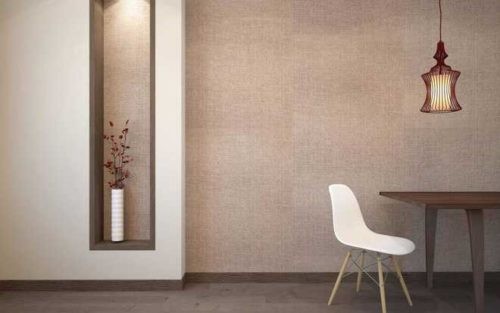
Wallpaper has drawbacks in addition to its benefits.
- short service life – mostly up to 8;
- low strength – incompatible with pets: cats and dogs;
- difficult care: contaminated areas require very careful and careful cleaning;
- Difficulties in joining drawings.
Every kind of wallpaper has benefits and drawbacks of its own.
Paper wall coverings:
- mask imperfections in the wall surface well;
- environmentally friendly;
- have a budget price;
- allow vapors to pass through, causing the walls to breathe.
- in damp rooms or direct contact with water they lose their consumer properties;
- have low strength – they tear from sharp objects and the claws of cats and dogs;
- serve no more than 5 years.
Non-textile trellises:
- have increased elasticity, which makes it possible to join the previous fabric without much effort;
- perfectly hide cracks, microcracks, sinkholes on the wall surface;
- muffles various noises well;
- easy to remove.
The drawbacks consist of:
- difficulty of care: cannot be washed, only vacuumed;
- transparency of the sheet, which requires painting the wall in light colors.
Vinyl wallpaper is long-lasting, effectively conceals wall imperfections, and is immune to moisture and UV rays (it doesn’t fade). Their service life is at least twenty years, especially if they are painted (with regular repainting).
The high toxicity of vinyl material during burning and the release of hazardous substances at temperatures above 30 o C are among the drawbacks that must be mentioned.
One of the most long-lasting finishing materials is glass fiber wallpaper, which enables homeowners to put off replacing it for several decades. Simple maintenance: use a soft-bristled brush to wash with chemically active agents (hard brushes can scratch the paint). As a result, you can paste over the walls in areas with high humidity and pollution (like the kitchen, bathroom, and children’s room). doesn’t burn. is not harmed by animals.
Experts believe that wallpaper has the following drawbacks:
- production of wallpaper only for painting;
- limited choice of design;
- difficult to remove.
Decorative plaster
The following are the reasons decorative plaster is becoming more and more popular:
- versatility – cement-sand and gypsum mortar can be applied to all types of wall materials, from natural stone, brick, concrete to porous materials (aerated concrete, gas silicate, etc.).d.);
- plasticity – during plastering work, all wall defects are hidden: cracks, sinkholes, etc.d.;
- durability – service life ranges from 15 to 50 years or more. It all depends on the operating conditions;
- strength – the wall can withstand significant impacts without destroying the plastered surface;
- elasticity – some types of plaster do not crack when the building shrinks;
- resistance to fading – do not fade under sunlight;
- the absence of connecting seams, which gives the room a finished look;
- good sound and heat insulation properties;
- environmentally friendly – all components of the solution are not allergens and do not release any substances into the air;
- moisture resistance, which eliminates the problem of rooms with high humidity (bathroom, kitchen);
- simple care – you need either a vacuum cleaner or a damp cloth;
- resistance to sudden temperature changes from –55 to + 60 o C;
- a huge selection of surface textures and colors.

First and foremost, among the flaws, the following should be mentioned:
- high price of mixtures;
- significant costs for plaster work;
- a complex technology for applying a plaster solution, quite often limits the possibility of work on its own.
Furthermore, the drawbacks consist of:
- low probability of successful repair of damaged places;
- Complex dismantling: dusty, heavy;
- Special requirements for the surface of the walls: should be strong, clean, dry and primed.
The strengths and weaknesses listed above provide you with a general understanding of the materials; however, they do not help you determine which is better, wallpaper or Venetian plaster, for example.
It’s important to think about your maintenance preferences, the purpose of the room, and your personal style when choosing between wallpaper and decorative plaster for your walls. Wallpaper comes in a variety of patterns and textures, is reasonably simple to apply, and can be an affordable way to update a room. Conversely, decorative plaster offers a more robust, distinctive, and textured finish that can give any space depth and personality. Every option has advantages and disadvantages, so the best option for you will be determined by how well durability, maintenance, and aesthetics are balanced.
Comparison of characteristics
Every selection is made in accordance with predetermined standards. About the materials that are being examined, this is:
- vapor permeability. Many owners of apartments and private houses pay little attention to the ability of finishing materials to allow air and water vapor to pass through. But the microclimate in the room depends on whether the walls “breathe” or not, since a vapor-proof film leads to the appearance of dampness and an increase in the amount of carbon dioxide;
- price of material and cost of finishing work. In many cases, it is finance that dictates the choice of type of finish. Then, instead of what is more beautiful and practical, they look for what is cheaper. Unfortunately, these are the realities of Russia that must be taken into account;
- resistance to external influences. Generalizing criterion. Includes the entire range of factors that have a negative impact on the finishing surface, ranging from mechanical stress to the ability to retain color when exposed to sunlight;
- durability. The effectiveness of financial investments in repair work depends on the service life. Many consumers take this factor into little account. For example, they buy finishing material, which costs 25-30% less than the alternative option, but lasts 2-2.5 times less;
- complexity of installation technology. The criterion is directly related to finance. It’s one thing when the work is done on your own, another thing is hiring a team of professional builders. And even here there is a huge difference in prices. For example, painting walls will cost inexpensively, about 70 rubles./m2, “Venetian” is many times more expensive – from 400 to 1500 rubles./m 2 ;
- environmental friendliness. For apartment owners who are susceptible to allergic reactions to various substances and materials, this indicator is very important;
- moisture resistance. The reaction of the finishing material to high humidity determines its use in a particular room;
- ease of care. The indicator is important, but not decisive. They pay attention to him last.
Outlined criteria. Let’s contrast ornamental plaster with wallpaper.
Vapor permeability
Within both categories of materials, there are sealed finishes (polymer latex mixtures and vinyl wallpaper) and ones that permit air and steam to flow through in both directions (paper- and non-woven-based trellises, cement-sand and gypsum mortars).
In summary, all of the materials are identical.
Cost factor
Comparing materials based on cost is required in two scenarios:
- the price of the material;
- cost of finishing works.
Wallpaper is the clear leader in the budget sector in terms of material cost. At a discount, they are available for 45–50 rubles per square meter. The least expensive plaster starts at 200 rubles per square meter.
The benefit of wallpaper holds true in the middle price range, but the difference is noticeably less. Within the "elite" class, there is roughly equal representation: Costs for 1 m 2 of 3D wallpaper range from 1,000 to 2,500 rubles, while decorative plaster costs between 1,200 and 2,100 rubles per m 2.
There is no denying wallpaper’s benefit in terms of labor costs. For 80 rubles per square meter, you can hire a master to wallpaper the walls; for 325 rubles per square meter and more, experts will handle the plastering.
In conclusion, wallpapering the walls is a more financially advantageous option when there is a lack of funds for repairs.
Resistance to external influences
This criterion gives plaster solutions a clear advantage over trellises. Decorative plaster can withstand pet claws, UV rays, impacts, scratches from sharp objects, continuous friction from the back of a chair, etc.
In conclusion, plaster’s strong resistance to a variety of factors lengthens the finish’s useful life.
Durability
Every homeowner wants to have a finished product that will look good for as many years as possible when having finishing work done. Here, plaster has no rivals. Wallpaper, paper, and non-woven materials have varying average lifespans: 7-8 years, 10-15 years, and 45-50 years for decorative plaster, mineral compositions, silicone, and polymers, respectively.
In conclusion, spending more money on pricey decorative plaster will ultimately prove to be more profitable than using cheaper materials.
Complexity of installation technology
Wallpaper can be hung by almost any family member. Plastering tasks that require more expertise, such as Venetian, wet silk, etc., should only be handled by qualified professionals. Nonetheless, there are a select few artisans that carry out this kind of work at a respectable caliber. But rather than being the norm, this is the exception.
In conclusion, a master’s knowledge and experience are necessary for applying decorative plaster. These kinds of technological tasks are still beyond the capabilities of novices in the construction industry.
Environmental friendliness
When it comes to environmental friendliness, there is total equality. In every group under analysis, all varieties of finishing materials are composed of eco-friendly materials. Some customers only have concerns regarding vinyl wallpaper. However, issues with them only arise in dire circumstances (fire), allowing you to overlook vinyl’s propensity to release toxic compounds when burning.
In summary, those who suffer from allergies can afford any kind of finishing material.
Moisture resistance
Materials can now be ranked equally with respect to moisture thanks to advancements in technology. Direct contact with water destroys the moisture-resistant materials and finishes found in both groups.
In conclusion, you should always follow the usage instructions or product recommendations when applying wallpaper or decorative plaster in highly humid rooms.
Which is easier to clean?
If we consider user feedback from different forums, decorative plaster turns out to be a more useful material. You can use common household chemicals to wash it. But as the author’s own experience demonstrates, things are not always that easy: dust and dirt removal from textured plaster can be challenging. It is particularly challenging if there are a lot of tiny depressions, which are smaller than those of the "lamb."
In conclusion, trellises are not always cleanable, but decorative plaster can be cleaned despite its difficulty. They can sometimes only be vacuumed.
We highlight a crucial point at the conclusion of the analysis: the materials were not compared based solely on appearance. Since each person has a different definition of beauty, there can be no judgments made here. While some people appreciate 3D wallpaper’s illusion of space, others are drawn to walls made of real stone.
Important: You can completely trust the conclusions drawn in this work if you’re wondering which is better, decorative plaster or wallpaper for painting. After all, wallpaper for painting is nearly identical to basic trellises in terms of features, with the exception of service life. It lasts for at least 20 years.
Ultimately, your budget, personal taste, and the particular requirements of your room will determine which decorative plaster or wallpaper is best for you. Each option has special benefits and can change the interior design of your house in different ways.
With the wide variety of patterns, colors, and designs available, wallpaper can easily complement any type of interior design. If you want to update your appearance, it can be replaced easily and is reasonably simple to install. But it can be more vulnerable to damage, particularly in places with a lot of traffic or humid rooms.
Conversely, decorative plaster offers a finish that is more resilient and long-lasting. It gives walls more depth and texture, giving them a distinctive and frequently opulent feel. Long-term, its durability may make it a cost-effective investment, despite the fact that application can be more costly and time-consuming. It can also be altered to produce a variety of finishes and effects.
Take your budget, the amount of maintenance you’re willing to undertake, and the particular requirements of each room into account. The ideal option is the one that best suits your lifestyle and aesthetic tastes because both decorative plaster and wallpaper have advantages. The interior of your house can be exquisitely enhanced by either decorative plaster or wallpaper, due to their differing design options and sturdy elegance.


