
Selecting the appropriate materials is essential when organizing a building or remodeling project. Drywall is among the materials you’ll come across most frequently. But not every drywall is made equally. Different varieties, like regular and moisture-resistant drywall, are made for particular uses.
Knowing the distinctions between these two kinds will enable you to make wise choices and guarantee the longevity and affordability of your project. As the name implies, moisture-resistant drywall is made specifically to withstand damp conditions, which makes it perfect for spaces like kitchens and bathrooms.
Conversely, normal drywall works well in dry places where moisture is not an issue. Potential problems like mold growth and structural damage can be avoided by using the appropriate type of drywall in the right location. Over time, being aware of these differences can help you save time, money, and effort.
- Markings and varieties
- Technical characteristics of GKVL
- What is the difference between moisture -resistant drywall and ordinary?
- How to turn ordinary drywall into moisture-resistant
- Is it possible to use GKLV outdoors, in a bathhouse??
- Installation process
- How to choose the right one
- Video on the topic
- How to make moisture-resistant drywall with your own hands from a regular sheet?
- Boris Belozerov on the moisture resistance of gypsum products / 300
- Acoustic drywall in 90 seconds! Let"s talk about soundproofing simply | Training with TechnoSonus
- Waterproofing drywall in the bathroom. My opinion.
- Moisture-resistant drywall
- 🟨 ACOUSTIC DRYWALL – which is the best in our opinion?
- How to choose and use drywall correctly
Markings and varieties
The original purpose of water-resistant gypsum plasterboard (GKLV) was to finish rooms with moderate to high humidity levels. It looks like a regular rectangular slab made of two layers of cardboard with a layer of gypsum sandwiched in between. The latter has antifungal and reinforcing ingredients.
Other abbreviations include GVL and GVLV. Although the composition of all these materials is similar, they are made with entirely different technologies. Plasterboard, for instance, is created using the sandwich principle, and manufactured fibers and a gypsum mixture are combined to create GVL, a building material. Finally, the composition is ready to be pressed. The substance is homogeneous as a result.
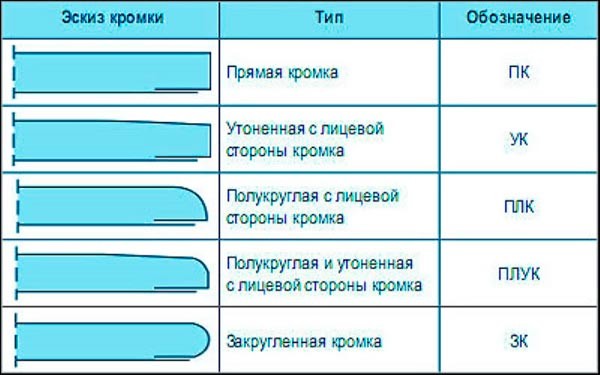
Sheets with GKLV markings are distinct. The type of edge, the group of building materials, and the slab’s dimensions all influence the designations. The latter might be:
- Direct (PC). In the process of finishing with such products there is no need to seal the seams.
- Refined (UK). From the outside of the element it tapers towards the edge. The joints of the panels are covered with serpyanka, then putty.
- Rounded (ZK). The gaps between the sheets are covered with putty.
- Semicircular from the outside (PLC). Similar to the previous case, the joints are puttied.
- Semicircular, thinned from the outside (PLUK). The areas where the plates come into contact are covered with a mesh and then puttyed.
Waterproof plasterboard, similar to simple plasterboard, can be used for walls or ceilings, depending on how it is installed. While thicker elements are used to cover walls, smooth slopes, and form partitions in the second scenario, thin sheets are used to decorate ceilings in the first.
Technical characteristics of GKVL
Only well-ventilated rooms should use moisture-resistant plasterboard. It is also crucial to think carefully about the labeling. Plasterboard sheets are separated into groups A and B according to the quantity of surface imperfections. Smoother-surfaced products fall into the first category. They will endure longer because the putty layer fits them more snugly. These components have a marginally higher price.
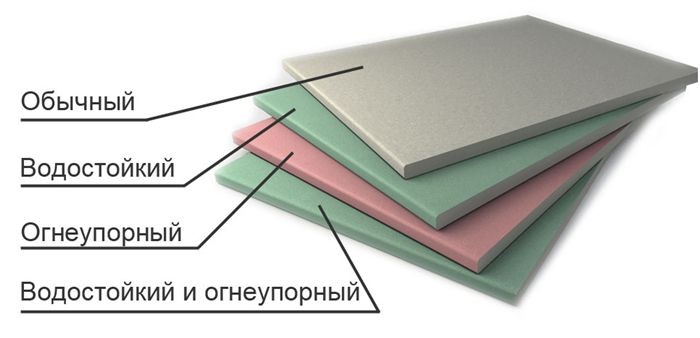
What visual differences exist between basic plasterboard and moisture-resistant plasterboard? just in hue. When painting moisture-resistant products, manufacturers typically use a green tint; however, pink panels are occasionally found. Additionally, this material may be fire-resistant.
Waterproof plasterboard slabs come in standard sizes ranging from 60×200 to 120×400 cm. The element’s width is shown by the first digit, and its length by the second. The step in this instance is just 50 mm.

Plasterboard also comes in a variety of thicknesses. For the latter, the range is 6.5–24 mm. The majority of the time, the decision is based on the building material’s intended use and the operational circumstances. For building walls in homes, sheets thicker than 1.25 cm are appropriate; material with a transverse size of 6.5–12.5 mm is acceptable when forming arches.
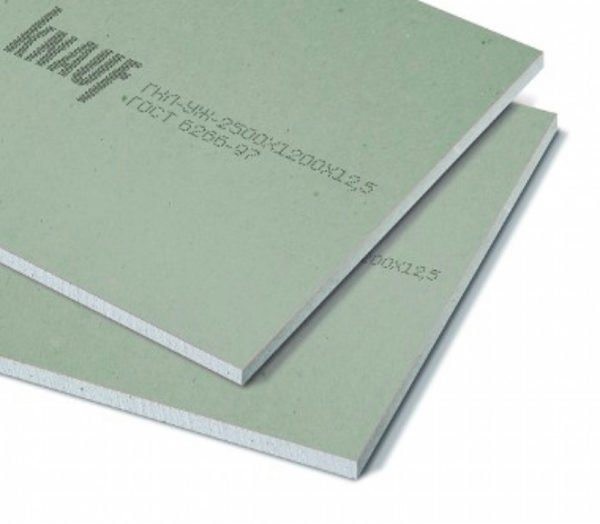
Products of superior quality are always marked. You can use it to learn vital details about the building material, such as sheet type, group, edge type, and dimensions. There’s also a link to the standard included.
What is the difference between moisture -resistant drywall and ordinary?
The primary distinction between GKLV and GVL is that the former has additional unique parts that enhance its functioning characteristics when humidity levels rise. Using impregnated impregnation, cardboard made of these building materials is processed. It helps moisture escape from the drywall structure by preventing it from penetrating the material.
Additives such as antifungal medications and water protection products are also included in the gypsum "filling" of waterproof products. The latter shield GKLV from harm caused by different microbes.
How to tell moisture-resistant drywall from regular by looking at external indicators: a waterproof analogue is green, whereas a basic GVL is grayish in color. The location of the material’s application heavily influences the choice of material. You should go with GKLV if this is a room (like a bathroom) where there is a lot of humidity. Because they are more expensive, experts feel that using moisture-resistant building materials is not recommended under typical circumstances. Simple is a great option for dry room repairs.

How to turn ordinary drywall into moisture-resistant
A basic gypsum board has to be treated with the following preparations in order to become extremely resistant to moisture:
- Deep penetrating soil. It is recommended to apply two to three times, starting with the first layer.
- Antifungal, anti-mold compounds.
- Water-repellent paint. Suitable only in cases where the base is not planned to be finished with tiles.
- Water repellent. Replaces primer, at the same time serves as waterproofing. The panels are processed with a roller on both sides.
Simple drywall becomes much more moisture-resistant when the aforementioned products are used. Simultaneously, obtaining a material of the same quality as the factory one through this method is unattainable. Consequently, using genuine waterproof panels is advised.
Is it possible to use GKLV outdoors, in a bathhouse??
Moisture-resistant plasterboard differs significantly from ordinary plasterboard, making it suitable for use in bathroom design. However, the acquisition of this material to finish bathrooms is not always authorized; it is only permitted to cover the sink. It is the opinion of many experts that using waterproof plasterboard boards inside of a steam room is not recommended. If not, after five years it will need to be renovated.
It is crucial to follow this rule when performing repairs in highly humid rooms: waterproof putty should be used to seal the holes between the panels, followed by fiberglass tape and another layer of putty mixture. Furthermore, this needs to be carried out irrespective of conventional advice regarding a particular kind of edge. Furthermore, it’s critical to putty the screw heads to stop corrosion from destroying them.
Outdoor use is not recommended for gypsum boards, not even premium moisture-resistant varieties. It will soon need to be replaced because it will quickly lose its qualities.

Installation process
You can start installing waterproof drywall once it’s evident how it differs from ordinary drywall. The actual installation procedure for the two different materials is the same: a metal frame with rack-mounted guide profiles needs to be mounted. You must first gather plasterboard, dowels, screws, and a set of tools in order to complete this process:
- drill;
- screwdriver;
- grinder;
- plumb line;
- building level;
- rule;
- roulette;
- metal scissors;
- hammer.
The following considerations should be made when installing moisture-resistant plasterboard sheets:
- Ventilation must be provided in the room where repair work is being carried out.
- The pitch between the lattice elements should be slightly smaller than when installing conventional material.
- The frame must be aluminum only, wood cannot be used.
- All seams must be carefully sealed.
You must consider the location of the groove in order to determine which side of the plasterboard sheets to attach to. If the end is positioned at a specific angle, it will show up. Here, the products’ color is unimportant.
Installation requires self-tapping screws, which are fastened at a maximum distance of 20 cm. Additionally, there should be tiny spaces left where the panels meet. This will guarantee premium putty for the entire base as a result. The treated surface needs to be puttied once more after priming. After that, painting with waterproof compounds is permitted.

How to choose the right one
It won’t be evident how much waterproof drywall differs from basic drywall until it becomes evident why waterproofing is necessary. After choosing the kind of sheet, you can choose them based on factors like size, weight, and edge. Furthermore, it is advised that you consider the following:
- The cardboard should never peel off (especially at the corners).
- When transporting, plasterboard panels must be securely fastened, otherwise they may be damaged.
- The thickness of the material is selected according to the purpose of purchase, type of object, features of its operation.
Frame or frameless technology is used for drywall installation. The latter’s primary benefit is its lower cost. However, the first one is more popular since it makes it possible to conceal any flaws and install utility lines.
| Feature | Moisture-Resistant Drywall | Regular Drywall |
| Core Material | Special additives to resist moisture | Standard gypsum |
| Paper Facing | Moisture-resistant paper | Standard paper |
| Color | Typically green | Usually gray or white |
| Usage Areas | Bathrooms, kitchens, basements | Living rooms, bedrooms, hallways |
| Cost | More expensive | Less expensive |
| Durability in Moist Conditions | High | Low |
In building and remodeling, regular drywall and moisture-resistant drywall have different uses. Although walls and ceilings can be constructed with either type of drywall, moisture-resistant drywall is made especially to resist wet and muggy environments. Because of this, it’s the best option for rooms with moisture issues like bathrooms, kitchens, and basements.
It’s the composition that makes all the difference. Often green or blue in hue, moisture-resistant drywall has a unique coating on the paper facing and water-repellent additives in the core. This promotes a longer-lasting and healthier environment by inhibiting the growth of mold and mildew. Regular drywall, on the other hand, is more appropriate for dry areas and does not provide the same degree of moisture protection.
The particular requirements of your project will determine the best kind of drywall to use. By lowering the chance of damage and the need for repairs, moisture-resistant drywall can ultimately save time and money in areas that are prone to moisture. Regular drywall is a practical and affordable solution in drier areas. You can make well-informed decisions and get the best results for your building or renovation project by being aware of these differences.
The main distinction between regular and moisture-resistant drywall in construction is how they react to moisture. Moisture-resistant drywall, also known as "green board," is better suited for places like bathrooms and kitchens that are occasionally exposed to moisture and are subject to humidity because it contains unique additives and a protective layer. Regular drywall, or whiteboard, on the other hand, is made for dry environments and quickly deteriorates when exposed to moisture. Selecting the appropriate kind guarantees the longevity and robustness of your walls, averting problems such as mold growth and structural impairment in moist areas.


