
Foam blocks are becoming a more and more common option in construction because of their portability, insulation, and simplicity of use. These adaptable materials are available in different sizes and have a variety of uses, including the construction of walls and the creation of elaborate architectural details. Having a thorough understanding of the various sizes and their attributes will enable you to make well-informed decisions regarding your building or remodeling project.
Foam blocks come in a variety of sizes to accommodate various building requirements, which is one of their main advantages. Blocks with standard dimensions typically measure 600 mm in length, 300 mm in height, and vary in width. Common widths are between 100 and 300 mm, giving you flexibility based on your project’s insulation and structural requirements.
Foam blocks differ not only in size but also in density and strength. Lower density options work well for insulation and non-load-bearing partitions, while higher density options are more durable and better suited for load-bearing walls. When choosing the appropriate foam block, it is crucial to take into account the particular needs of your project, including structural support, soundproofing, and thermal insulation.
The three factors of size, density, and intended use should all be considered when selecting foam blocks. Speak with an expert in construction for more information on the best choices for your particular requirements. Foam blocks can greatly improve the longevity and efficiency of your building or remodeling projects if you choose the right ones.
| Size (mm) | Characteristics |
| 600x300x200 | Standard size, suitable for most wall constructions, easy to handle and transport |
| 600x300x100 | Thin, great for partition walls, lightweight and easy to install |
| 600x300x150 | Intermediate thickness, offers better insulation than thinner blocks |
| 600x400x200 | Large size, good for faster construction, fewer joints reduce thermal bridges |
| 600x200x200 | Smaller height, useful for detailed or smaller projects |
- Existing dimensions of foam concrete blocks
- Which ones are suitable for the walls of a house or apartment??
- Load-bearing external and internal
- Non-load-bearing interior partitions
- The importance of choosing the right foam concrete blocks for construction
- Video on the topic
- Forms for foam blocks
- 🔨 What is foam block in construction? #shorts
- aerated concrete (foam concrete) dimensions, characteristics and qualities.
Existing dimensions of foam concrete blocks
The maker and the process used to create this building material determine the dimensions of foam concrete blocks. The foam concrete block can have a thickness of between 50 and 500 mm. The building material’s length, which is always 600 mm, is the only variable. The most common products used in wall construction have a thickness of 200 mm.
The thinner ones can be used as a thermal insulation layer and in the construction of interior walls. The type of concrete used and the composition’s density at the time of casting determine the foam block’s weight.
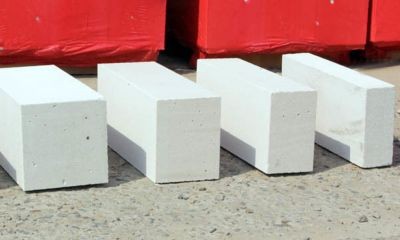
Superior material composed of a foamed concrete mixture has specific dimensions and the right block shape. GOST 25485-89 only permits a 1 mm variation.
By stacking stones on top of one another, you can verify that the foam block’s geometric shape is accurate. Their The surfaces need to fit together tightly and the sides need to line up precisely.
Flipping the bars over and comparing all surfaces will allow you to verify this.
Products made of foam concrete come in various sizes. The block’s width, height, and length must all be multiples, per GOST. This is essential for ease of laying, enabling you to construct a wall with the necessary thickness. The dimensions of the bar are used to determine the width of the partitions and the thickness of the walls when designing a structure.
Although foamed concrete is laid by hand, some large-format products need to be lifted with the use of a winch or other lifting apparatus.
Standard and non-standard are no longer concepts. As per GOST 1989, the most commonly consumed size of a single bar is 600x300x200. The production of foam concrete blocks in any size that the customer wants is now feasible thanks to new technologies.
| Popular sizes of foam blocks (mm) | Foam blocks of other sizes (mm) | Large format block panels (mm) | ||||||||
| for carriers | for partitions | for thermal insulation | ||||||||
| Length | 600 | 600 | 600 | 500 | 600 | 600 | 600 | 600 | 600 | 1000 |
| Width | 300 | 300 | 300 | 80 | 300 | 300 | 400 | 200 | 100 | 600 |
| Thickness | 200-400 | 100-150 | 100 | 200 | 80 | 240 | 200 | 200 | 250 | 300-600 |
Which ones are suitable for the walls of a house or apartment??
Depending on the type of structure to be constructed, the manufacturer orders foam concrete blocks in specific dimensions. Foam blocks are available for both internal non-load-bearing partitions and external load-bearing walls.
Load-bearing external and internal
The density of the material used in the construction of foam concrete products has replaced size as the determining factor for load-bearing external and interior walls.
Blocks with a density of at least D600 are chosen for load-bearing walls (marking).
The grade of foam concrete should be higher for heavier and taller planned buildings. A unit of concrete will weigh more the higher its grade.
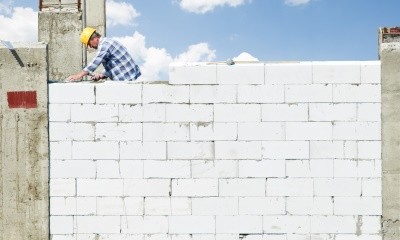
For load-bearing external and internal structures, foam blocks with a thickness of 200–500 mm are most frequently utilized.
If more thermal insulation is not needed, a standard 600 x 300 x 200 mm block will suffice.
In the event that building takes place in the north, the blocks are laid flat and the masonry is completed in two layers.
It is sufficient to install standard foam concrete sections in a single row for the middle strip.
Non-load-bearing interior partitions
For non-load-bearing walls, partition foam blocks measure 600x300x100 mm. On the thinnest side, the blocks are stacked one on top of the other. A 100 mm thick partition is sufficient for internal use. Depending on how the house is designed, interior walls can be put together using foam blocks in different sizes if that is what the homeowner wants. Foam concrete sections starting at grade D300 are appropriate for non-load-bearing internal partitions.
The importance of choosing the right foam concrete blocks for construction
Different technologies for producing foam concrete blocks have made a wide range of foam concrete products available. These building materials are produced in a number of ways. They can be divided into the necessary-sized blocks and cast using pre-made molds. Learn how to create a foam block with your hands separately.
It’s crucial to consider both the foam block’s overall dimensions and the fact that all of the products are precisely the same size when buying foam concrete for walls. There shouldn’t be a deviation of more than 1-2 mm. A level and measuring tape are used to verify this.
Blocks with larger size errors can only be placed on mortar, where the thickness of the seams covers and balances the bar size variation. When foam blocks are laid with inaccurate dimensional accuracy, the structure’s geometry may be upset.
Premium foam concrete blocks, each precisely the same size, can be positioned on a thin layer of glue (1-2 mm). For this reason, choosing the right block dimensions when building a house is crucial.
You should buy foam blocks from reputable, trustworthy businesses that have a certificate and offer a guarantee on their products and sizes to avoid issues with sizes. When external wall products are chosen carefully, which includes considering the local climate where the building is being built, you can avoid having to pay extra for insulation.
Each size of foam block is designed to meet a particular purpose in construction. Among the common dimensions are 600x300x200 mm, 600x300x100 mm, and 600x400x200 mm. The selection of foam blocks for your project can be greatly influenced by the dimensions, taking into account the needs for structural integrity, load-bearing capacity, and insulation.
It is imperative to take into account the attributes of foam blocks, including their density, compressive strength, and thermal insulation capabilities. Blocks with a higher density are more resilient and strong, which makes them appropriate for load-bearing walls. Lower density blocks, on the other hand, are perfect for insulation layers and non-load-bearing partitions because they offer superior thermal insulation.
It’s important to consider the particular requirements of your construction project when choosing foam blocks. Take into account your insulation goals, the building’s structural requirements, and the climate. Your decision should also take into account how simple it is to handle and install the blocks, since larger blocks can expedite construction but may also need more manpower and equipment.
You can improve the effectiveness and caliber of your construction by making well-informed decisions by being aware of the various dimensions and properties of foam blocks. Careful selection minimizes expenses and maximizes resource utilization while guaranteeing the building’s stability and comfort. For modern construction needs, foam blocks provide dependable and adaptable solutions, whether for residential or commercial projects.
It’s crucial to comprehend the many sizes of foam blocks, their essential qualities, and the guidelines for selecting the best ones when choosing them for construction. Foam blocks offer distinct advantages like thermal insulation, soundproofing, and structural strength and are available in a variety of sizes to meet different building requirements. Making an informed decision that ensures the selected blocks meet the project’s requirements for durability, efficiency, and cost-effectiveness requires knowledge of the differences in size and their respective properties.


