
The right material selection is essential for insulating your home. Glass wool and basalt wool are two of the most widely used materials. Although both materials provide good acoustic and thermal insulation, they differ in certain ways that may make one better suited to your particular requirements.
Glass wool is renowned for being flexible and light weight because it is made from recycled glass. It is a favorite among do-it-yourselfers because it is simple to handle and install. Furthermore, glass wool is frequently less expensive, making it a financially sensible option for a lot of homeowners.
However, basalt wool, which is made from volcanic rock, has a higher level of durability and fire resistance. In certain situations, it provides superior sound insulation and can tolerate higher temperatures. Because of this, it’s the perfect option for places where durability and safety are top concerns.
Knowing the main distinctions between basalt and glass wool will enable you to choose wisely for your insulation project. Let’s examine each material’s advantages and disadvantages to decide which is best for your house.
| Aspect | Glass Wool | Basalt Wool |
| Thermal Insulation | Good | Excellent |
| Fire Resistance | Non-combustible | Non-combustible |
| Sound Insulation | Good | Excellent |
| Moisture Resistance | Moderate | High |
| Durability | High | Very High |
| Cost | Lower | Higher |
- Advantages and disadvantages
- Basalt wool
- Fiberglass mineral wool
- Performance Comparison
- Which is cheaper?
- Which is warmer
- Hygroscopicity and vapor permeability
- Which is more durable?
- Environmental friendliness
- Noise insulation
- Fire safety
- Which is easier to install?
- What is better at resisting mold?
- Video on the topic
- Basalt Wool or Knauf Insulation? Which Insulation Is Better | What"s the difference | Knauf insulation
- Mineral and basalt wool insulation.
- Basalt wool. Advantages and disadvantages.
Advantages and disadvantages
We will examine their technical and operational features, cost, hygroscopic properties, and installation method to support the distinction between mineral and basalt wool.
Basalt wool
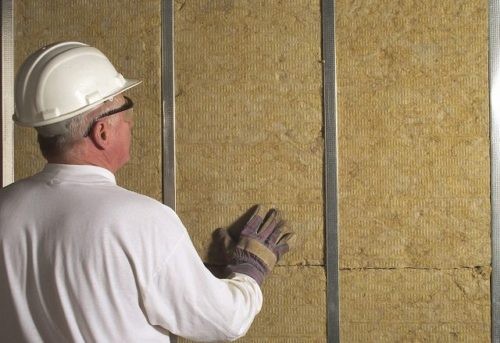
Stone wool is made from gabbro, a type of granite, and basalt, a volcanic rock. Crushed and melted stones. Subsequently, the liquid lava is forced through a finely perforated grid to produce minuscule fibers that range in diameter from 4 to 12 microns and length up to 16 mm. After the fibers are hardened, a layer of loose material is formed. Formaldehyde resin is then added as a binder, and slabs up to six meters long are created.

The material’s coefficient of thermal conductivity varies from 0.035 to 0.042 W/(m*K) and is contingent upon the density of the fiber arrangement. Range of operation: -190°C to +1000°C. Both water absorption and burning are absent from the insulation. possesses superior sound-absorbing qualities.
The following qualities of basalt fiber-based thermal insulation are advantageous:
- long service life reaching 50 years;
- resistance to high temperatures and open flames;
- almost zero hygroscopicity;
- excellent thermal insulation properties;
- high level of absorption of sound vibrations;
- resistance to chemically active substances;
- high elasticity, preserving the shape and size of the slabs;
- possibility of use for external and internal work;
- light weight and easy installation;
- environmental cleanliness;
- does not attract rodents and insects;
- does not serve as a basis for the appearance of fungus and mold.
However, basalt insulation also has a number of serious drawbacks, including:
-
high cost due to high energy consumption for production;
presence of installation joints that reduce the effectiveness of insulation;
emission of large amounts of dust when cutting and laying.
As you can see, basalt wool has far more advantages than disadvantages. However, the comparatively high price frequently dissuades customers from selecting this thermal insulation.
Fiberglass mineral wool
Glass manufacturing waste serves as the primary raw material for the creation of glass wool, to which a combination of quartz sand, limestone, dolomite, borax, and soda is added. Glass to mixture volume ratio: 4:1.
Glass fragments and additional materials are placed in a furnace set at 1400°C to melt them. In order to produce thin fibers with a diameter of 3 to 15 microns and a length of 15 to 50 mm, the molten mass is forced through a fine grate while under pressure.
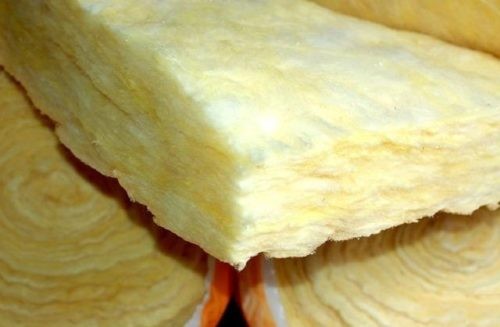
Thin fibers are joined to one another by a binder, which is applied to the layer of resulting threads. Furthermore, the insulation will be more elastic and long-lasting the longer the glass threads.
All of this heated fiber mixture is dumped onto a moving conveyor, which creates a layer of glass wool whose thickness is determined by the line’s speed. Slabs are cut or rolls are rolled from the insulation tape that is collected on the conveyor.
Mineral wool has a thermal conductivity coefficient ranging from 0.038 to 0.046 W / (m * K). + 450 °C is the maximum working temperature. Because it is hygroscopic, the material is only suitable for indoor use. It needs extra moisture protection when working outside or in moist areas.
The following should be mentioned as benefits of mineral wool insulation:
- low cost;
- light weight, allowing you to insulate weak structures;
- environmental friendliness;
- good thermal insulation properties;
- easy installation;

- non-flammability;
- resistance to fungus and mold;
- convenient transportation.
Among the drawbacks are:
- high hygroscopicity;
- change in shape and decrease in thermal insulation properties when wet;
- service life no more than 10 years;
- the need to use eye and respiratory protection during installation;
- attractive to rodents;
- low resistance against aggressive chemicals.
As you can see, when selecting insulation, glass wool has a number of significant drawbacks that need to be considered. Still, buyers continue to like it because of its affordable price.
Performance Comparison
The most crucial indicators, which we will compare in order to determine which is superior, a basalt slab or mineral wool, are as follows:
- price;
- thermal insulation qualities;
- gyroscopicity and vapor permeability;
- durability;
- environmental friendliness;
- noise insulation performance;
- fire safety;
- ease of installation;
- Rodent attractive and mold resistant.
After establishing these standards, it will be feasible to determine which insulation is superior and what to select in each individual situation.
Which is cheaper?
The cost of mineral wool ranges from 1200 to 1400 rubles per square meter. Basalt insulation ranges in price from 1450 to 2250 rubles per square meter. The cost of installation is the same. Furthermore, it is not at all difficult to lay the slabs yourself.
It turns out that mineral wool is 20–25% less expensive than basalt, which can be the most significant consideration when working with a tight budget. But it’s important to remember that less expensive material performs worse, which could result in significant losses in a matter of years.
Which is warmer
Glass wool has a thermal conductivity coefficient of 0.038-0.046 W/(m×°K), while basalt mats have a coefficient of 0.035-0.042 W/(m×°K). In other words, both thermal insulation materials are nearly identical based on this indicator. It is therefore illogical to make a decision based solely on thermal conductivity. Furthermore, experience has shown that the majority of manufacturers create their goods with a thermal conductivity coefficient that is lower than the average stated level.
Hygroscopicity and vapor permeability
Basalt mats absorb water at a nearly zero rate. Glass wool actively absorbs moisture, changing its original shape and losing its ability to act as thermal insulation. The two insulation materials have the same vapor permeability, or capacity to let air through. However, it should be noted that the vapor permeability of mineral wool mats will entirely vanish if they are covered in plastic film to keep them dry.
Based on these criteria, the best insulation material should be thought to be basalt.
Which is more durable?
Glass wool has a 30-year shelf life when operated in an entirely dry environment. Following this, the material will collapse as a result of crystallization processes. Reality, however, indicates that mineral wool insulation is rarely good for a decade or longer. The primary cause is the airborne moisture’s absorption, which speeds up the crystallization process.
Stone wool producers assert that there is a 50-year potential for exploitation, even though the material has only been produced for slightly more than 25 years. Just as there is no information about forced insulation replacement, there are currently no actual data.
Given that the material lasts a long time and doesn’t result in future expenses, investing in more expensive basalt mats might be more profitable.
Environmental friendliness
There are no unhealthy components in either material. Nevertheless, 3-4% formaldehyde resin is present in the binders. Because of this, many experts believe that both insulation materials may be harmful to people. However, they fail to consider the fact that formaldehyde only starts to release up to 2.5% of its toxic compounds when heated above 30°C.
As a result, we can declare with confidence that both insulation types are truly suitable for use in residential construction.
Noise insulation
Both materials are good at reducing vibrations caused by sound. This number is somewhat higher for basalt, but not substantially. As a result, this indicator cannot be considered when selecting insulation.
Fire safety
Both materials are categorized as non-flammable by fire safety indicators, and they can only break down at temperatures higher than the maximum allowable.
Which is easier to install?
The technology used for installation is exactly the same. However, you will need to take precautions to ensure that your eyes and respiratory system are safe when handling glass wool. While in use, basalt mats also release dust, though experts say this is safe for human health. Here, we used the example of a ceiling to explain the installation technology.
What is better at resisting mold?
Neither of the insulation materials promotes the growth of mold or mildew. However, rats are not drawn to basalt material at all, and they happily reside in glass wool.
The choice between basalt and glass wool for insulation ultimately boils down to your personal requirements and tastes. An affordable alternative that provides good acoustic and thermal insulation is glass wool. Because it is lightweight and simple to install, it is a well-liked option for a lot of home improvement projects. But because it can irritate the skin and lungs, wearing the right protective gear is crucial when installing it.
However, basalt wool offers better fire resistance and marginally better insulation qualities despite being generally more expensive. Because of its increased durability and density, it may be a better long-term investment—especially in regions with harsh weather. Furthermore, basalt wool is safer for both professionals and do-it-yourselfers to handle than glass wool because it causes less irritation.
In conclusion, each material has advantages and disadvantages. While basalt wool offers superior protection and durability for those who are willing to spend a little more, glass wool is a more affordable option that works well for standard insulation needs. To ensure you get the best insulation for your home, carefully consider your budget as well as the particular requirements of your project. Either option can greatly increase the comfort and energy efficiency of your house.
The selection between glass wool and basalt wool for insulation is based on their distinct characteristics and intended uses. Glass wool is perfect for residential projects because it is affordable, lightweight, and provides good thermal insulation. However, basalt wool offers better durability, soundproofing, and fire resistance, making it ideal for commercial buildings and high-performance needs. You can choose the material that best meets your needs for construction or renovation by being aware of its advantages and disadvantages.


