
Common building materials like cinder blocks are renowned for their toughness and adaptability. These long-used building blocks are made of a mixture of cement, water, and coal cinders. They are a popular option for both residential and commercial projects because of their strength, affordability, and ease of use.
One of the primary characteristics of cinder blocks is their hollow construction, which lowers their weight and offers superior insulating qualities. Because of this, they are an energy-efficient choice that keeps buildings warm in the winter and cool in the summer. To improve their structural integrity, reinforcing materials can also be inserted into the hollow spaces.
Because cinder blocks come in a variety of sizes and shapes, building can be done with flexibility. They can be utilized to construct ornamental structures as well as walls and foundations. Their coarse texture makes a good surface for painting or applying stucco, which improves the project’s overall aesthetic appeal.
Cinder blocks also have the benefit of being weather-resistant, pest- and fire-resistant. They are therefore a sturdy option for construction that will last. Images of cinder block buildings frequently highlight their utilitarian style and untamed beauty, emphasizing their significance in contemporary architecture.
We will go into more detail about the different kinds of cinder blocks that are available, their special qualities, and their numerous construction applications in the sections that follow. Additionally, we’ll provide some motivational images to highlight their potential and adaptability for construction projects.
| Description | Features |
| Cinder blocks are lightweight building materials made from coal cinders. They are commonly used for constructing walls, foundations, and other structures. | Cinder blocks offer good insulation, are fire-resistant, and have a high strength-to-weight ratio. They are easy to handle and quick to install. |
| Cinder blocks come in various sizes and shapes, allowing for versatile use in different construction projects. They are also relatively inexpensive compared to other building materials. | These blocks can be used for both load-bearing and non-load-bearing walls. They have good soundproofing properties and are resistant to pests and mold. |
| Cinder blocks can be painted or coated to enhance their appearance and durability. They are also environmentally friendly as they often use recycled materials. | They provide good thermal insulation, helping to maintain indoor temperatures. However, they can be prone to cracking if not properly reinforced. |
| Overall, cinder blocks are a popular choice for both residential and commercial construction due to their affordability, durability, and ease of use. | Despite their many advantages, they may not be as strong as concrete blocks and may require additional treatment to improve their longevity and appearance. |
- What kind of building material is this??
- What does it look like?
- Which GOSTs establish the requirements??
- Where can cinder block be used??
- Varieties and their photographs
- Parameters and characteristics
- Production technology
- Advantages and disadvantages
- Video on the topic
- 💮CINDER BLOCKS WITH DELIVERY. Instagram: artdvorium
- Strength of wall concrete blocks
- How to save a snake and get to the Hospital?
- Operating principle of the MARS vibration machine
- Cinder block dimensions
What kind of building material is this??
Manufactured or industrially produced artificial stones fall under the category of slag concrete blocks. The term "cinder block" is used to refer to this type of wall product in the technical literature.
As mandated by regulations, the starting mixture needs to include:
- high quality cement;
- lime can be used as a binder;
- slag from metallurgical or energy production;
- Fillers can also be added: crushed stone, perlite and crushed construction waste in the form of broken bricks or hardened cement.
Numerous features of cinder blocks are influenced by the sizes of the component fractions. Therefore, strength increases with smaller inclusion sizes and decreases with larger fraction sizes, causing the block to become loose while simultaneously exhibiting enhanced heat-protective properties.

Cinder blocks are made up of a number of chemical components in addition to their primary ingredients.
Their kinds and quantities are determined by the manufacturer’s selected production technology and the necessary production quality, which may include improving the solution’s plasticity, shortening the time needed for the mixture to set and the blocks to harden, boosting frost resistance, and other qualities.
Additives and cinder block designations:
- "SKG" – gypsum binder mixture, used in blocks for small outbuildings, for example, bathhouses.
- "SCC" — cement binder mixture for load-bearing and non-load-bearing walls of houses up to 3 floors.
- "SKI" – limestone component.
- "SKSH" – pure slag blocks, quite rare.
Crucial! The blocks’ weight is dependent on particular impurities. The heaviest products are made of crushed stone and pebbles, while the lightest and warmest products are made of sawdust.
What does it look like?
The color of cinder blocks is typically gray, with the amount of slag, cement, and lime influencing the color’s tone. These days, it’s common to see multicolored cinder blocks laid without any external finishing.
In order to meet the demands of the housing construction industry, manufacturers create standard blocks in various sizes for load-bearing, non-load-bearing, internal, and partition walls.
The final indicator shows the height. 390x190x188 is the most typical size for load-bearing walls. The dimensions of partition blocks are 390x120x188. Blocks constructed at home could have unique sizes.
Furthermore, the blocks are made both hollow and solid. The percentage of voids in cinder blocks can vary from 28 to 40% of the volume, per regulatory documents. The block becomes warmer and less durable as the percentage increases.
Which GOSTs establish the requirements??
As per the extant legislation, the cinder block does not have to precisely fulfill the GOST requirements. Nonetheless, given the increased demand for these cinder blocks among consumers, many manufacturers provide a certificate of conformance with their goods. This certification is obtained by manufacturers through a certification laboratory that verifies that the products meet specified standards.
Current GOST regulations governing the manufacture of cinder blocks are as follows:
| No | Registration document | Year publications | Name | Note |
| 1 | GOST 4.233 | 1986 | Masonry mortar | Requirements for indicators |
| 2 | GOST 6133 | 2019 | Concrete wall stones | Basic specifications |
| 3 | 31189 | 2003 | Dry mixes | Basic specifications |
| 4 | 31357 | 2007 | Dry mixes | Release Requirements |
| 5 | 31359 | 2007 | Autoclaved concrete | Basic specifications |
| 6 | 8462 | 1985 | Wall materials | Methods for establishing strength indicators |
| 7 | 57335 | 2016 | Concrete building blocks | Basic specifications |
| 8 | 6133 | 1999 | Concrete wall stones | Basic specifications |
Where can cinder block be used??
Cinder blocks are used in a wide range of applications, from wall structures to foundations.
When installing a cinder block foundation for a non-heavy object, one should look for regions with dry, immobile soils. The presence of groundwater below the soil freezing line is a crucial requirement.
The best application for cinder blocks is wall masonry, as each of these stones can replace five to six regular bricks. It is advised to use hollow blocks for external walls that have up to a 30% hollowness. Sawdust or another heat-insulating material should be poured into the holes in the blocks to increase the house’s thermal protection. Every third row of the wall is additionally reinforced with reinforced mesh to strengthen the wall structure.
Since they are simple to use and long-lasting, cinder blocks are a popular and affordable building material in construction. The main characteristics of cinder blocks are examined in this article, along with their composition, advantages, and range of uses in both residential and commercial projects. We’ll show you why cinder blocks are a popular option for both homeowners and builders, complete with in-depth pictures. Constructing a large-scale building project or a small DIY project? Knowing the benefits of cinder blocks can help you make wise choices.
Varieties and their photographs
The retail chain has a large selection of cinder blocks that are arranged based on features, outside measurements, function, and degree of finishing.
Cinder block classification based on filling and finishing:
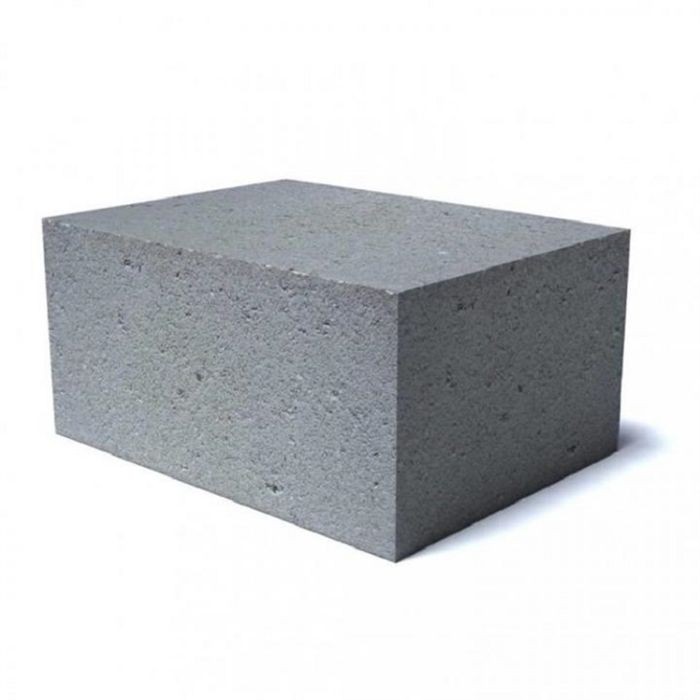
- Full-bodied, used for structures capable of bearing increased load: columns, plinth and foundation.
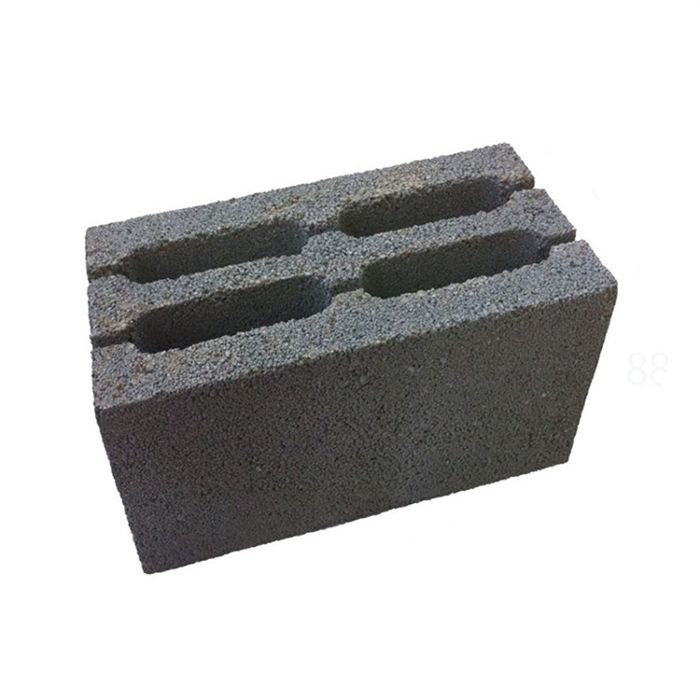
- Hollow with a void percentage from 28 to 40% used for walls for various purposes. For load-bearing external walls, a lower void percentage is used.
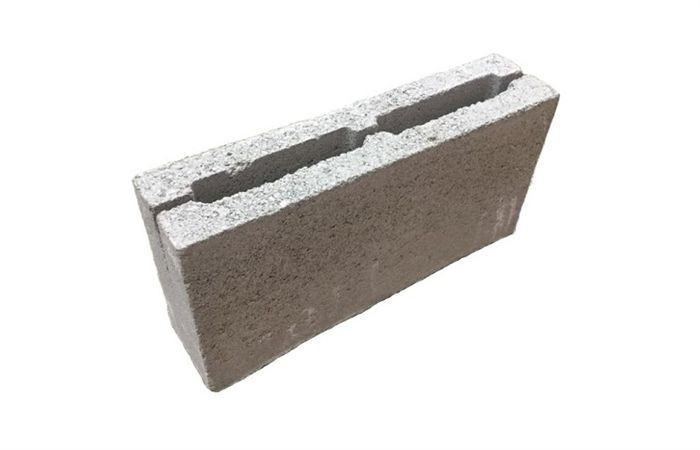
- Septal cinder blocks have a thinner thickness from 90 to 120 mm.
- Decorative blocks with finishing coating on 1 or 2 sides. Finishes can be varied, imitating natural stone or plaster. In addition to its beautiful appearance, it has increased heat and moisture protection.

- Color Blocks are used to erect pediments and other decorative elements. Color is obtained in the production process by adding crushed red bricks or chalking of various colors.
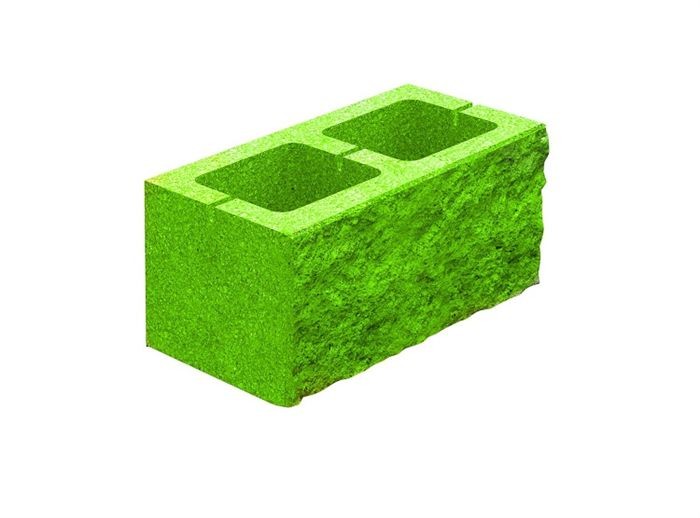
- Foundation Blocks are characterized by high -strength characteristics that allow them to work for a long time, while they do not give shrinkage and do not crumble.

Learn more about the different kinds of cinder blocks that are covered in this post.
Parameters and characteristics
The brand of strength (m) in the range of 35 to 125 is the most significant cinder block indicator. It indicates a load that this type of wall material is guaranteed to support. For instance, M 35 denotes a cinder block’s maximum load capacity of 35 kg/cm2.
Slag concrete block applications in strength:
- M 35, heat protection.
- M 50/75, partitions and internal non -carrying walls.
- M 100/125 foundation and load-bearing walls.
This page has additional details regarding cinder block parameters.
Production technology
Pressing and vibration pressing are the two primary production techniques. In the first option, specialized pressing equipment is used to compact the material. The mixture that has been prepared and hardened, but has not yet reached its full strength, is put into a specific form where the entire compaction process is carried out.
Industrial presses that run automatically in software mode are installed in businesses that specialize in producing large quantities of cinder blocks. This allows the production of tens of tons of blocks in a single load.
The effect of pressing with vibration of loaded molds is utilized in the vibration pressing process. The procedure, using a 60 Hz vibration frequency, takes no more than 1.5 minutes. The mixture’s active adhesion to the matrix allows for the blocks to compact well at the same time.
Cinder blocks require a specific shape, a high-quality mixture composition, and precise technological step execution.
The form is a unique container where the block is formed and the working solution is loaded. Its structural components are composed of wood, plastic, and metal. The form’s dimensions have to be uniform. Vibration equipment can be mounted on the mold to boost output quality and productivity.
For cinder blocks, there is no one-size-fits-all recipe; instead, the producer establishes a production recipe based on the stone’s intended use.
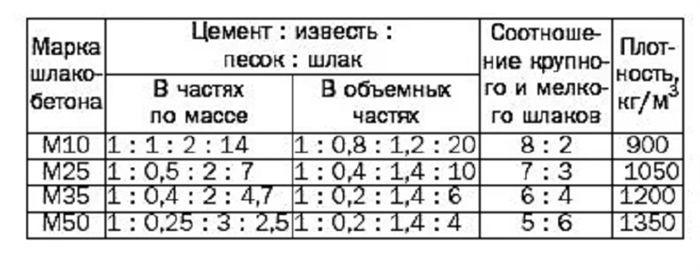
Numerous producers employ a common block composition:
- cement M400 – 1.5 hours.;
- slag – 7 hours.;
- gravel – 2 hours.;
- sand – 2 hours.;
- water – 3 hours.
To attain plasticity, additional special plasticizers are added to this mixture at a rate of 5 g per block.
- Place a heaped solution into the mold so that the mixture settles, turn on the vibrator for 5 seconds. If after this a certain volume in the mold is released, the mixture is brought to the level and the vibration is turned on again.
- The process of block formation begins, which will be completed after the clamp is fixed on the stops.
- Turn on the vibration unit for 10 seconds, after which the mold is removed.
- Then, over the course of 5 days, drying occurs with the complete formation of a cinder block.
- The complete hardening process of the blocks takes 30 days; the formation environment must be moist and warm.
Crucial! Plasticizers are added to the working mixture in order to expedite the drying process. After eight hours, these blocks can be taken down from the website and stored.
Our material will teach you about the technology used in the manufacture of cinder blocks.
Advantages and disadvantages
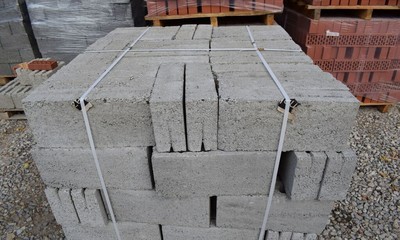
Compared to traditional brickwork, this wall material has a relatively low volumetric weight, which reduces the load on the house’s foundation. This is just one of its many benefits.
Additionally, larger blocks result in lower masonry work costs, faster construction, and ultimately significant savings over the course of the construction project.
Additional benefits of cinder blocks include their superior resistance to frost and their high heat and noise insulation qualities.
Manufacturers believe that the lengthy hardening period is the primary drawback of cinder block. After 28 days, the released block only possesses 50% of the design strength; the material will nearly a year later reach 100%.
Because of their porous structure, these materials also have the drawback of high hygroscopicity. As a result, while constructing walls and storing the material on site, the developer and manufacturer must take the necessary precautions to keep it dry.
Learn more here about the benefits and drawbacks of cinder blocks.
Because they are a strong and adaptable building material, cinder blocks are frequently used in a variety of construction projects. Their special qualities, which include soundproofing, thermal insulation, and fire resistance, offer major benefits in both residential and commercial buildings.
The affordability of cinder blocks is one of their main advantages. They are a cost-effective choice for builders because they are readily available and reasonably priced. Their strength and resilience also guarantee long-lasting structures with little upkeep.
Additionally, cinder blocks allow for flexibility in design. They are available in different sizes and can be utilized for building foundations, walls, and even accent pieces. These blocks are simple to shape and cut, which encourages innovative architectural solutions.
In conclusion, cinder blocks are a dependable and useful option for building projects. Their many advantages, such as their low cost, robustness, and adaptability in terms of design, make them a great choice for anyone trying to construct or remodel. Builders can make wise decisions that result in successful and sustainable construction projects by being aware of the benefits and features of cinder blocks.


