
One important maintenance task that can help prevent water damage to your home’s foundation and basement is to repair the blind area surrounding your property. Rainwater is kept away from the building by the blind area, sometimes referred to as the perimeter area or the area surrounding the foundation. Weather exposure can cause this area to deteriorate over time, leading to problems like structural damage and moisture infiltration.
You can keep your house safe and secure and save money by learning how to fix the blind area on your own. This procedure entails evaluating the blind area’s current state, pointing out any damage or areas in need of repair, and then taking action to strengthen and improve its protective qualities.
Regrading the soil to guarantee a suitable slope away from the house, fixing or replacing broken drainage systems like gutters and downspouts, and installing or maintaining landscaping elements like gravel beds or plants that can help absorb excess water are common repair tasks for the blind area.
This guide will walk you through the process of maintaining and repairing the blind area surrounding your home so that it can withstand weather and water damage. Whether the problem is soil erosion, concrete cracks, or poor drainage, taking quick action to fix them will greatly increase the foundation’s lifespan and strengthen the structure as a whole.
- Blind area device
- Why do cracks appear in the blind area?
- Necessary equipment
- How to make DIY repairs step by step
- How to fix cracks in the blind area around the house with your own hands
- Video on the topic
- Blind area and repair of Blind area around the house
- Repair of the blind area with your own hands
- Do-it-yourself home blind area repair
Blind area device
A blind area is a covering that surrounds a building and has an average width of 80 to 150 cm. Its purpose is to keep moisture and freezing out of the foundation. In order to guarantee that rainwater drains away from the house, it is constructed with a specific slope. Construction codes state that the slope should be 5 to 10 cm for each meter of blind area, that the edge next to the house’s wall should be raised, and that the edge across from it should be level with the ground.
When fixing a blind area, lathing for concrete pouring starts at the lowest point, or the water drainage point.
After that, they go to the other side of the house while continuing to keep an eye on the slope’s level.
The following supplies can be used to build a protective structure by hand:

- concrete;
- cement;
- artificial and natural stone;
- paving stones;
- asphalt;
- tile.
Why do cracks appear in the blind area?
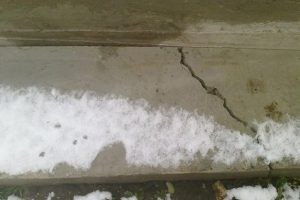
- Time factor. If the coating is old, then it has been repeatedly exposed to temperature influences (expansion and contraction). As a result, cracks formed in the blind area, which tend to expand more and more over time.
- Uneven settlement of the building. The occurrence of cracks in the blind area occurs due to a violation of the tightness of the joints between it and the base. The covering is detached from the house, and water penetrates into the resulting gap. Such cracks need immediate repair.
- Drawdown of the blind area. The reason for this phenomenon is soil subsidence or a violation of the technology for laying coating around the house.
Necessary equipment
You will need the following supplies to fix the coating around the house yourself:
- shovel;
- bucket;
- wheelbarrow;
- perforator;
- materials for heat and moisture insulation;
- building level;
- sand;
- crushed stone;
- fittings.
Discover how to take on the job of fixing the blind areas around your home with doable, practical steps. This article walks you through the steps of evaluating the damage, clearing the area for repairs, selecting appropriate materials (such as concrete or gravel), and carrying out the repairs successfully. You don’t need to be an expert builder to improve the surroundings of your home in terms of safety, appearance, and longevity by following these simple instructions.
How to make DIY repairs step by step
Step1: Get ready to pour the solution.
Dust and dirt should be removed from the old coating’s surface before beginning any major work. Extend fissures and eliminate all areas that are damaged. To increase adhesion, prime the crack edges. You can use fragments of the previously destroyed blind area to seal the resulting gaps and preserve cement mortar. They are laid out there before pouring to accomplish this.

Step 2: Get the solution ready.
The following components are utilized for this: 2.6 parts sand, 1 part cement (M500 or M400), 4.5 parts crushed stone, and 125 liters of water per 1 m cube. ready-made solution in addition to additional additives. The completed mixture has a two-hour shelf life.
Step 3: Applying concrete.
It is preferable to begin pouring concrete from the highest point and to check that the intended slope is being followed on a regular basis. Reinforcing mesh should be used when repairing large areas of damaged blind area.

Concrete is leveled and compacted after it is poured.
When the job is finished, the surface is covered with a damp cloth and allowed to dry gradually, with occasional mistings of water to prevent the concrete from drying out too quickly and cracking.
The formwork is taken down once the concrete has dried fully.
How to fix cracks in the blind area around the house with your own hands
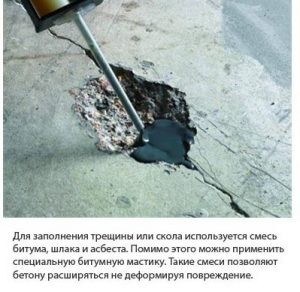
- If the cracks in the blind area are small, then after preliminary cleaning, they are filled with a liquid cement solution in a ratio of 1:1 or 1:2 with the addition of diluted PVA glue and grout.
- If the size of the cracks is average, then the repair is carried out differently. The surface is cleaned, the cracks are widened using a hammer drill. The resulting channels are treated with a primer, allowed to dry, and then filled with concrete.
- When detaching the covering from the plinth around the building, the resulting gaps should be filled with extruded polystyrene foam and sealed with polyurethane sealant. Grout the top with cement mortar. Repairs in this case will be more expensive.
- If the reason for the appearance of cracks in the blind area is caused by subsidence of the old coating, it should be completely destroyed in this section, soil should be added and compacted. Then restore all layers of coating followed by pouring concrete.
- There are cases when the damage to the coating is too great and repair is no longer possible. The only thing that can be done is to lay new structures on top of the old coating. If it is impossible to make a blind area on top of the old one, you should dismantle all its layers and do the installation yourself from the very beginning, following the technology. It should be remembered that expansion joints should be installed every one and a half to two meters.
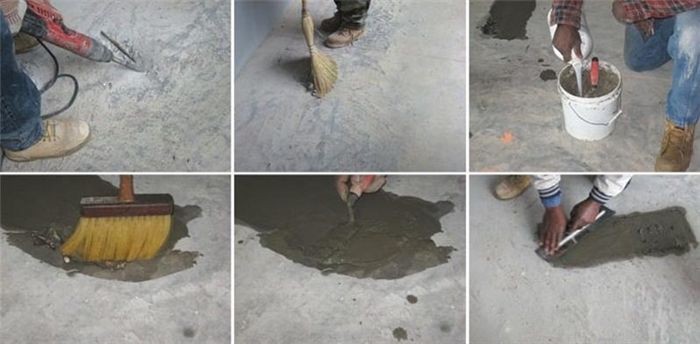
Maintaining the structural integrity of your home and guarding against water damage require repair of the blind area surrounding it. You can improve your property’s safety and appearance without breaking the bank or hiring a pro by doing these do-it-yourself projects.
First, look for any damage indicators, like cracks or uneven surfaces, in the current blind area. To guarantee a clean workspace, remove any trash and plants from the area. Next, get the supplies ready for the fix, such as the bonding agent, concrete mix, and the necessary equipment like gloves and a trowel.
Fixing any holes or cracks in the current concrete should come first. After thoroughly cleaning the damaged area with a wire brush, apply a bonding agent to ensure that the new concrete will adhere strongly. Using a trowel, carefully fill in the damaged areas and mix the concrete in accordance with the manufacturer’s instructions, smoothing the surface.
After the repairs are finished, give the concrete the time it needs to cure correctly. To guarantee maximum strength and durability during this time, shield the repaired area from excessive moisture and temperature changes.
To stop further damage, the blind area must receive routine maintenance. Periodically check the repaired areas, and take quick action to resolve any new problems that arise. By being proactive, you can improve your blind area’s longevity as well as the general safety and appeal of your house.


