
Anyone involved in building, remodeling, or land development must be aware of the different uses that are allowed for land within settlements. It can save time, money, and legal headaches to know what you can and cannot do with a specific plot, whether you’re a developer, builder, or homeowner.
According to its intended use, land inside settlements is categorized, promoting harmony and order in both urban and rural areas. These classifications specify the uses for which a plot may be developed, including residential structures, businesses, industries, and so forth. Gaining knowledge about these categories will enable you to make well-informed decisions when it comes to purchasing, developing, or remodeling real estate.
The primary categories of land uses that are allowed in settlements will be discussed in this article. We’ll deconstruct the categories, describe what each one comprises, and offer useful examples to show how these guidelines work in actual situations. By the time it’s all over, you’ll know exactly how land use laws can affect your building or remodeling ideas.
| In residential areas | For construction of residential buildings and associated facilities such as garages and utility structures. |
| In industrial zones | For construction of industrial facilities, warehouses, factories, and other related structures. |
| In commercial zones | For construction of shops, offices, hotels, and other commercial buildings. |
| In recreational areas | For parks, playgrounds, sports facilities, and other recreational purposes. |
| In mixed-use zones | For combination of residential, commercial, and recreational purposes, allowing diverse types of construction. |
- What is ZNP?
- Main types of permitted use by zone
- Residential
- Public and business
- Entrepreneurship
- Rest
- Common use
- Additional terms and restrictions
- What VRI is needed to build a house??
- Individual housing construction
- Personal subsidiary plot
- Blocked residential building
- Suitable VRI for doing business
- Useful video
- Video on the topic
- Land categories. Types of permitted use. Legal assistance.
- Categories of land plots. Which is better for construction?? Individual housing construction, private household plots, peasant farms.
- What is the difference between individual housing construction, private household plots and SNT? Where can you build?? Types of permitted use of sites.
- Categories of land and types of permitted use of land plots
- Type of permitted use of land for a car wash, car service and related products
- How to change the type of permitted use of a land plot
- How to change the type of permitted use (TPU) of a land plot?
What is ZNP?
Seven potential categories of land have been established by the Russian Federation’s Land Code:
- state reserve;
- water fund;
- forest fund;
- natural objects under state protection;
- special purpose;
- agricultural purposes;
- settlements.
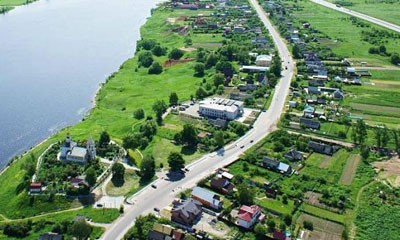
According to Article 83 of the same code, ZNP acknowledges properties that are meant for infrastructure development or for the development of infrastructure but do not extend beyond boundary settlement.
Article No. 84 of the Russian Federation’s Land Code governs the drawing of these borders.
The authority to alter them resides with:
- federal authorities;
- local authorities;
- courts, as part of resolving an issue in a particular proceeding.
Main types of permitted use by zone
The VRI classifier controls how settlement lands are divided into categories of allowed uses. Traditionally, all settlement lands are separated into sizable territorial zones.
The following are set apart: principal zones:
- residential buildings;
- public and business buildings;
- entrepreneurship;
- recreation;
- public use.
There are multiple VRIs present in each of the designated zones.
Residential
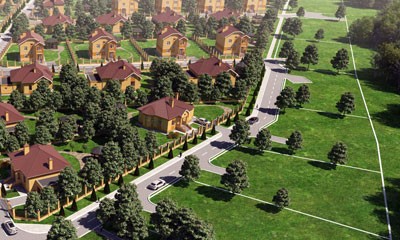
The following land plot uses in settlements are allowed for the construction of residential buildings with codes ranging from 2.0 to 2.7.1:
- blocked type – townhouses;
- mobile type – camping sites, tent cities;
- mid-rise – apartment buildings Houses up to 8 floors;
- high-rise buildings – high-rise buildings;
Additionally for the construction:
- individual residential buildings (IZHS) – private houses, cottages;
- domestic buildings – utility rooms, garages;
& management personal subsidiary plot (LPH): A private residence with a plot set aside for the following uses
Public and business
Includes areas where certain types of uses are allowed, such as service provision, with codes ranging from 3.0 to 3.10:
- utilities,
- social,
- medical,
- veterinary,
- places that promote cultural development;
- educational institutions;
- religious centers;
- centers of scientific activity;
- management centers.
Entrepreneurship

Consists of settlement lands that are authorized for the following uses:
- business management centers;
- shopping centers, shops and markets;
- commercial and insurance organizations;
- catering outlets, hotels (hotels) and places of entertainment;
- vehicle service locations.
Rest
Includes the kinds of uses for which settlement land may be used to produce:
- sports facilities;
- tourist facilities;
- playing fields and walking fields;
- berths intended for yachts, boats, etc.;
- places for fishing and hunting animals.
Common use
The types of land plots in settlements that can be used to create the following are included in the common use zone:
- highways,
- pedestrian sidewalks,
- water bodies common use,
- parks and squares,
- cemeteries, etc.
The many uses for land plots inside settlement areas are covered in the article "Lands of Settlements: Types of Permitted Use of Plots in This Category." Commonly allowed uses, including residential, commercial, and mixed-use, will be covered, along with the implications of each category for developers, business owners, and homeowners. Knowing these uses contributes to the efficient and lawful use of land, which benefits the community and its development.
Additional terms and restrictions
The decision made by local authorities to allow an auxiliary or conditionally permitted use on a site classified as "land of settlements."
The land use commission may authorize the assignment of up to three VRI to one land plot:
- basic,
- conditionally permitted,
- auxiliary.
The ability to use a settlement’s land as efficiently as possible serves as the foundation for determining the primary type.
That is to say, it is best to approve construction if the site is situated in an area with residential buildings:
- Houses,
- store,
- educational institution.
Plot owners have the option to submit a request to add a new VRI with the status "Conditionally permitted" if they believe their plot is being used inefficiently. In order to accomplish this, the modification must be approved by the land use commission during public hearings.
The following parties are involved in the case’s consideration:
- representatives of the local administration,
- owners of nearby plots,
- the petitioner himself, etc.
VRI that is conditionally authorized may be used alone or in tandem with him. In other words, you can either build a store or just a house on the individual housing construction plot, or you can build both a store and a house if the commission approved the provision of a new VRI.
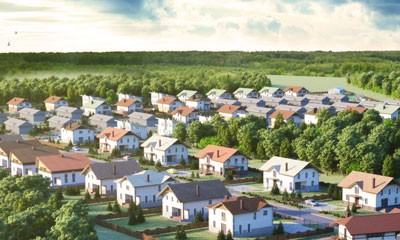
Buildings on the site that don’t extend past the two VRIs mentioned above are considered an auxiliary use.
For instance, the auxiliary VRI for building a residential building on a separate housing construction plot will be outbuildings.
There is no requirement to obtain a building permit for the construction of objects covered by auxiliary construction materials.
Only the types mentioned above may be utilized in conjunction with auxiliary VRI.
The future construction project needs to be in line with the local government’s adopted urban planning and land use and development (PLZ) regulations.
These documents, for the most part, forbid building construction that could jeopardize the security of nearby structures. For instance, a house cannot be constructed less than one to three meters from the site’s edge. If this requirement is not met, the construction project may be labeled as unauthorized construction.
Furthermore, if additional PZZ and town planning regulations are broken, a residential building may be labeled as an unauthorized construction.
Two choices are available:
- Demolition unauthorized construction at the expense of a person who violated construction standards.
- Repossession developer for construction through the court.
What VRI is needed to build a house??
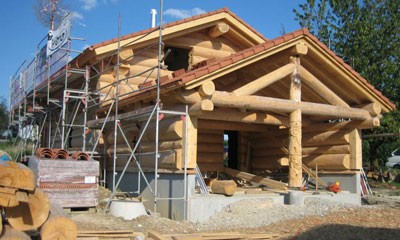
The following uses are permitted when a residential building is built privately on land classified as "land of settlements":
- individual housing construction,
- Private household plots,
- blocked residential building.
Allow us to go over each of the aforementioned VRIs in more detail.
Individual housing construction
Building is permitted for homes with a maximum of three storeys, excluding basement levels, as well as garages and utility rooms. The home is solely intended for single families. You can do gardening and gardening-related activities on the site. This article contains additional information about building individual homes.
Personal subsidiary plot
Building a house with a maximum of three storeys (not including basement levels) is permitted, along with a garage and utility rooms. The home is solely intended for single families.
On the website, you can:
- gardening,
- gardening,
- cattle breeding.
More information about private household plots can be found here.
Private residential plots in densely populated areas and private plots on agricultural land are two distinct entities with different VRIs.
There are no restrictions on building a house in the first scenario; however, in the second, you are limited to building non-permanent outbuildings and putting a mobile trailer.
As such, it is worthwhile to ascertain the site’s VRI and category beforehand. There are multiple methods to determine which land category your plot is in, but using your cadastral number is the most straightforward. Find out more about the types of land that are better suited for constructing a home or cottage here. The article "What is the difference between individual housing construction, SNT, and DNP?" contains information that may also be helpful.
Blocked residential building

Permitted the construction of multiple single-family homes next to one another with a maximum of three storeys—minus the basement floors—and garages and utility rooms.
On the website, you can construct:
Suitable VRI for doing business
The "Entrepreneurship" zone is appropriate for the building of commercial buildings.
It is preferable for private business. Use all of the following categories of approved land plot usage in settlements:
- the shops,
- catering points,
- hotels,
- car service stations.
Construction is allowed for construction shops, with a maximum area of 5000 square meters. Any kind of goods can be sold out of the building. The addition of a conditionally permitted VRI "Public Catering" must be requested from the land use commission if opening a cafe concurrently with a store is necessary.
Regarding catering locations for construction:
- canteens,
- restaurants,
- cafe,
- other places where you have to pay for food.
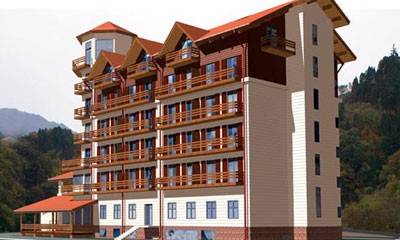
Regarding hotels under construction:
- hotels,
- hotels,
- boarding houses,
- other places that are buildings to provide visitors with a comfortable stay in them – recreation, but in which medical services are not provided.
Regarding auto services:
- car services,
- car washes,
- gas stations, etc.
Useful video
This video also provides information about settlement lands and their allowed uses:
Anyone wishing to develop or invest in real estate must be aware of the different types of land uses that are allowed in settlement areas. The primary use of residential land is for housing.


