
The blind area, or the paved surface surrounding the foundation, is one area that frequently requires attention when it comes to maintaining and updating the exterior of your home. Weather and general wear and tear can cause this area to deteriorate over time. But to update the blind area, is it just possible to pour a fresh layer of concrete over the previous one?
Many homeowners are unsure if this is a workable way to get around the trouble and expense of having to remove the existing concrete. The good news is that you can effectively pour a new layer over the previous one if you follow the proper procedures and get ready. For the new layer to adhere correctly and endure for many years, it is crucial to heed the advice of experts.
We’ll provide professional advice on how to properly pour a fresh layer of concrete over an existing blind area in this article. We’ll take care of everything, from surface preparation to pouring itself, to ensure that the outcome is both long-lasting and visually beautiful. You can make exterior improvements to your home while saving money and time by adhering to these guidelines.
| Recommendation | Description |
| Assess the Old Blind Area | Check the condition of the old concrete. It should be free of major cracks, crumbling, or significant damage. Repair any minor issues before pouring new concrete. |
| Clean the Surface | Remove dirt, debris, and any loose material from the old concrete surface. A clean surface ensures better adhesion of the new layer. |
| Use a Bonding Agent | Apply a concrete bonding agent to the old surface to help the new concrete adhere properly. |
| Prepare the New Concrete | Mix new concrete according to the manufacturer"s instructions. Use high-quality materials to ensure durability. |
| Pour the New Concrete | Pour the new concrete over the prepared old surface. Spread it evenly and smooth it out using appropriate tools. |
| Cure Properly | Allow the new concrete to cure properly by keeping it moist and protected from extreme temperatures for the recommended period. |
- Is it possible to do without dismantling??
- Preparation of materials and tools
- How to fill a new concrete base if there is an old one?
- How to avoid mistakes?
- Pros and cons of the updated design
- Video on the topic
- How to properly make a blind area on top of an old one?#lifehacks #construction #shorts #house
- Laying paving slabs on an old blind area
- BREATHED LIFE INTO THE DESTROYED BOARD. REPAIR OF CRACKED BLINDBOARD 👍
Is it possible to do without dismantling??
The influence of external factors and various technological violations during construction account for the destruction of the blind area. If none of these things are done, the house might eventually become uninhabitable altogether.
It is more efficient and cost-effective to use the old blind area as the foundation for a new one rather than completely removing it and creating a new one.
To accomplish this, you must closely inspect the state of the previous coating:

- Overall it looks good, some small cracks are noticeable. You can just seal them up. This is done quickly and inexpensively.
- The integrity of the blind area is compromised; due to frost heaving, the surface is turned back towards the house. It is recommended to pour a 10 cm layer of concrete over the existing one, always with reinforcement.
- The surface is destroyed, covered with deep, wide cracks. Due to frost heaving, the tape is turned back towards the house or has completely moved away from the wall. It’s cheaper and easier to completely dismantle the old one and make a new one instead.
There are soft and hard blind areas. Usually, a hard one is built on top of the old one, and suitable materials for this include concrete, various stone types, paving slabs, and asphalt. It is advisable to consider the condition of the previous coating when making a decision.
These materials can be used to make it:
- Asphalt concrete. This surface must be cleaned and covered with liquefied bitumen. A new layer of asphalt is laid on top and compacted with a roller. Asphalt can only be laid on heavily damaged areas.
- Paving slabs, sometimes paving stones. The old surface needs to be removed, crushed stone and sand filled in to create a new high-quality pillow. Lay tiles or paving stones on top in accordance with the standard rules for laying them.
- Cobblestone. You will need to remove the old mortar and remove the stones. After cleaning, crushed stone is poured, with cement mortar on top. Prepared cobblestones are placed in it. The cracks must be filled with a liquid solution of cement and water.
The blind area may consist of gravel or crushed stone, or it may be soft. Making it over the old one is costly and labor-intensive, though. The best and most dependable material for a blind area is thought to be concrete.
Expert recommendations stress the significance of using the right technique and preparation when deciding whether to pour new concrete over an existing blind area. If the old surface is free of large cracks and severe deterioration and in generally good condition, this process may be successful. Applying a bonding agent, thoroughly cleaning the old surface, and making sure the new layer is the right thickness and reinforced are important steps. These instructions will help you build a long-lasting blind area that will improve the protection of your home’s foundation and stop water damage.
Preparation of materials and tools
It’s crucial to use high-quality materials and closely follow construction technology when building a blind area. Prior to anything else, you must choose the material.
Appropriate solid, waterproof materials:
- paving slabs,
- concrete,
- natural or artificial stone.
Brick and asphalt are used less frequently.

Whatever the subject matter you decide on, you must get ready for:
- high quality cement;
- sand, preferably quartz;
- crushed stone;
- grid with a step of 5 cm;
- moisture barrier material.
Investing in or renting a vibration plate is advised. It is advised to get the following equipment ready:
- shovel,
- bucket,
- wheelbarrow,
- hammer drill,
- building level.
How to fill a new concrete base if there is an old one?
The surface is first made ready for work. Just use a hard broom and your hands to remove the fallen pieces of the old blind area; there’s no need to break it completely. It will be necessary to pry up some areas from below and use a spatula to clean and widen the cracks.
The following plan is followed in order to carry out additional processing:
- Surface strengthening. The old blind area is covered with a deep penetration primer, it is applied evenly with a brush, including inside the cracks.
- Delamination removal. To do this, prepare a composition: cement is diluted with water, liquid glass is added. All parts are taken in the same volume.
- Installing a curb. According to the rules, the old blind area is above the ground; after laying the new one, the level will be even higher. When installing tiles and paving stones, a border is required so that the tiles do not diverge.
- Screed. The surface is leveled using a plastic solution. A special repair mixture with the addition of diluted PVA glue (1:10) is most often used.
- Waterproofing. Roofing felt and sometimes ordinary polyethylene are used. Do not forget about the overlap on the base 6-8 cm wide.
- Reinforcement. Wire mesh is used (5 cm mesh is recommended).
- Pouring concrete. The required thickness is 6-8 cm, a slope is made from the wall of the building (per 1 meter of width 3-5 cm). After drying, the surface is smoothed, ironed, and the next day it is polished using a polyurethane or wood grater.
You will need to make transverse seams for a large house—15 meters, for example. This is required to stop shrinkage or deformations brought on by temperature changes.
Boards are used for the seams spaced two meters apart; they have been pre-treated with an antiseptic. Hard foam 1 cm wide is suitable.
In certain cases, formwork is utilized to smooth the blind area’s exterior edges. It will be necessary to add soil to the level of the blind area after the formwork is removed. When pouring concrete in a layer that is less than five centimeters thick, a thickening known as a "tooth" is occasionally created along the edge. It has a thickness of 10 cm, and curbs or bricks can be installed. Here, formwork is not required. Next, two-piece asbestos-cement pipes are used for drainage.
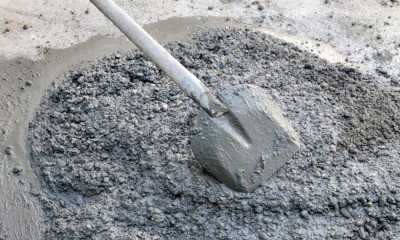
The following components make up the filling solution:
- cement grades 400, 500 (1 part);
- high-quality sand (2.5 parts);
- crushed stone (4.5 parts);
- plasticizers, additives;
- water (120 l per cubic meter. meter of solution).
The same plan is followed for preparation work as when pouring concrete if the new blind area is composed of tiles, stone, or brick. The tile or stone is installed using traditional technology on a surface that has been primed.
How to avoid mistakes?
Regardless of construction style, a well-made blind area will endure for a very long time. If it breaks down quickly, there were technological mistakes made when it was made.
The material does not expand or contract in response to temperature changes or soil movement because, in most cases, expansion joints were not constructed between the blind area and the foundation. It is not always considered that the seams must run in both the longitudinal and transverse directions.
Additional mistakes:
- When pouring, cushions of sand and gravel were not made; the concrete was laid directly into the ground, so the blind area is exposed to the force of soil heaving.
- The level of the blind area is below the ground level around the house.
- The pillow is laid in too thin a layer, not compacted tightly.
- The blind area along the edge has a smaller thickness. Because of this, under the influence of water flowing from the roof, it collapses faster.
- Waterproofing, gutters and drainage pipes not installed.
- No concrete tape reinforcement in high traffic areas.
A narrow blind area is a very common error. Its width needs to be at least 20 centimeters wider than the roof overhang or align with it.
The tape needs to completely encircle the house in order to protect the base. The building starts to collapse if there is no tilt.
Pros and cons of the updated design

A new blind area is firmly anchored by the old blind area. She makes it possible for you to drastically lower the cost of repair.
Sometimes it is sufficient to simply update and repair it to keep the building from collapsing, if the creation of a pillow or soil preparation is not required.
While the old coating may appear to be quite strong and intact, keep in mind that it has lost some of its original qualities due to constant exposure to heat and other environmental factors. Maybe it will start to collapse quickly beneath a layer of new blind area and then need to be repaired again.
The cushion beneath the previous coating is another crucial detail. It might be of low quality and fleeting. Additionally, if there is an old coating present, the soil beneath the pillow may begin to settle and go undetected. As a result, it is advised to consider all the advantages and disadvantages before determining whether or not to keep the existing coating.
This section contains a wealth of pertinent and helpful information regarding the blind area’s design.
Restoring and improving the foundation protection of your house can be accomplished with ease by adding a fresh layer of concrete to an old blind area. To prevent problems later on, it is imperative to make sure the current surface is ready and in good shape.
First things first, give the old concrete a thorough cleaning and fix any damage or cracks. This will establish a strong foundation for the new layer to adhere to. Enhancing the adhesion between the new and old concrete can also be accomplished by applying a bonding agent.
Make sure the new layer is thick enough to offer support and durability when it is poured. Generally, two to three inches is the minimum recommended. For optimal results, level the surface and give it enough time to cure.
You can successfully pour a new blind area over an old one, increasing the longevity and curb appeal of the outside of your house, by paying attention to these expert recommendations. Your new blind area will function as a robust barrier for many years to come with proper planning and execution.


