
An exhibition stand is your face to potential customers and partners. In just a few seconds, it must attract attention, tell about the brand, and encourage dialogue. Doing this in the noisy and competitive atmosphere of an exhibition is not an easy task, but it is achievable with the right approach.
We have collected practical advice from five experienced designers who have created stands for various companies. Their experience shows that success lies not only in the budget, but also in a competent idea, well-thought-out ergonomics, and attention to detail. These recommendations will help you avoid common mistakes and stand out, even if space or resources are limited.
Instead of trying to fit all the information about the company on the stand, focus on the main message. What do you want the visitor to remember? What single step should they take after talking to you? Clear answers to these questions will form the basis for effective design and communication.
- Tatyana Mironova: “I design the stand like an interior, which allows me to create an atmosphere, a feeling of comfort, and this attracts visitors.”
- Anna Sakharova: “It is important to know the laws and rules: restrictions on the size and shape of stand elements, methods of fastening structures, stand power supply conditions, lighting options, etc.”
- Alexey Bochkov: “Before you start, look at the future stand through the eyes of a visitor.”
- Alena Chashkina: “Ergonomics is the most important thing in stand design. It is necessary to plan routes and visitor service areas.”
Tatyana Mironova: “I design the stand like an interior, which allows me to create an atmosphere, a feeling of comfort, and this attracts visitors.”
"The exhibition is a pleasant and entertaining event. I like showing my work to the public, communicating, meeting new people, and attracting attention to myself, among other things. I participate for the sake of interest, pleasure, and attracting customers. Not every exhibition brings new clients. For example, at the Antique Salon, in my opinion, people come for something else, to buy antiques and art objects. But at the same time, the theme of the exhibition is very close to interior design. Interior design and antiques go together perfectly. My partner, a supplier of American furniture, and I took two stands opposite each other and complemented each other perfectly. It turned out to be a unique collaboration between an interior designer and a furniture company. In addition, I had the opportunity to exhibit my own jewelry, which was very successful—many pieces were sold, which partially covered the costs.
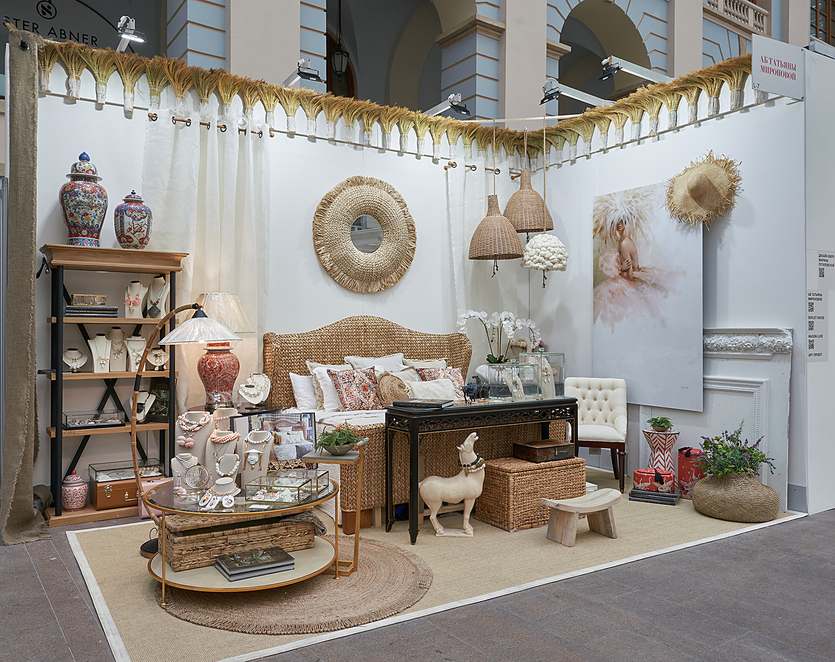
Tatyana Mironova's architectural bureau stand at the Antique Salon 2023. Photo: Dmitry Livshits
Tatyana Mironova's architectural bureau stand at the Antique Salon 2023. Photo: Dmitry Livshits
The themes are always different. We don't sell or manufacture furniture, so we work with what we have at the moment. For one of my projects, we brought in a wicker bed. I thought it would be a great idea to use it in the design, and that's how the eco-design theme came about. We framed the upper cornice with a cornice made of brooms. Together with the straw bed, it looked very interesting and unusual. By the way, one dark-skinned visitor, seeing our stand, exclaimed: “This is Africa!” Can you imagine, our Russian brooms reminded her of her home. It was touching and sweet. In general, it doesn't matter to me what the stand is made of or how it is made, what style it is in. My story is about creating comfort, and the focus is always on people and their comfort in this space.
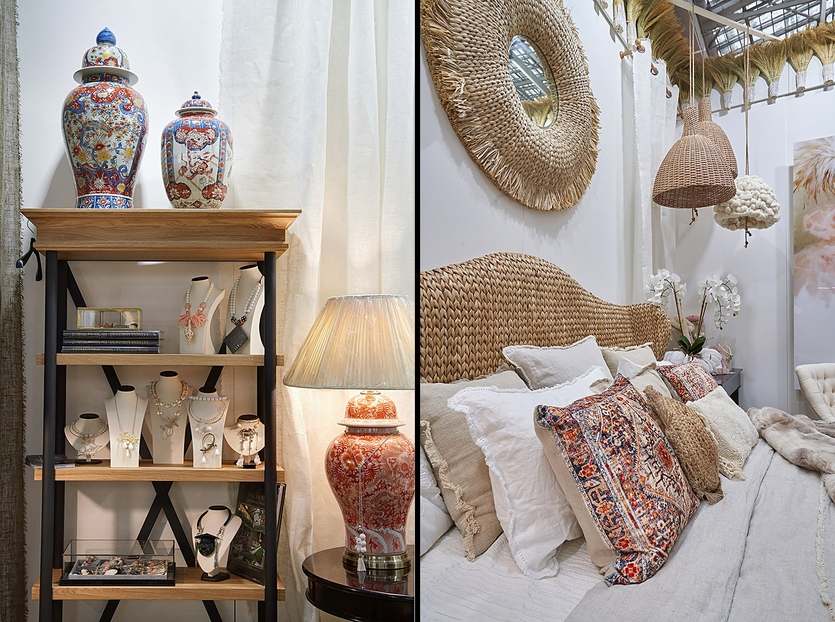
Tatyana Mironova's architectural bureau stand at the Antique Salon 2023. Photo: Dmitry Livshits
Tatyana Mironova's architectural bureau stand at the Antique Salon 2023. Photo: Dmitry Livshits
I prefer to use combined lighting to create a play of light. I like spot lighting, down lighting (floor lamps, table lamps, cozy lampshades). I even arrange the stand like an interior, which allows me to create an atmosphere, a feeling of comfort, and this attracts visitors and allows me to stand out from the other participants.
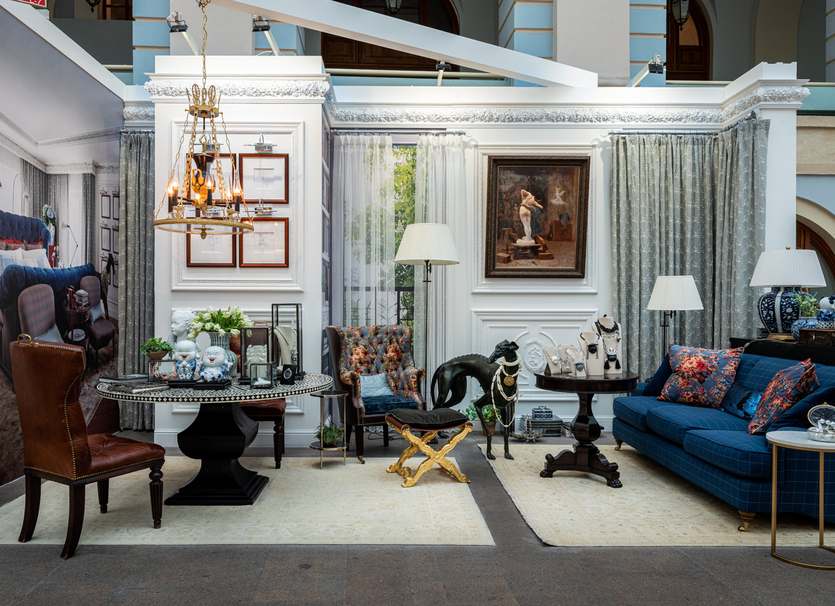
Stand at the Antique Salon 2022 exhibition
Stand at the Antique Salon 2022 exhibition
Any theme can be played up, and even an anti-trend can be presented in a favorable light. Surprise people with something that is unlike what you do. Anything can be turned into a treat; the main thing is to come up with a creative and interesting way to present it.
Anna Sakharova: “It is important to know the laws and rules: restrictions on the size and shape of stand elements, methods of fastening structures, stand power supply conditions, lighting options, etc.”
When an exhibition is held to showcase achievements in interior design and product design, the most effective and successful solution, in my opinion, is joint projects between manufacturers or suppliers of interior items and companies engaged in interior design or product design. It's a kind of alliance between business and creativity. In our opinion, a system of collaboration works very well when several companies engaged in complementary activities jointly organize a stand. First, you share the costs; second, you advertise each other; and third, you fill the stand as effectively as possible with everything you need to best showcase your ideas.
For an exhibition stand to be successful in every respect, many things need to be considered. Here are just a few questions that need to be answered: the main goals to be achieved as a result of participating in the exhibition, the audience the stand plans to attract, the main purpose of the stand, how to attract visitors to the stand, and much more. If you answer these questions, success is guaranteed!
As with any serious, professional event, there are rules and regulations for creating an exhibition stand. In addition to the regulatory documentation governing exhibition activities at the state level, each exhibition venue and exhibition organizer issues a set of rules for exhibition participants, which must be strictly followed. All rules and regulations must be studied before the design process begins in order to take all the nuances into account. It is important to know everything: restrictions on the size and shape of stand elements, methods of fastening structures, power supply conditions for the stand, lighting options for the stand, recommendations on color scheme and semantic content, logo size, etc.
When planning a stand, it is very important to consider where the main visitor flows will be, in which direction the main movement will go, and to place accent items and signs so that they are immediately visible, and to arrange the elements on the stand in such a way that everything looks well thought out, balanced, and effective from the opening views.
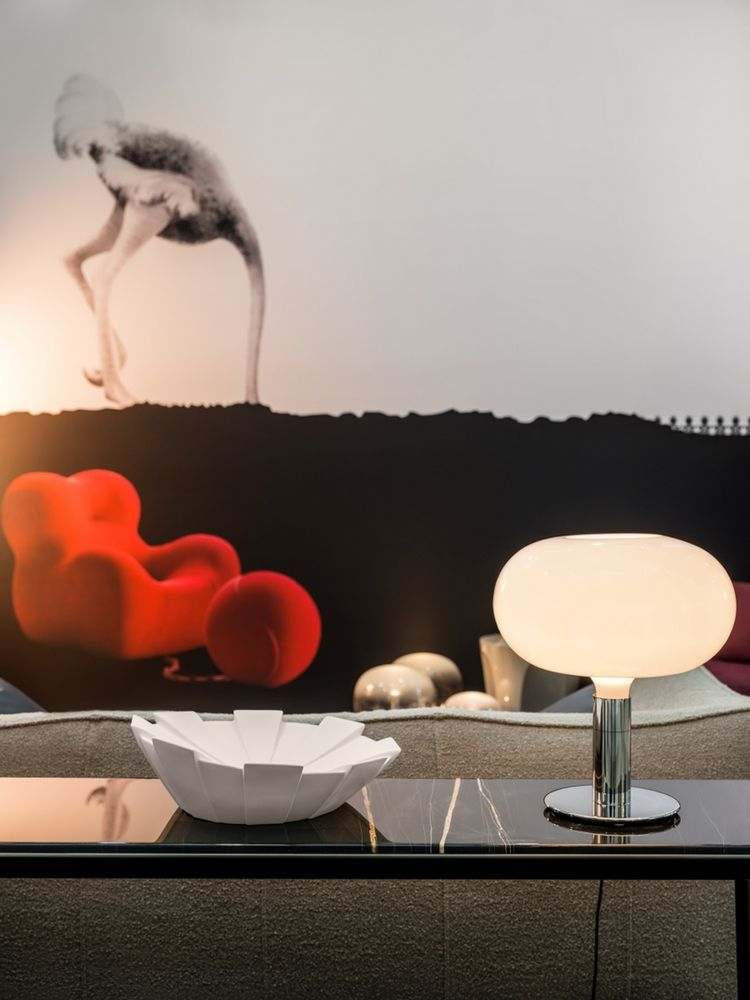
Our stand at the ART DOM exhibition was dedicated to interior items from the B&B Italy factory, or more precisely, icons of object design: the UP chair by Gaetano Peshe, the Fat chair by Patricia Urciola, and the le Bambole sofa by Mario Bellini. The main idea was to immerse visitors in the inner world of objects created by great masters. We played on this “invitation” through a symbolic portal formed by an infinite reflection of mirrors, which allowed guests to immerse themselves in the unknown, hidden history of the creation of objects in order to understand the intentions of the authors who created these iconic pieces. To make the stand noticeable and memorable, we used several techniques at once. First, contrasting poster colors—red, black, and white. Second, a bright and large image of a huge ostrich hiding its head in the dark inner world of objects. Third, grotesquely designed mirrors that repeat the shape of the windows of the Sforza Castle in Milan.

Stand at the ART DOM-2024 exhibition (collaboration between design bureau Bellardo, interiors Extra Class salon chain, Dom Farfora store chain, Karpet Culture company)
Stand at the ARTDOM-2024 exhibition (collaboration between design bureau Bellardo, interiors Extra Class chain of salons, Dom Farfora chain of stores, Karpet Culture company)
Of course, it is very important to formulate the concept of the stand in writing, and the main ideas that will be conveyed by the employees working at the stand must be formulated clearly and concisely. All participants must know everything about each item by heart, from its concept to the materials from which it is made, where and by whom. Therefore, first formulate these information blocks, print them out, and distribute them to your colleagues so that they can learn all the material and be able to tell guests about the company's activities.
The main thing is to start with insulation and glazing, because this is the basis for future comfort. The rest of the stages — from finishing to furniture arrangement — depend on your desires and imagination. Don't be afraid to experiment, but remember about safety and approvals. Bellardo, interiors Extra Class salon chain, Dom Farfora store chain, Karpet Culture company)
Stand at the ARTDOM-2024 exhibition (collaboration with design bureau Bellardo, interiors Extra Class chain of salons, Dom Farfora chain of stores, Karpet Culture company)
The main purpose of participating in the exhibition is advertising, and in addition to the stand itself, working personally at the stand with stories, comments, and answers to questions, QR codes placed in the most prominent areas of the stand and printed materials to be distributed to visitors are also necessary. These are small cards, business cards, and booklets that effectively and concisely inform visitors about us and invite them to further cooperation.
And last but not least, the most important thing is working with the results of the exhibition. This includes systematizing the contacts made during the exhibition, working to establish interaction and further cooperation, working on mistakes in all areas of our activity that became apparent during the exhibition, summarizing the results, and thanking colleagues and partners.
A good exhibition stand is not about scale, but about attention to detail: it should catch the eye, be understandable at first glance, and tell a story without unnecessary noise. Five designers advise starting with the basics — clearly defining the purpose of the stand, choosing one central element, and building everything else around it. Don't overload the space with text and images: people at the exhibition don't have time to sort through clutter. The life hacks are simple: use bright accents, comfortable fonts, think about lighting, and don't forget about interactivity — let visitors not only look, but also remember.
Alexey Bochkov: “Before you start, look at the future stand through the eyes of a visitor.”
"An exhibition is a responsible and complex undertaking, from choosing a place in the general exhibition hall to organizing the stand itself.
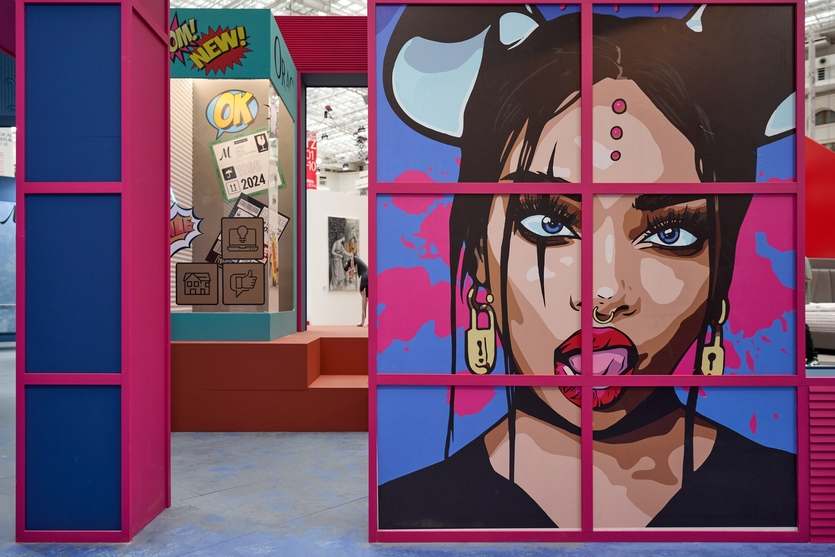
Ampiir-Dekor stand at the Art Dom 2024 exhibition. Photo: Sergey Morgunov
Ampiir-Dekor stand at the ArtDom 2024 exhibition. Photo: Sergey Morgunov
Usually, a lot remains behind the scenes: arrival at the construction site, construction, and how the concept of the stand itself is designed and agreed upon. Of course, ideally, you should look at the exhibition site. Pay attention to the natural lighting of the space and be more careful about the lighting of the stand. Usually, the organizers offer their own lighting devices, but this can spoil the overall picture. If you are going to shoot video, keep this in mind.
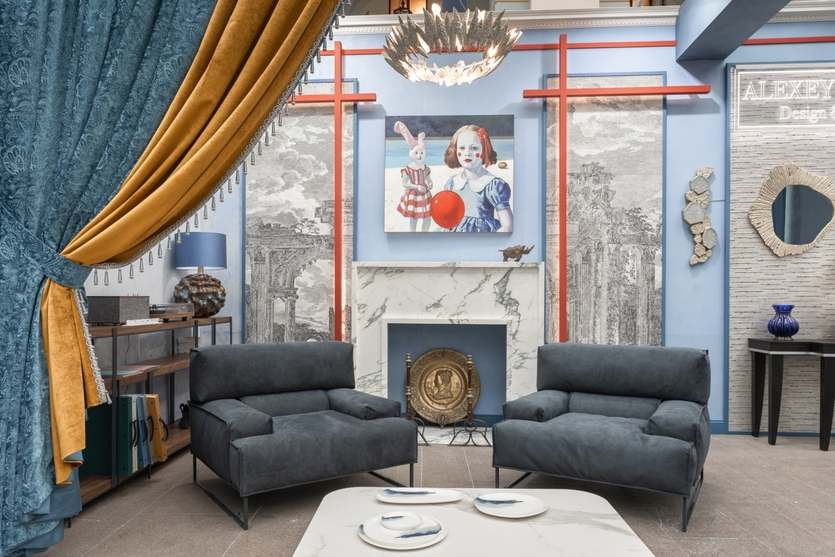
Alexey Bochkov Design stand at the Antique Salon & LifeStyle exhibition
Alexey Bochkov Design stand at the Antique Salon & LifeStyle exhibition
Before you start, look at the future stand through the eyes of a visitor: is it interesting to me, will I pay attention to it? The stand should be understandable and at the same time provoke the question: “What is this?” I am in favor of collaboration. This allows you to fill the stand with additional materials and objects, to show more ideas.
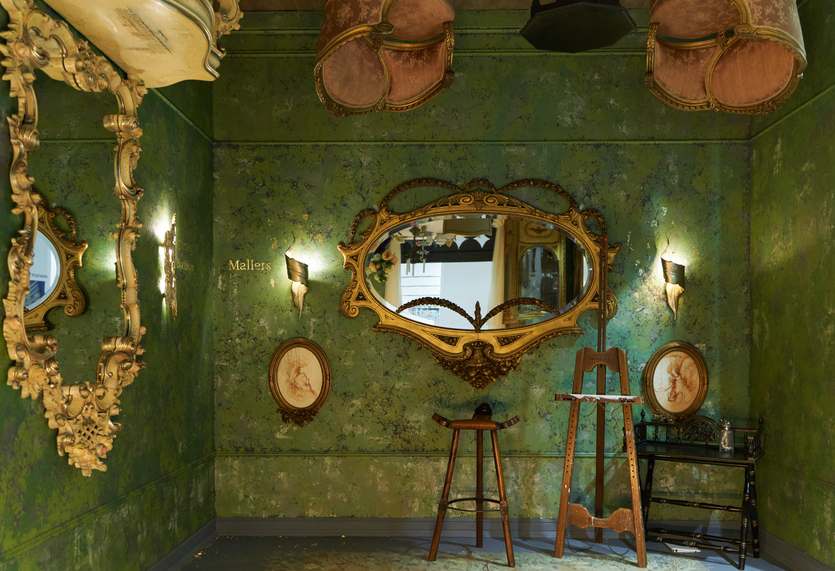
Alexey Bochkov Design stand at the ArchMoscow exhibition
Alexey Bochkov Design stand at the ArchMoscow exhibition
You need a well-coordinated team that is ready to implement your ideas in the shortest possible time. One day is allocated for installation, and sometimes even less. And even less for dismantling and removing materials from the site. Technical standards, loads, fire safety requirements — the list is quite long… But at the moment the exhibition opens, all this is forgotten and the excitement begins!
Like any project, it all starts with technical specifications. These need to be as detailed as possible. Think through the design and assembly of the elements. Keep in mind that there are restrictions not only on the size of the stand, but also on certain types of construction work and tools.
The main goal of any stand is to attract attention and surprise visitors with interesting solutions. It all depends on the product we want to present.
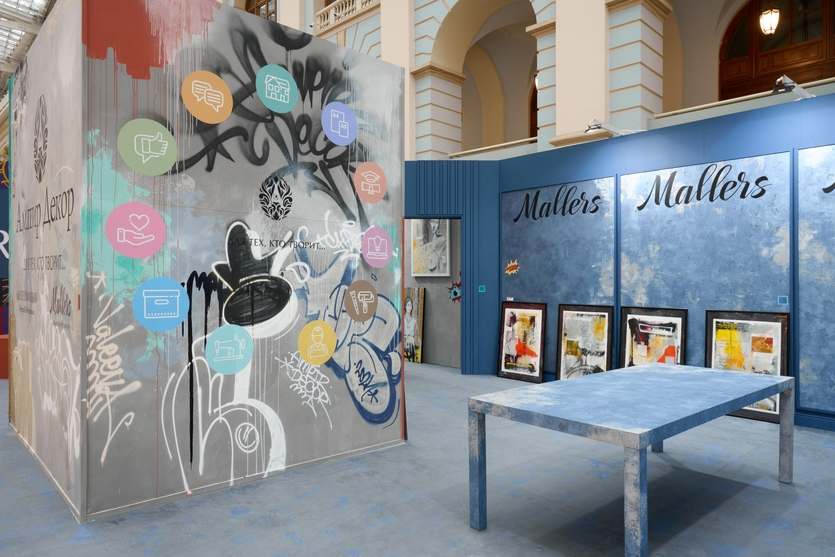
Mallers stand at the ArtDom 2024 exhibition. Photo: Sergey Morgunov
Mallers stand at the ArtDom 2024 exhibition. Photo: Sergey Morgunov
I have been working on concepts for Ampir Decor and the Mallers premium decorative materials brand for several years now. We never repeat ourselves. We showcase new creative ideas at every exhibition. We were the first to collaborate with artists and show how interior paint can be used as a work of art. Artists create their masterpieces using Mallers paints and decorative plasters.
Alena Chashkina: “Ergonomics is the most important thing in stand design. It is necessary to plan routes and visitor service areas.”
"Work on any project always begins with an idea. It doesn't matter whether it's a private or public space, especially when it comes to exhibition space. The product to be exhibited will always dictate how the stand should be designed. For example, when thinking about the concept for the Sagarti stand at the ARTDOM-2024 exhibition, I settled on a beautiful combination: classic wall design and curved modern panels decorated with relief plaster, which visually reminds us of the complex relief of the Earth. A message about nature and eternity. In this way, we show that our product will look perfect in any interior. And here, the stand serves as a visual aid for potential buyers.
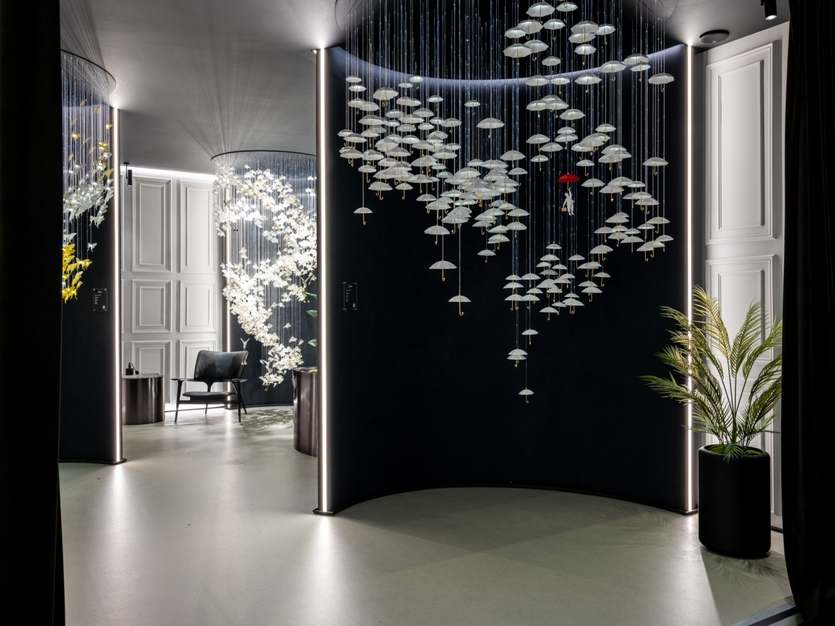
Sagarti stand at ART DOM-2024, designed by Alena Chashkina
Sagarti stand at ARTDOM-2024, designed by Alena Chashkina
At the MosBuild 2021 exhibition, AM GROUP invited several designers to decorate its large stand. The theme chosen was the four elements. I was assigned “The Territory of Water.” What inspired me? The element of water can be perceived in different ways. For me, it is a flow of energy, its depth, power, and architecture. At the same time, I wanted to connect all this with human energy. These thoughts were reflected in the Wall&deco panel, which shows the connection between water and human energy. The result is a complex yet stylish backdrop for STELLA faucets, Bertocci accessories, and ArtCeram sanitary ware in striking color schemes. They contrast with each other like yin and yang, like the deep blue ocean and the pure white icy expanse of the Arctic. Given the atmosphere of complete immersion in the elements and the sensation of unusual phenomena associated with water, a mirror with blue perimeter lighting was used to create an effect of bioluminescence, which can sometimes be observed in many places around the world by the sea or ocean. In addition, Innovation Electrique equipped it with a TV function.
Hidden storage systems: p
The house was built in 1964 and is a classic Khrushchev-era apartment with a standard layout. No architectural frills, but no unsolvable problems either. Standard 2.5-meter ceilings, load-bearing walls that cannot be touched, narrow corridors.
Children's corner
During the process itself, there is a possibility of staining the walls and floor with emulsion.
Whitewash begins to crack and crumble over time. The next method of finishing suspended plasterboard structures is wallpapering. Choosing wallpaper and glue, applying glue to the wallpaper, lifting it up with a stepladder—all this requires special knowledge and skills. The main thing here is to choose the right shade or pattern so that you don't have to redo everything. After the wallpaper is hung, you need to attach baseboards so that no flaws are visible, which still appear in the process of wallpapering plasterboard ceilings in the living room, bedroom, or hallway. Bed with drawers: x
We hope our examples and ideas have inspired you and helped you see new possibilities. Start small—with a photo you like or a single detail—and gradually build your dream room around it. Happy renovating!
The main thing is to start from your family's lifestyle. Think about what you need this room for most: quiet relaxation, socializing with friends, or family gatherings. This answer will be your best guide.
Attending ISaloni, the world's largest exhibition, every year helps me a lot in my work. It's good practice for keeping an eye out for trends, and of course, it's important for me to understand which trends are currently leading the furniture industry. Which colors, styles, shapes, and details are currently in priority. What is the global furniture and lighting design industry breathing? I definitely recommend not missing an event of this level and scale.
As you can see, creating a spectacular exhibition stand is not magic, but the result of a thoughtful approach. The main thing is to start with a clear goal and understanding of your guest. When the foundation is ready, feel free to add details that will catch the eye.
Don't be afraid to experiment with graphics, lighting, and interactivity, but always check whether they work with your main idea. Sometimes a simple but vivid visualization of a message works better than the most complex design.
And last but not least, check everything in practice. Put together a mock-up, walk past it as a visitor, and make sure everything is legible and works. A well-designed stand is your silent but very persuasive salesperson, working for you every day of the exhibition.


