
It is essential to guarantee the longevity and safety of electrical systems when building or renovating a home. The cable corrugation process is one of its key elements. This frequently disregarded component is essential to maintaining the integrity of electrical installations and shielding wires from harm.
Electrical wires are shielded from physical harm, moisture, and other environmental dangers by the corrugation of cables. Enclosing the wires in a flexible, long-lasting conduit helps guard against wear and tear over time as well as possible problems like electrical fires and short circuits. This extra layer of security is crucial in locations where cables are subjected to extreme weather or frequent movement.
Cable corrugation comes in a variety of forms, each intended to satisfy particular demands. The options can be adjusted to meet the particular requirements of any project, ranging from metal and plastic versions to stiff and flexible conduits. It is easier to make sure that the appropriate form of protection is applied in each unique situation when one is aware of the distinctions and uses between these types.
This post will discuss the different kinds of cable corrugation and explain why it’s necessary for any building or remodeling project. The safety and effectiveness of your installations can be greatly improved by understanding how to properly protect your electrical wiring, whether you’re a professional electrician or a do-it-yourself enthusiast.
| Reason for Cable Corrugation | Types of Cable Corrugation |
| Protects cables from physical damage | Plastic corrugated conduit |
| Reduces risk of electrical fires | Metal corrugated conduit |
| Improves cable management | Flexible corrugated conduit |
| Prevents moisture ingress | Waterproof corrugated conduit |
To ensure safety, shield electrical wires from harm, and increase their longevity, cable corrugation is crucial. It is an essential part of construction for both residential and commercial buildings because it acts as a barrier against physical impacts, moisture, and chemical exposure. Cable corrugation comes in a variety of forms, including flexible, rigid, and fire-resistant varieties, each intended to satisfy particular requirements. Choosing the appropriate protection for your wiring and ultimately protecting your investment and property depends on your understanding of the various types and their uses.
- Why do you need corrugation?
- Kinds
- By material
- In terms of resistance to external influences
- By number of layers
- Size
- Installation
- Features of the rules for standardization of corrugated pipes
- Video on the topic
- We put an end to the question “With or without corrugation?". What kills cable insulation? What determines the service life.
- PVC and HDPE corrugated. Where to use which one.
- With or without corrugation – why do you need corrugation?
- With or without corrugation #1. Main advantages of use. Why do you need corrugation??
- PVC or HDPE corrugated?
Why do you need corrugation?
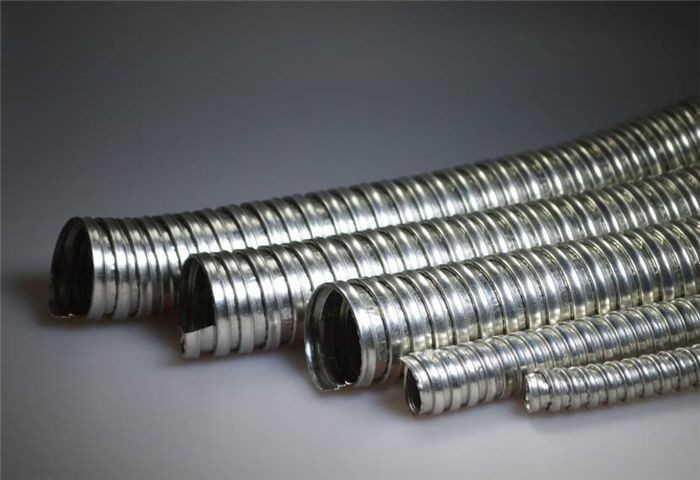
Corrugation is a hollow, specially ribbed pipe that resists corrosion and is used to lay wires and cables in a variety of settings. It is not exposed to water, air, or other external factors, depending on the type. Various wires and cables are laid using special corrugated pipes:
- underground (to provide a hard shell and protection from groundwater, rotting, damage by animals and rodents);
- in wooden, frame and other combustible walls or laid under fire-hazardous finishing materials such as lining, wooden panels and others (for protection against fire and unintentional damage to the cable);
- under the flooring (to protect against compression by concrete or other damage);
- outside buildings (to protect against illegal actions of third parties and atmospheric phenomena, including exposure to ultraviolet radiation and high temperatures in summer).
Crucial! When a fire breaks out, fireproof corrugated materials release specific substances that stop the fire from spreading, causing the fire to go out quickly.
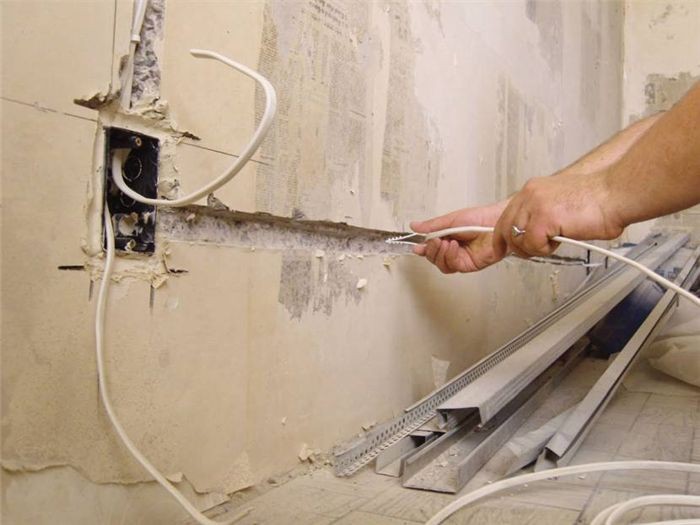
When it becomes necessary to replace the wires with new ones, corrugated pipes can be correctly installed so that the existing corrugated hoses don’t have to be taken apart. For this, a unique broach is utilized.
Kinds
Numerous types of corrugations are available for wires. The articles of this unique product differ in terms of color, manufacturing material, diameter, load carrying capacity, and wall thickness. Let’s examine the various kinds of corrugated pipes:
By material
- Polyvinyl chloride (PVC). Used as a non-flammable and inexpensive cable protector that must be located away from sunlight, water and ultraviolet radiation.
- Metal (metal hoses). Protect from mechanical damage, fires, corrosive and other active substances.
- Polyethylene, polypropylene (PPR). They can be intended for installation under conditions of high (High Pressure) or low (LHD) pressure, withstand temperatures from – 40 °C to + 45 °C, as well as exposure to acids, alkalis, ultraviolet rays and oils (PPR pipes are self-extinguishing and usually painted gray during production, HDPE – orange or black).
In terms of resistance to external influences
- Lightweight (wall thickness up to 320 N/5 cm², flexible, cannot withstand heavy loads) fit into ceiling and wall plasterboards
- Medium (wall thickness up to 750 N/5 cm²) can be placed in the grooves of room walls.
- Heavy (wall thickness up to 1250 N/5 cm², are inflexible) can withstand installation in concrete screeds, withstand exposure to moisture, dust and dirt.
- Reinforced super-heavy (the wall thickness of the metal corrugation for electrical wiring is more than 1250 N/5 cm², it consists of metal wires twisted in a spiral, covered with a plastic sheath) intended for installation outdoors or underground.
By number of layers
- Single layer (may have different thicknesses).
- Double-layer (have two walls at once).
Metal corrugation can be further classified into multiple subspecies. It can be constructed from galvanized or stainless steel, and a coating of plastic or polymer material may be applied. The best features for users are found in metal-polymer corrugated hose, which offers the highest level of protection against dust and water for wires.
This is fascinating! Although this rule is not mandatory, white polyethylene corrugated pipes are found in locations where electrical networks and the Internet are installed, and green pipes are used for telephones. Generally, red, blue, and black polyethylene corrugated pipes are used for outdoor use and general purpose circuits, respectively.
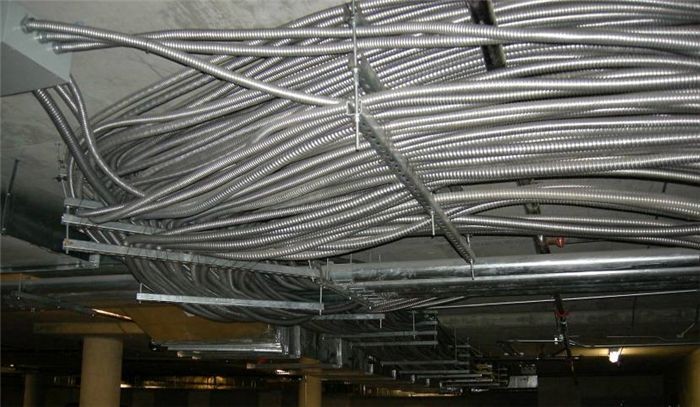
Products made of corrugated cable can have an outer diameter of 16 mm to 87.5 mm and an inner diameter of 5 mm to 78 mm. Additionally, some corrugated pipes are designed with a probe to assist in pulling flexible wires through the sleeve.
A number of corrugated hose types are distinguished, according to GOST R IEC 61386: based on corrosion protection and the degree of combustion process propagation. The IP index indicates, in accordance with GOST 14254-2015 regulations, how well corrugated pipes are protected against penetration and exposure to solid particles and/or water. Additionally, there are various types of corrugated highways based on the temperature range in which they can function. Information regarding the intended use and placement of the installed wiring must be considered by the specialist when selecting a particular type of corrugation.
For instance, it is essential to use protected reinforced corrugated pipe outdoors that has an IP rating appropriate for the anticipated load and can withstand the effects of mechanical, environmental, and temperature factors.
Size
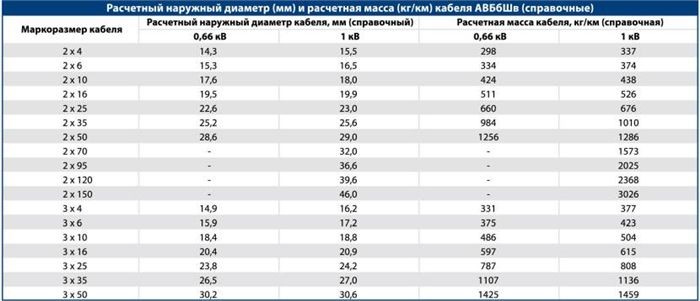
The number and thickness of wires that can be inserted through such a protective sleeve depends on the thickness of the corrugated cable. A corrugated pipe’s outer diameter is indicated by the first number on the marking, while the wall thickness is indicated by the second. The following table shows the diameter of the cable’s corrugation:
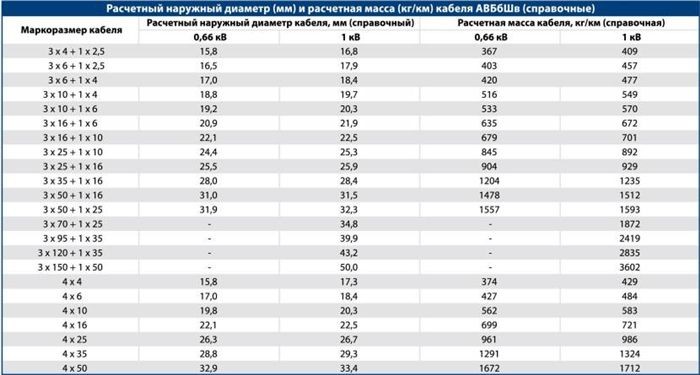
To help you better understand the process of choosing corrugated sleeves for different kinds and types of cable (wires), we’ll provide you with a few examples:
- 16 mm – pipes with this thickness are suitable for laying two wires from an electrical distribution board to lighting fixtures;
- 20 mm – this corrugation is suitable for running cables to sockets and switches;
- 25 mm – this thickness of the corrugated pipe is ideal if you need to run cables from an electrical panel to another component of the electrical circuit;
- 32 mm – such a thick sleeve helps to lay the cable from one panel to another;
- 40 mm and thicker – this corrugation is used for laying wiring in interfloor coverings.
Kindly take note! One rule to remember when choosing the size of the corrugation for the cable is that you need to leave about 25% of the space inside the sleeve free. By doing this, an air cushion is formed, which will eventually allow the cable to cool.
Installation
Now that you are aware of the benefits of corrugation in electrical wiring, you should think about the proper way to install corrugated hoses.
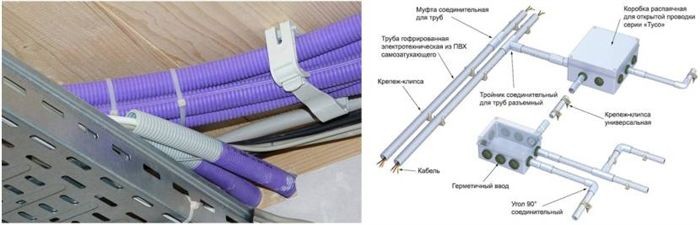
As a result, special plastic clips and clamp-dowels are used to secure cables and wires when they are laid externally. These are attached every 20 to 30 centimeters. In this instance, additional self-tapping screws or regular dowels are used, but they are positioned so as not to compromise the integrity of the corrugation’s outer layer. Tin strips fastened with nails in the center or plastic ties, also known as clamps, are also utilized when installing in grooves.
When installing corrugated pipes with wiring, it’s important to follow these guidelines:
- absence of sharp turns, the angle of which is less than 90 ° (for a track with four turns, the length can reach a maximum of 25 meters);
- if low-current cables are located near the route being laid, a distance of at least 20 cm should be maintained;
- if the structure in which the wiring needs to be installed is monolithic, the corrugated hose must be placed before concrete is poured, and the wires should be pulled after the mortar has hardened;
- the distance between two adjacent turns of the electric corrugation is at least 4-5 meters;
- if it is impossible to make the required distance between the turns of the electrical route, a distribution board (box) and an inspection hatch should be installed instead;
- to install hidden wiring in the walls, grooves of the required depth are first hollowed out (it must correspond to the diameter of the corrugated pipe);
- between two adjacent corrugated hoses there should not be less than 20 cm; if intersection is necessary, a right angle should always be maintained.
It’s crucial! You must lean the corrugation against a unique, pre-fixed clip and press until you hear a distinctive click in order to properly and firmly fasten it.
Turn signals, tees, or special couplings are used to connect two distinct pieces of corrugation. If it’s required, special plugs with tiny slots are placed on the corrugation to shield the wires from moisture.
In order to install corrugations for electrical wiring in a closed manner—that is, with a broach—you will need:
- Measure and cut the required length of the corrugated sleeve and make sure that it is tensioned.
- Secure the broach so that it does not go deep into the pipe.
- Attach the wires (cables) combined into a bundle to the broach, wrapping the joints with insulating tape.
- Cables that need to be pulled through the corrugation are attached with wire to the pulling harness, crimping the ends with pliers.
- Push the wire harness into the corrugated pipe.
Must keep in mind! Take a picture of the corrugated wiring installation in the grooves or sketch out a layout diagram before covering it with finishing. By doing this, mishaps during repairs will be reduced.
When it becomes necessary to install corrugated cable outside, a suspension on a dedicated cable is typically used. A sturdy, protective metal-polymer sleeve is primarily used for this purpose. Using ties, the corrugation is fastened to the main cable holder.
Features of the rules for standardization of corrugated pipes
As previously mentioned, corrugated pipes are standardized in accordance with GOST R IEC 61386.1-2014, which specifies pipe systems for cable laying. The guidelines for building these kinds of systems and the proper way to join components are laid out in the document. The corrugated pipes that are being examined need to be tested in accordance with certain requirements, such as a particular room temperature.
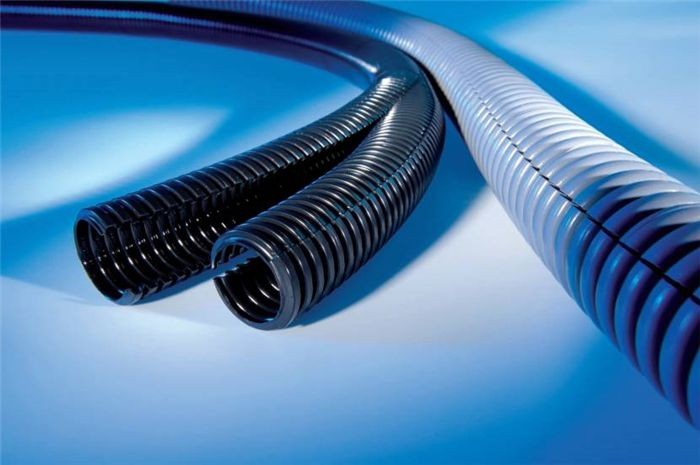
The degree of resistance to compression, destruction, impact, bending, tension, suspended load, exposure to allowable ambient temperature, electrical characteristics, degree of protection from external influences, and degree of protection from fire and ignition are all taken into account when assigning a classification code to each variety of these materials. Additionally controlled is the degree to which solid particles, such as dust and dirt, and water, may seep through.
The international standard IEC 60529:2013 and the GOST 14254-2015 regulations specify the various levels of protection, referred to as IP. These regulations specify in detail the requirements for certifying different types of protected materials, which are identified by a label indicating their level of resistance to outside influences. Each letter, number, and auxiliary character decoded from the cipher that makes up the IP code is explained in detail.
In contemporary building and renovation, cable corrugation is crucial. It is essential for shielding electrical cables from environmental elements like moisture and physical harm. Corrugation helps guarantee the longevity and safety of electrical systems by offering a safe and well-organized method of routing cables.
To satisfy diverse needs, cable corrugation comes in a variety of forms. Corrugated tubes that are flexible are ideal for applications where there needs to be a lot of movement or bending. When additional protection is required for permanent installations, rigid corrugated tubes are the best option. In addition, there are fire-resistant alternatives for high-risk situations and waterproof corrugations for areas exposed to moisture.
The safety and effectiveness of your electrical installations can be greatly increased by selecting the proper type of cable corrugation. It eases upkeep and upcoming upgrades and gives you confidence that your cables are securely guarded. To guarantee a dependable and secure electrical system, take your environment’s unique requirements into account when you design your next project and choose the right cable corrugation.


